Slim Booster Seats for 3-Across Back Rows
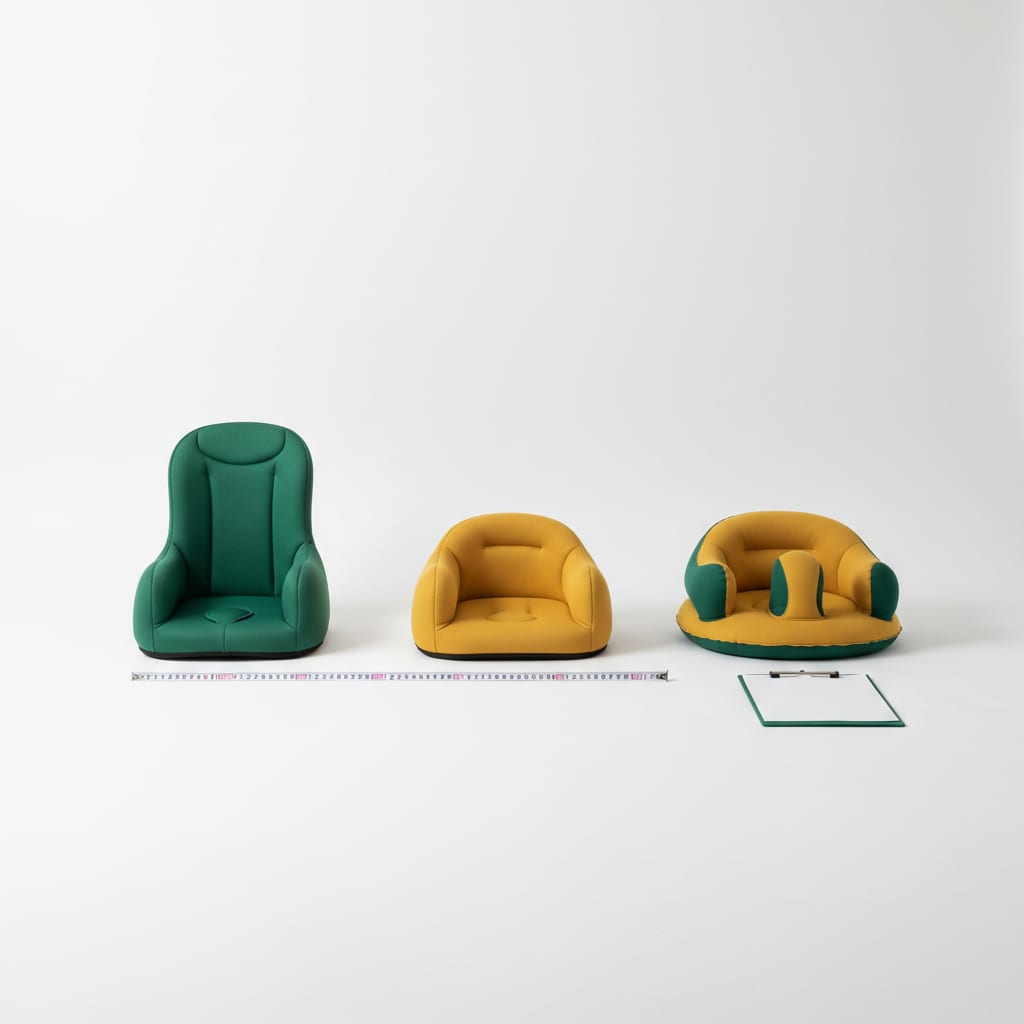
Slim booster seats are the cheapest way to make a 3-across back row work: once a kid graduates from a harness, swapping their bulky seat for a narrow booster — the slim class runs from inflatable models around 13 inches wide up to trim high-backs in the 17-inch range — often frees the exact inches the row was missing. A booster is inherently less bulky than a harnessed seat because the vehicle belt does the restraining; the booster’s whole job is positioning the kid so the belt fits right. That means width, belt-guide quality, and buckle access are the entire shopping list. Here’s the slim class as I’ve actually run it, three kids across my own bench.
Booster first, brand second: is your kid ready?
A booster is a graduation, not a birthday present. General guidance: a kid moves to a booster when they’ve outgrown their forward-facing harness by height or weight — check your current seat’s limits, because harnessing longer is the safer default — and they need the maturity to sit properly for the whole ride, every ride, no seceding from the shoulder belt to reach a dropped toy. Many kids hit the physical thresholds around age five-ish; plenty aren’t behaviorally ready until later. Your call, your kid, your seat manual — and when in doubt, keep the harness.
The 3-across incentive is real but it points the wrong way if you rush: never move a kid to a booster early to solve a width problem. Solve width with narrower gear for the kids who are legitimately ready, and with the narrowest harnessed seats for the ones who aren’t.
High-back vs backless in a tight row
High-back boosters bring their own shoulder-belt guide and head support — the right call for sleepers, for vehicles with low seat backs or no headrests in a position, and for younger booster riders who benefit from the structure. In 3-across terms they cost more inches at shoulder height, which is exactly where neighboring seats are also widest.
Backless boosters are the space heroes: minimal width, nothing at shoulder height to fight the neighbors, cheap, and easy to move between vehicles for the carpool shuffle. They need the vehicle’s own headrest behind the kid’s head and a decent natural shoulder-belt angle.
The common big-family play is mixed: high-back for the newest booster rider, backless for the veteran, harnessed seat for the youngest — three different widths at three different heights, which is precisely how the 3-across puzzle wants it. Different shapes interlock; identical shapes collide.
The slim booster class, honestly described
Widths below are hedged on purpose — manufacturers measure at different points, cupholders add width that sometimes pops off, and model years drift. Measure the actual seat against the actual space, and treat tiers, not dollars, as the price talk.
- Inflatable and compact travel boosters (BubbleBum class). Around a foot wide — the narrowest legitimate boosters sold, and the classic fix for a middle position between two big seats. Tradeoffs: backless-only, minimal structure, and kids slide around more on them; they’re the specialist tool, not the daily chair.
- Slim mainstream backless boosters (the big-brand value class). Most big-brand backless boosters run in the roughly 15-to-17-inch band, cost little, and disappear into a bench. This is the default answer for the veteran booster rider in a 3-across.
- Trim high-backs (Chicco, Graco, Diono and peers). The narrower high-backs run around 17 inches with good belt guides; several fold or slim down for travel. Tradeoffs: shoulder-height width varies a lot within the class, so this is where your tape measure earns its keep.
- Premium high-backs (Clek class, e.g. the Clek Oobr). Rigid-LATCH attachment, tall shells, metal structure, top-tier belt geometry — and premium prices. Rigid LATCH keeps the booster planted when it’s unoccupied, which anyone who’s heard an empty booster somersault through a hard stop will pay for.
Belt fit is the whole product: the check
Every ride, the belt should pass this five-point check: shoulder belt across mid-shoulder and chest (not neck, not upper arm), lap belt low on the hips touching the thighs (never the belly), kid’s back flat against the seatback, knees bending at the bench edge, and the kid able to hold that position the whole trip. A booster that produces this fit in your vehicle’s geometry is a good booster; the fanciest model that routes the belt across a neck is not. Test in the position it’ll live in — belt anchor geometry changes seat to seat.
One 3-across operations note: boosters get buckled and unbuckled every single ride, so put boosters where hands can reach the buckle — usually outboard — and the harnessed seat in the middle. A middle-position booster with a buried buckle turns every school run into cave spelunking. And if even slim boosters can’t save your bench, the bench itself may be the problem — that’s when you audit cars that actually fit 3 across or a minivan’s seating chart before buying more gear.
FAQ: slim booster seats
What is the narrowest booster seat?
Inflatable/compact travel boosters are the floor of the class at around a foot wide, with slim backless models from mainstream brands in the roughly 15-to-17-inch band next. Verify where the maker measured — cushion, base, or widest point — and measure the seat yourself.
Are backless boosters as safe as high-back boosters?
Both must meet the same federal standard; the practical difference is fit support. High-backs add a shoulder-belt guide and head support, which matter for sleepers, low seat backs, and newer riders. With a proper headrest behind the kid and a clean belt fit, a backless booster is a legitimate choice — the belt fit is the safety.
Can a booster go in the middle seat for 3-across?
If the middle has a shoulder belt (lap-only belts can’t do boosters) and you can physically reach the buckle, yes. Most families run boosters outboard purely for buckle access — a decision about your knuckles, not about safety ratings.
When can my kid stop using a booster?
When the vehicle belt passes the five-point fit check without the booster — commonly somewhere in the 8-to-12 range and tied to height, not birthdays. Check your state’s law as the minimum, and let the belt fit make the final call.