The Narrowest Car Seats, Measured (17 Inches & Under)
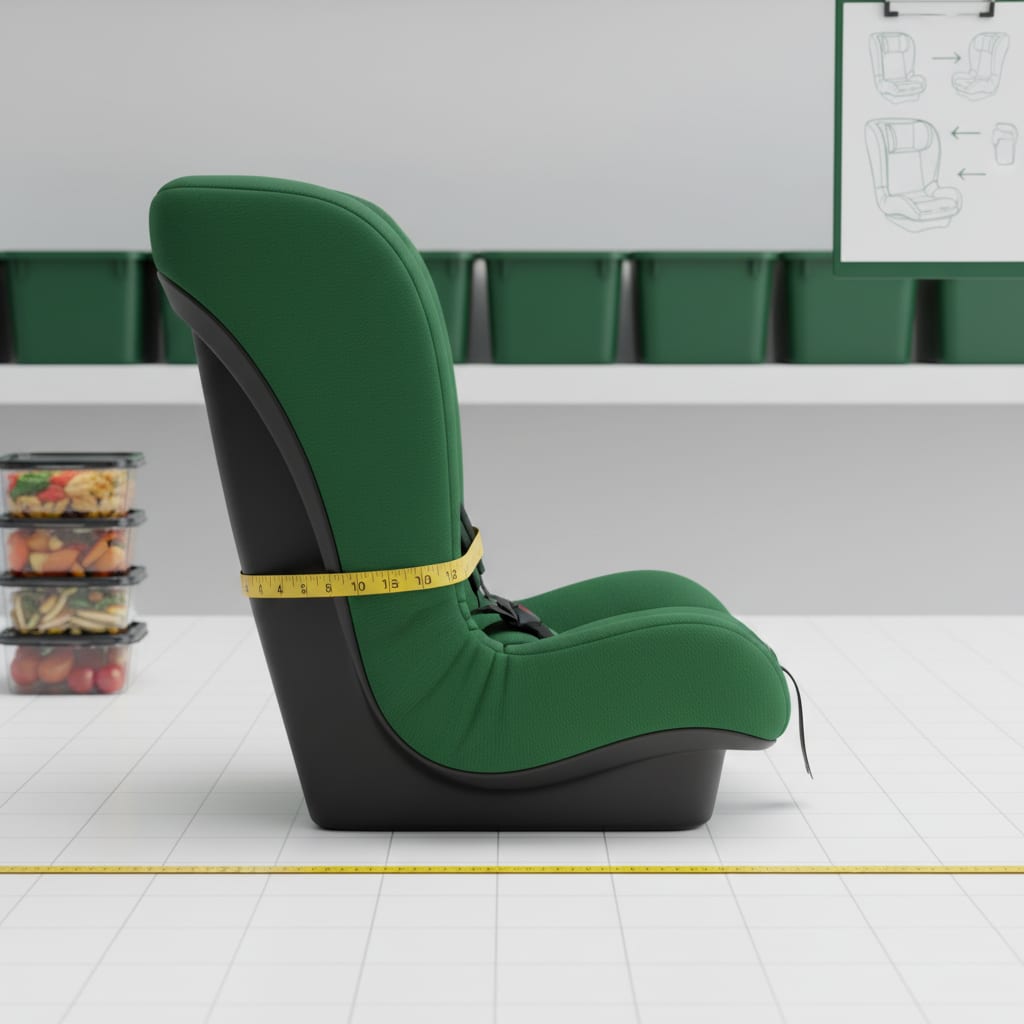
The narrowest mainstream car seats measure around 17 inches wide — the class led by Clek’s convertibles (Fllo and Foonf) and Diono’s fold-flat Radian line, with Graco’s SlimFit series and several slim boosters close behind. Around 17 inches matters because three of them total roughly 51 inches, which is what starts fitting across real-world benches. But “narrowest” has fine print: manufacturers measure width at different points, and the narrowest seat at the cushion can be the widest at the cupholders. Here’s the slim class, what the numbers mean, and the tape-measure check that beats every spec sheet.
How to read a width claim
A published width is one number describing a three-dimensional object that touches your bench, your buckles, and its neighbors at different heights. Before trusting any claim, including the ones below:
- Ask where it was measured. Widest point overall? At the base? Some brands publish base width and shell width separately — the base decides bench contact; the shell decides elbow wars.
- Subtract removable parts. Cupholders add width on several models and are designed to pop off. The seat with removable cupholders is functionally narrower than its spec.
- Check width at YOUR contact height. Two seats can share a widest-point spec and puzzle completely differently against their neighbors — which is why the 3-across combo method starts with a tape measure, not a shopping cart.
The slim class, honestly described
No affiliate rose-tinting here — every slim seat is a set of tradeoffs, and I’ve owned enough of them to list the real ones. Prices shift constantly, so I’ll speak in tiers, not dollars.
Clek Fllo and Foonf — the width benchmark. Both run about 17 inches wide, with tall shells, dense steel-reinforced builds, and extended rear-facing capacity. Tradeoffs: they’re heavy, they’re premium-priced, and the narrow-firm shape makes them the hardest class to install badly — which is a compliment wearing a disguise.
Diono Radian series — the fold-flat workhorse. Also around 17 inches, steel-cored, and it folds flat, which matters for travel, carpools, and the seat-shuffling life of a big family. Tradeoffs: heavy, long install learning curve, and the low-slung shape can sit tight against some vehicle headrests.
Graco SlimFit line — the budget-friendly slim. Marketed on a slimmer profile with rotating cupholders that reclaim real inches; typically the most affordable path to a workable three-across when you need to replace only one seat. Tradeoffs: a bit wider than the Clek/Diono class in practice, softer materials, but the value math is hard to argue with.
Slim high-back boosters. Once a kid graduates to boosters, slim models from the usual booster brands free up serious bench space — boosters are inherently less bulky and belt-routed. In mixed-age rows, aging one kid into a slim booster is often the cheapest inch you’ll ever buy.
One honest note: the perfect slim seat doesn’t exist. You’re choosing which tradeoff — weight, price, or plushness — your family absorbs best. Mine absorbed weight; my back files a complaint every road trip and the fit works.
Slim seat first, or new car first?
Run the cheap experiment before the expensive one. One narrow seat is a fraction of a vehicle payment: if replacing your widest seat with a roughly 17-inch model makes your current bench work, you just saved a car. If even three slim seats can’t clear your buckles, the bench has spoken — that’s when you graduate to our list of cars that fit 3 car seats across and shop geometry instead of gear.
Buying order for a three-across build: measure your bench, replace the middle-position seat first (the constraint position), and re-test before buying seat two. Incremental beats heroic.
FAQ: narrow car seats
What is the narrowest car seat available?
The mainstream slim class bottoms out around 17 inches, led by Clek’s convertibles and Diono’s Radian line. Claims under that exist, but check where the measurement was taken — and measure the seat yourself at pickup, because your bench doesn’t read marketing pages.
Are narrow car seats as safe as wide ones?
Width is not a safety rating — every seat sold in the US must pass the same federal standard (FMVSS 213). The slim premium models are actually among the most robustly built seats on the market. Fit, correct installation, and correct harness use are what move real-world safety.
Do I need three identical narrow seats for 3-across?
No — mixed combos usually puzzle better than triplets, because different shells are wide at different heights. The common winning move is one or two slim seats around your existing seat, per the combo shapes in the puzzle guide.
Are slim boosters safe for the middle seat?
They’re fine wherever a proper belt fit and easy buckling exist — but in three-across rows the middle buckle is usually the hardest to reach, and boosters get buckled every single ride. Most families run boosters outboard for buckle access, not safety reasons.