Twin Sleep Schedules: Two Babies, One Bedtime
The way you get twins on one sleep schedule is simple to state and relentless to run: treat them as one schedule with two babies in it. Feed them at the same times (when one wakes to eat, wake the other), start naps and bedtime together, and run a single shared bedtime routine in the same room. Synchronization is the entire game — two babies on offset schedules means someone is always asleep, always waking, or always crying, and the parents never sit down. I ran this system on my twin girls; it’s why I’m alive to type this.
Why sync beats “follow each baby’s cues” (for twins specifically)
Cue-following is lovely advice for one baby. For two, it produces the relay-race failure mode: Twin A wakes at 1:40, eats, settles by 2:20; Twin B wakes at 2:50; you see 90 minutes of sleep at a stretch for weeks and start hallucinating gently in the shower. Every experienced twin parent and most sleep resources for multiples converge on the same core rule: the schedule is the boss, and both babies live on it.
The uncomfortable half of the rule is waking a sleeping baby, which feels like vandalism the first ten times. Do it anyway — when one twin wakes to feed at night, feed both; when one wakes from a nap far ahead of the other, cap the gap at about 30 minutes. A briefly grumpy woken twin costs you minutes; two full offset cycles cost you the night.
The one-bedtime routine, two-baby edition
Same routine every night, both babies, same room, tag-team if two adults exist, assembly line if one:
- Feed both — together or back-to-back, lights low
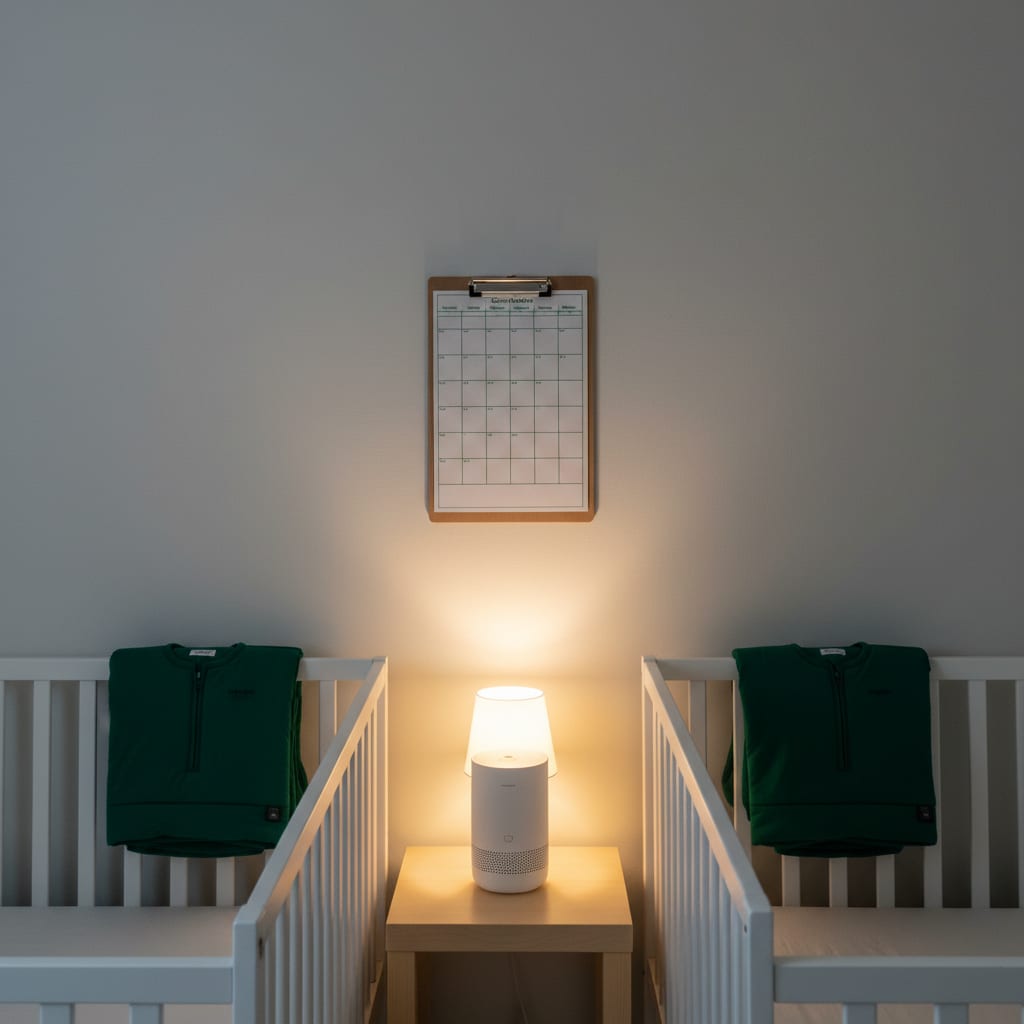
- Change and sleep-sack both (a HALO SleepSack in each crib) — the sack is the “sleep is happening” costume
- One story or song for the room — they share the audience experience; this scales to age five and counting
- Both down awake-ish, same crib-side ritual, exit
Identical inputs are what let two different babies converge on one output. And they are different babies — one of mine was a professional sleeper from birth, the other treated bedtime as a hostage negotiation. The schedule holds anyway; it just holds one of them with more protest minutes than the other.
Sample rhythm by age
Every baby differs and wake windows are ranges, not laws — take these as typical shapes, not prescriptions.
| Age | Naps | Shape of the day |
|---|---|---|
| 0–3 mo | 4–5 | Eat-wake-sleep loops, roughly every 2.5–3.5 hrs, synced feeds |
| 4–6 mo | 3 | Wake windows around 2–2.5 hrs; bedtime settles near 7pm |
| 7–13 mo | 2 | Mid-morning + early-afternoon naps; guard the early bedtime |
| 14–24 mo | 1 | One midday nap; bedtime creeps to 7:30-ish |
Same room? Separate cribs? Will they wake each other?
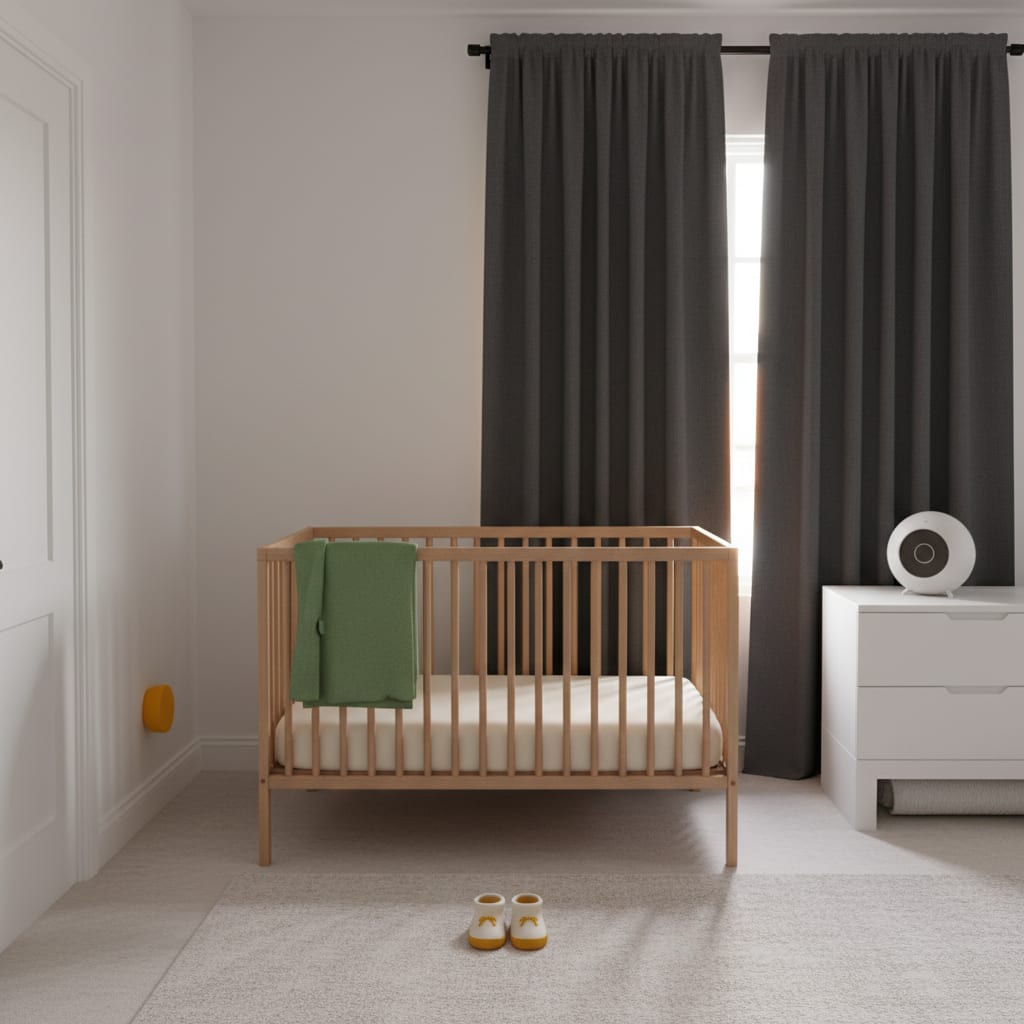
Less than you fear. Twins are each other’s white noise from the womb; most sleep through their co-twin’s fussing better than their parents do. Standing guidance is one baby per sleep surface (safe-sleep basics: own crib or bassinet, flat, bare, on their backs), same room is fine and normal. If one twin reliably detonates the other’s nights — it happens, usually mid-regression — separate rooms temporarily and reunite later. Room-sharing logistics for the bigger-kid years, including the twins-plus-sibling shuffle, live in the siblings sharing a room playbook.
The part nobody staffs for: running the plan while exhausted
Knowing the system and executing it at 3am across two cribs are different skills, and the gap is where twin sleep plans die. What I wanted in year one was someone to just tell me what today’s naps should be, because my brain had two babies’ worth of tabs open. That’s the actual use case for Betteroo — it’s a personalized baby-sleep program: you answer a quiz about your baby and your parenting style, and it generates the day-by-day plan (today’s wake windows, tonight’s bedtime) and keeps adjusting it through regressions and nap transitions. For twins, run the quiz per baby and then do what twin parents always do — run the schedule that satisfies the needier baby, and let the easy one ride along.

Balanced call, because that’s how we do reviews here: it’s a plan generator, not a night nurse. It won’t harmonize two babies with genuinely different temperaments by itself, and no app eliminates the weeks where a regression eats everyone’s 2am. What it removes is the daily schedule-math and the second-guessing — which, with twins, is the difference between running a system and improvising one twice.
FAQ: twin sleep schedules
Should I wake one twin when the other wakes to feed?
At night, in the early months: yes — it’s the least intuitive, highest-return rule in twin sleep. Feeding both at one waking consolidates your night into survivable blocks instead of a continuous relay.
When do twins settle into a predictable schedule?
Most babies’ sleep starts organizing somewhere around three to four months, and synced twins tend to lock in because the external schedule is doing the organizing. If you’re still in the everything-is-chaos window, that’s the phase, not a verdict on you.
Can twins sleep in the same crib?
Current safe-sleep guidance says one baby per sleep surface — separate cribs or bassinets, same room is fine. The shared-room question matters more at toddler age, when they discover conversation.
What about a twin plus a new baby later?
That’s the staggered-bedtime problem, and it’s a different play — the short version is oldest-down-last and a written plan per kid. Start with the second-baby sleep-and-gear plan, which covers running a newborn schedule while older kids exist, and the close-spacing realities in the Irish twins guide.