Convertible Car Seats, Explained
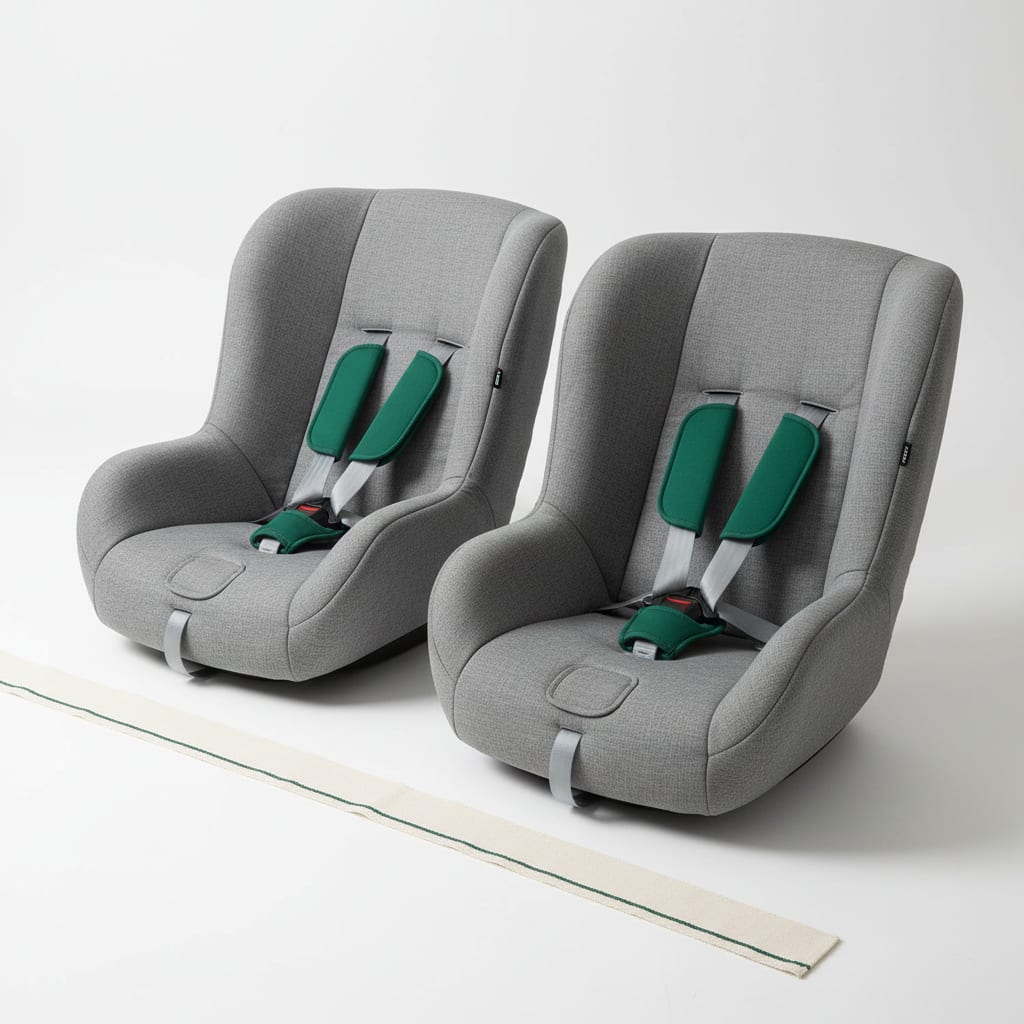
A convertible car seat is one seat that installs two ways: rear-facing for a baby and younger toddler, then converted to forward-facing with a harness for an older child. It stays in the car — there’s no carrier handle and no snapping in and out of a base — and it covers the years an infant seat and a forward-facing-only seat would have covered separately. That’s the whole idea. What makes it the default purchase in most big families isn’t the marketing; it’s that one shell serves a kid for years and then passes down to the next one in the queue.
Here’s what “convertible” actually converts, how it sits against the other four seat types, and what to check on the label before you buy.
What converts, exactly
Two things change when you convert the seat, and both are described in your seat’s manual with model-specific instructions:
The direction it faces. Rear-facing first, for as long as the seat’s own limits allow, then forward-facing. The seat installs differently in each mode — usually a different belt path through the shell, often a different recline setting, and once forward-facing, the top tether becomes part of the install rather than an optional extra.
The harness routing. Rear-facing, the harness straps come from slots at or below the child’s shoulders; forward-facing, at or above. Converting means re-threading (or, on no-rethread models, sliding the headrest to move both harness and headrest at once).
What doesn’t change: it’s a harnessed seat in both modes, and it’s belt- or lower-anchor-installed in both. It is not a carrier and it is not a booster.
The five seat types, side by side
| Type | Direction | Restraint | Typical service window |
|---|---|---|---|
| Infant seat (carrier + base) | Rear-facing only | 5-point harness | Birth until the seat’s rear-facing limit |
| Convertible | Rear- then forward-facing | 5-point harness | Birth or infancy through the harness years |
| All-in-one / 3-in-1 | Rear, forward, then booster | Harness, then vehicle belt | Birth through booster age |
| Combination | Forward-facing only | Harness, then vehicle belt | Toddler through booster age |
| Booster (high-back or backless) | Forward-facing | Vehicle belt only | Once harness limits are outgrown |
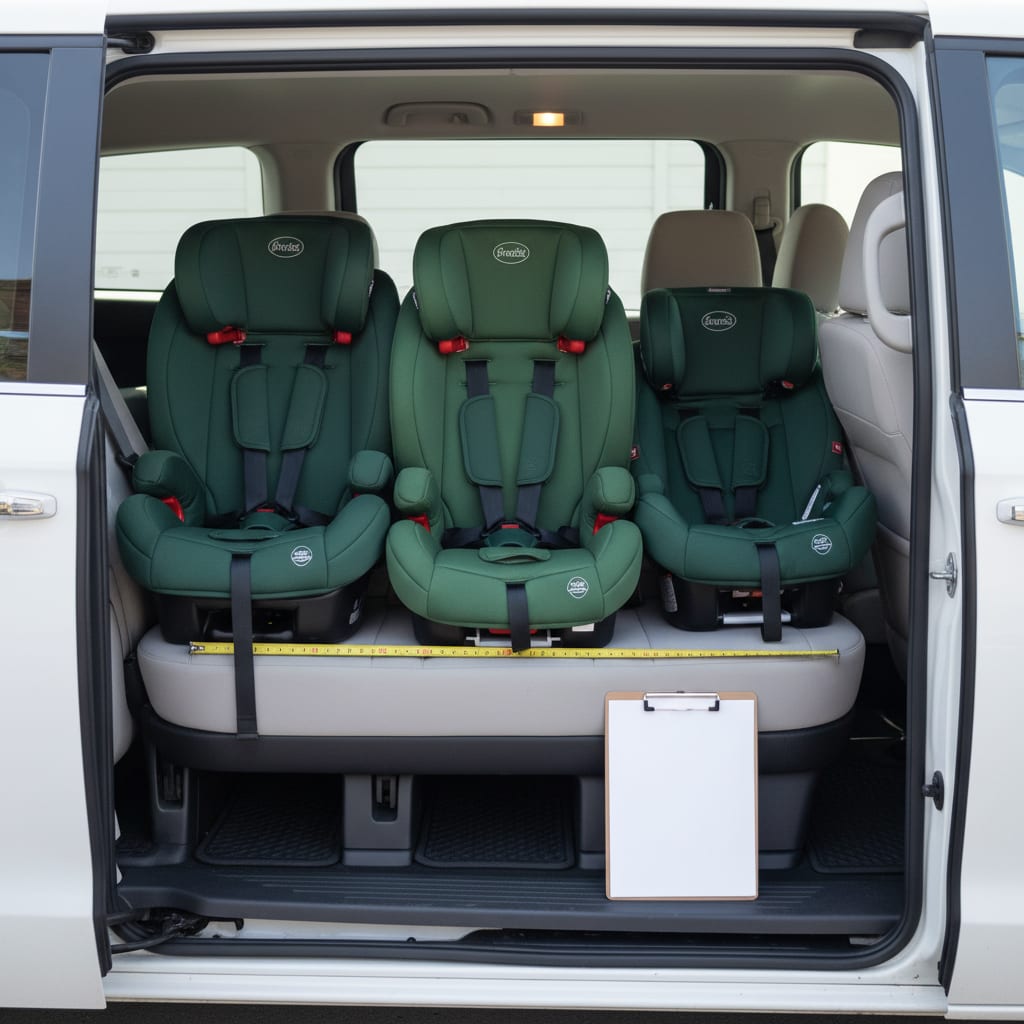
The one worth understanding properly is the difference between a convertible and an all-in-one. An all-in-one adds a third mode — it becomes a belt-positioning booster after the harness is outgrown. That sounds like strictly more value, and sometimes it is. But a seat engineered to do three jobs is usually bulkier and heavier than one engineered to do two, and in a household where bench width decides everything, bulk has a cost. If you’re squeezing three seats across a bench, run the widths through the 3-across combo method before you assume the do-everything seat is the efficient choice.
Where a convertible beats an infant seat, and where it doesn’t
Plenty of families skip the infant carrier entirely and start with a convertible from birth, provided the seat is approved down to newborn size — check the lower limits and the newborn insert requirements on the label rather than assuming.
The convertible wins on: longevity (one purchase covering years instead of months), cost per year, and rear-facing capacity, since convertibles typically allow rear-facing to considerably higher limits than infant carriers do.
The infant carrier wins on: the sleeping baby. A carrier lifts out with the baby still in it and clicks into a stroller frame, which — when you have older kids to walk into school and a napping infant — is not a small thing. It also makes a second and third base cheap, so the baby can move between cars without re-installing anything. Something like the Chicco KeyFit 35, rated rear-facing for infants from 4 to 35 pounds, is the shape of that trade: shorter service life, far more convenient during the months you have a baby who sleeps in transit.
Our honest position after five kids: the carrier earns its keep for the first baby, and by the third you care much more about the seat that lasts. The convenience mattered when one sleeping baby was the whole logistics problem. It matters less when the logistics problem is four kids and a school gate. When the carrier does run out, the signs (and the checks for a hand-me-down convertible) are in when to switch from an infant car seat to a convertible.
Buying one for a lineup, not for one kid
A convertible in a big family isn’t a purchase for a child. It’s a purchase for a position in the car that will hold several children in succession.
- Remaining useful life is a spec. The seat you buy new for a two-year-old has to still be in date when the next baby needs it. Check the manufacture date on the box and read our note on car seat expiration before committing to a hand-me-down plan.
- Width beats features. In a full bench, the inches at the base decide whether the row works at all. That’s the entire argument of the narrow seat class.
- Extended rear-facing capacity is worth paying for. Higher rear-facing limits buy you months or years of the safer mode. A seat like the Graco Extend2Fit is built around exactly that — an extension panel that adds rear-facing legroom so a long-legged toddler isn’t the reason you flip the seat.
- Ease of re-install is not a luxury. In a house where the seating chart changes with who has football, a seat you can uninstall and re-tighten quickly gets used correctly. A seat that takes twenty minutes and a knee in the shell gets left where it is, and eventually gets fudged.
Reading the label before the marketing
Every claim that matters is printed on the seat itself and repeated in the manual. Before you buy, and again before you install:
The rear-facing and forward-facing limits, in both height and weight, for that exact model. These vary by model and by model year, and they’re what governs the whole conversion timeline — the rear-facing question is answered by these numbers, not by a birthday.
The date of manufacture, for the hand-me-down maths above.
The install methods approved for your vehicle position — lower anchors versus seat belt, whether the lower-anchor weight limit has been reached, whether a tether anchor exists where you’re putting it.
The recline requirements, which differ between rear- and forward-facing on most convertibles and are usually indicated by a level line or a built-in indicator on the shell.
If any of that is ambiguous, a certified child passenger safety technician will check the install for free in most areas. Worth doing once per configuration change — and in this house, configurations change a lot.
FAQ: convertible car seats
What is a convertible car seat?
A single car seat that installs rear-facing for babies and younger toddlers, then converts to forward-facing with a 5-point harness for an older child. It stays installed in the vehicle rather than lifting out like an infant carrier.
Can a newborn go in a convertible car seat?
Many convertibles are approved from birth, but not all, and some require an infant insert at the smallest sizes. Check the model’s minimum height and weight and its newborn positioning instructions before using one from day one.
What’s the difference between a convertible and an all-in-one car seat?
An all-in-one adds a third mode — it converts again into a belt-positioning booster. Convertibles stop at the harness stage. All-in-ones cover more years, but they’re usually larger and heavier, which matters if you’re fitting several seats across one bench.
How long can a child use a convertible car seat?
Until they exceed the forward-facing height or weight limit printed on that seat, at which point they move to a booster — or until the seat reaches the end of its manufacturer-stated useful life, whichever comes first.
Is a convertible car seat safe from birth?
Yes, when the model is approved for your baby’s height and weight and is installed at the correct rear-facing recline with the harness set correctly. Every seat sold in the US meets the same federal standard; correct fit and correct installation are what decide real-world protection.