8-Passenger vs 7-Passenger: Which Seat Count You Need
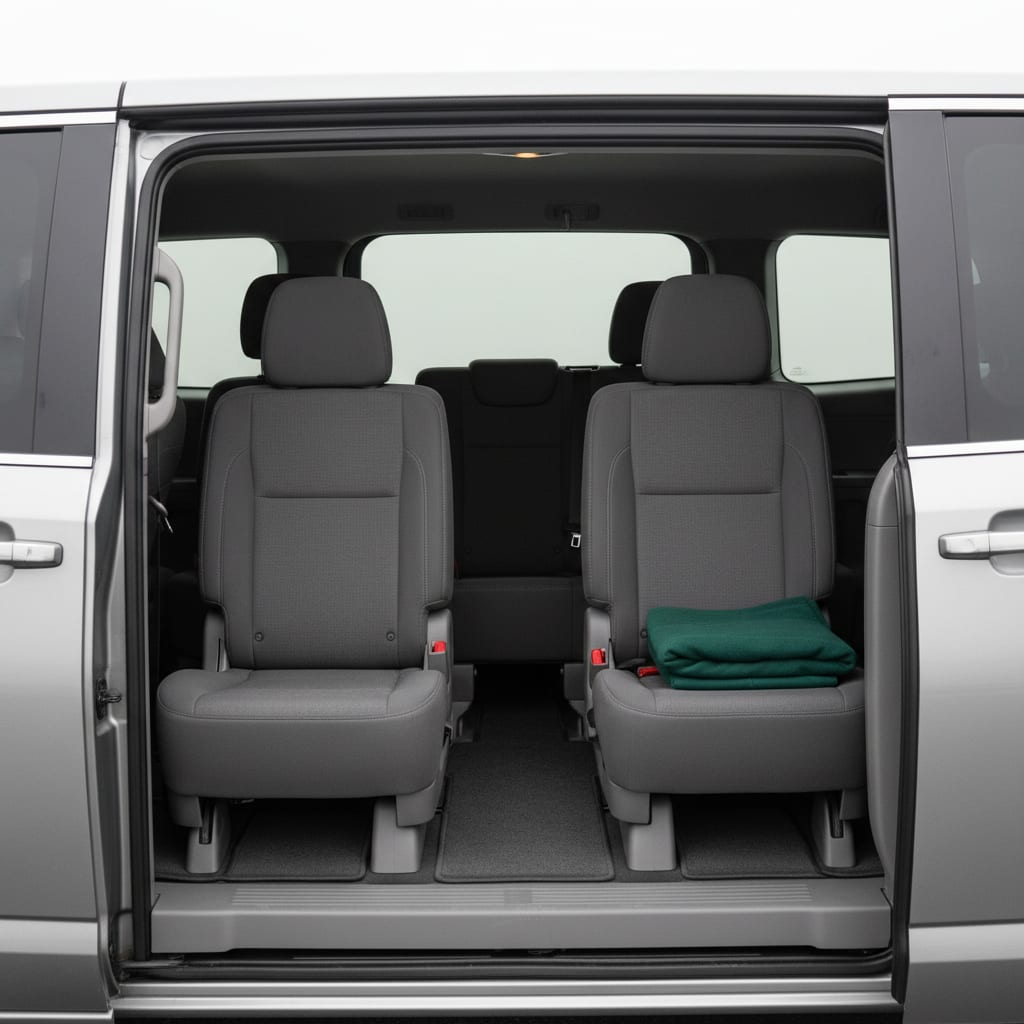
Seven- and eight-passenger versions of the same vehicle are usually identical everywhere except row two. The eight-seater puts a three-person bench there; the seven-seater puts in two captain’s chairs and leaves an aisle between them. So the whole decision is one trade: one extra seat belt, or a walkway to the third row. Families still installing car seats and buckling small kids usually want the aisle. Families hauling teenagers, carpool kids or an extra adult usually want the belt. Count the bodies you carry on a normal Tuesday, not the maximum you have ever carried.
I have driven both with five kids. The eighth seat is genuinely useful about four times a year. The aisle is useful every single school morning.
The only real difference is row two
Third rows are the same in both configurations — three belts, same width, same access to the back hatch. Cargo, towing and engine specs do not change with seat count either. What changes is entirely the middle row:
- Eight-passenger: a bench with three positions. Three belts, three sets of shoulders, no gap. Getting to row three means folding or tumbling part of that bench, or climbing over it.
- Seven-passenger: two individual chairs with an open aisle down the middle. Two belts, and a path from the side door straight to the back row without touching anything.
Every other difference people argue about — sliding doors, third-row legroom, cargo behind row three — belongs to the minivan versus SUV question rather than this one.
Count belts, not people
Write down every trip you make in a normal week and how many humans were actually in the car. Most large families discover two things: their true daily load is smaller than their household size, because the older kids are at school or at practice, and their peak load happens on a predictable handful of occasions.
Then ask what happens on the peak days. If the answer is “we take two cars anyway,” the eighth belt is not buying you anything, because you were never going to get eight people and their gear into one vehicle comfortably regardless. If the answer is “we regularly carry a grandparent, a nanny or a carpool kid,” the belt is the answer and the aisle is a luxury.
The failure mode is buying for a maximum load you hit twice a year and paying for it on 363 school runs.
The car-seat question: can you do three across in row two?
This is where the choice stops being about comfort. A three-across install in the second row requires a bench. Two captain’s chairs give you two positions, full stop, no matter how narrow your seats are.
So if you have three children who all still ride in a harnessed seat or booster, and you want them all in the middle row where you can reach them, you need the eight-passenger bench — and then you need to check that three specific seats fit across that specific bench, which is a measuring job rather than a shopping one. Our three-across car seat guide covers the width math and the combinations that actually clear.
Two more things to verify in the vehicle owner’s manual before you commit, because they vary by model and trim:
- Lower anchors in the center position. Many center bench seats have no lower anchors at all, which makes it a seat-belt install. Borrowing anchors from the two outboard positions is prohibited unless your manual explicitly permits it.
- Top-tether anchors for all three positions. A forward-facing harnessed seat needs one. Not every bench provides three.
Third-row access is what you trade away
The aisle in a seven-seater is not a small convenience. With captain’s chairs, a kid who rides in row three walks to their own seat, buckles themselves, and gets out the same way — while a car seat stays installed and untouched in row two.
With a bench, that same trip means folding or sliding a section of the middle row. If a car seat is installed on the section that moves, you are either uninstalling it, moving a child through a gap that is not really a gap, or sending the third-row kid over the top. Every one of those adds minutes to a morning and wear to your patience.
There is a related access problem in the back row itself — belt positions, tether anchors and reach — which is covered in car seats in the third row.
When eight seats is the right call
- You regularly carry more than seven people, not occasionally.
- You need three car seats across the middle row, and the third row is for older kids who can climb in themselves.
- Your third-row riders are teenagers or adults who do not need help buckling and can manage a folded bench.
- You run carpool, coach a team, or routinely have an extra adult along.
When seven seats is the right call
- You have small kids who need help getting to and out of row three.
- Your car seats live in the middle row and you do not want to disturb them on every trip.
- Your daily load is six or fewer and the eighth belt would be theatre.
- Somebody in your house needs to be able to sit between two kids who cannot be trusted next to each other, which the aisle version delivers by geometry.
That last one is not a joke. On a long drive, an adult who can sit between two kids is worth more than a belt nobody is sitting in.
The middle seat that comes out (and why trim matters)
Some vehicles blur the line: a removable or repositionable second-row middle seat lets one van be an eight-seater on holiday weekends and a seven-seater with an aisle the rest of the year. Where it exists, it is the best answer to this entire question.
But it is a trim-and-model-year feature, not a nameplate feature. All four mainstream minivans have offered both seating configurations at various points, and the seven-versus-eight availability changes between trim levels and generations. Verify it on the exact vehicle in front of you — the window sticker and the owner’s manual, not the brochure. The same audit-the-seating-first approach applies when you get to choosing between the big minivans.
Also check where the removed seat goes. A middle seat that stores in your garage is only convertible if you are home when you need it.
FAQ: seven versus eight passenger vehicles
Is an eight-passenger vehicle bigger than a seven-passenger one? No. In the same model they are usually the same vehicle with a different second row. Exterior dimensions, cargo space and third-row size are unchanged.
Can I fit three car seats in a seven-passenger vehicle? Not in row two, which has only two positions. You can often put a third seat in row three instead, if that row has a suitable belt position and tether anchor — check the vehicle manual, because not every third-row position allows a child restraint.
Does the eighth seat cost more? It varies by model and trim, and sometimes the bench is the cheaper configuration because captain’s chairs are packaged with higher trims. Price the exact build rather than assuming either direction.
Which is safer? Neither configuration is inherently safer. What matters is that every child is in the correct restraint, correctly installed, in a seating position the vehicle manual permits — and that you can actually reach and buckle everyone without shortcuts.
We are between the two. What is the tiebreaker? Age of the kids. Under about six across the board, take the aisle. Mixed ages with teenagers riding in back, take the belt.