What Age Are Bunk Beds Safe? (Top Bunk Rules)
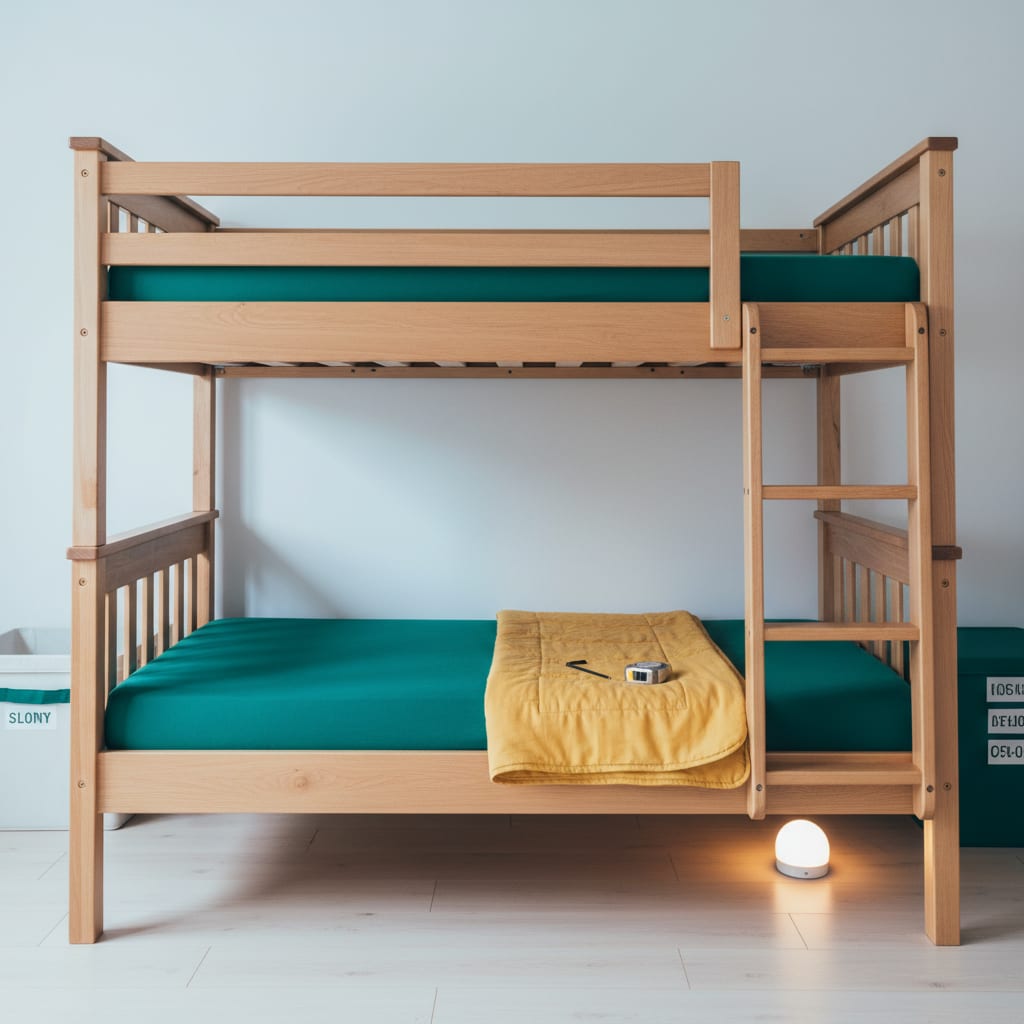
The long-standing guidance from the U.S. Consumer Product Safety Commission is that children under six should not sleep on the upper bunk — and that’s the floor, not the finish line. Age six clears a kid to be considered for the top bunk; whether they actually go up there depends on whether they can climb down half-asleep, stay in bed without rolling into the rail, and follow the no-playing rule when you’re not in the room. Bottom bunks have no lower age limit beyond ordinary bed-readiness. Below: the rules that actually keep the top bunk boring, and how we assign bunks across five kids.
Why six, and what the number is really about
The threshold isn’t about size. It’s about the two things that go wrong on upper bunks: falls from height, and entrapment in gaps. A four-year-old descending a ladder at 2am is a genuinely dangerous sequence — half-asleep, backward, in the dark, on rungs sized for bigger feet. And younger kids fit through gaps older kids don’t. Six is where those risks fall off enough for the guidance to shift. It doesn’t mean every six-year-old is ready: age is the gate, readiness is the test.
The maturity test past age six
Before anybody gets the top bunk, they should pass all five of these — in daylight, watched, more than once:
- Climbs up and down unassisted, facing the ladder, without carrying anything. Both hands on the rails is the whole technique.
- Can do it at night. Practice with the room lights off and a nightlight on. If the descent gets sketchy in the dark, that’s a no, and the fix is more practice or another year — not a brighter lamp.
- Sleeps still enough. A kid who ends every night sideways with a leg off the mattress is telling you they belong on the bottom for now.
- Follows the no-playing rule under no supervision. The top bunk is for sleeping and reading. If your kid treats every elevated surface as a launch pad, believe them.
- Wakes up enough to be careful. Some kids surface groggy and stumble; those stay down until they don’t.
If a child has a medical or developmental reason you’re unsure about — seizure history, sleepwalking, anything that affects nighttime awareness — that’s a question for your pediatrician rather than a checklist on a blog.
The top bunk rules that matter
- Guardrails on both sides of the upper bunk, always — including the side against the wall. Kids roll into the wall gap, and the gap is the hazard. This is a requirement of the federal bunk bed standard, not a nice-to-have.
- Watch the mattress thickness. The guardrail has to stand meaningfully above the mattress surface (the federal standard specifies about five inches) to do its job. A thicker replacement mattress quietly cancels the rail. Your bed’s manual gives a maximum thickness — it exists for this reason, and it’s the single most common way a compliant bed becomes a non-compliant one.
- No gaps a head can get through. The standard limits the openings around guardrails and between the frame and the mattress. Check that the mattress fits the frame edge to edge — an undersized mattress creates a gap along one side.
- Anchor the bed and check the hardware quarterly. Bunks wobble loose over time, especially when kids climb them the wrong way.
- Nothing hangs from the bed. No belts, no jump ropes as “curtain ties,” no bags on the posts. Strangulation risk around bunk posts makes this rule absolute.
- Nothing above head height on the top bunk. No shelf, no fan, no hanging light. The ceiling clearance up there is small and heads meet it.
- One kid on the top bunk at a time. No visitors, no sleepover doubling.
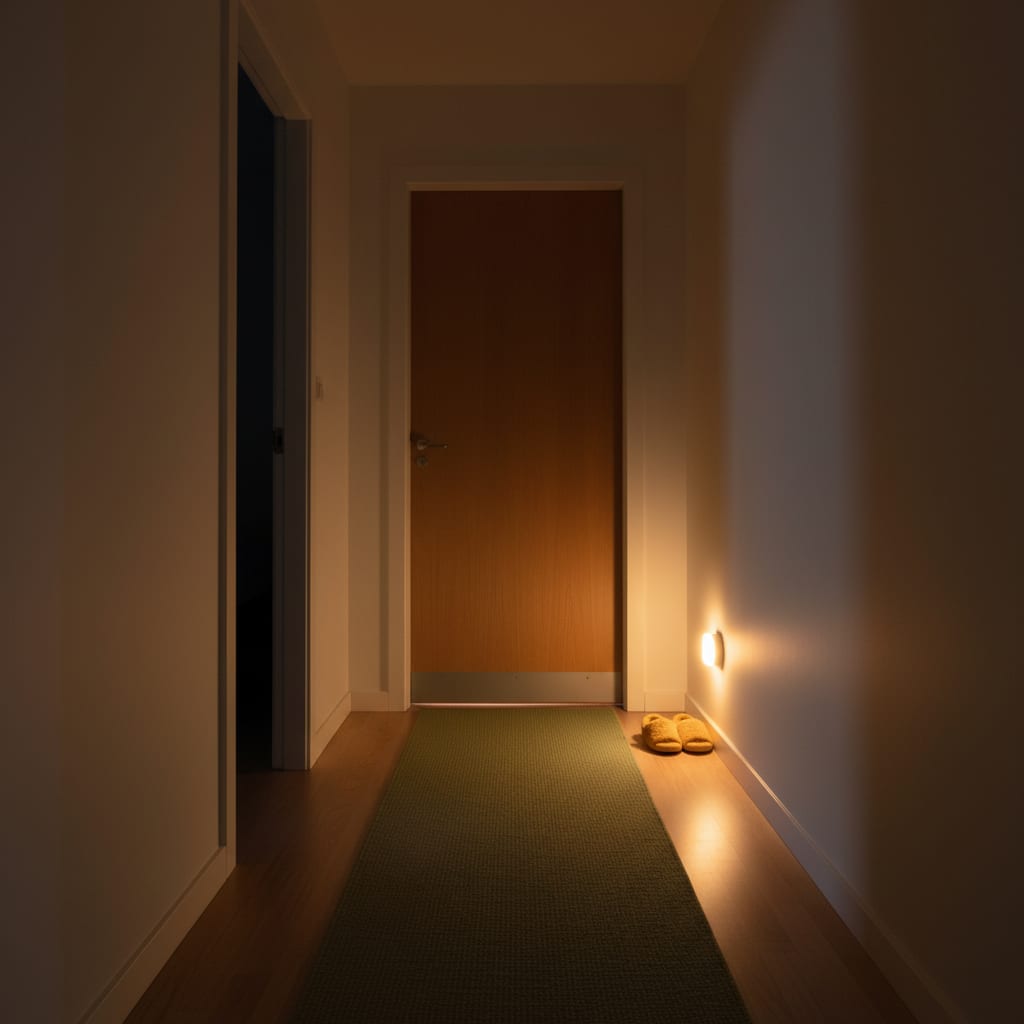
- Nightlight and a clear floor. The ladder route to the bathroom needs to be unobstructed and visible — the boring rule that prevents the most falls.
- Check for recalls before you buy used. Older and secondhand bunks are exactly where obsolete designs live; search the model at cpsc.gov before it comes in the house.
Assigning bunks in a big family (not by age)
The oldest kid gets the top bunk, right? Not necessarily. Our assignment rules, in priority order:
Bathroom frequency wins. Whoever gets up at night sleeps on the bottom. Nighttime ladder trips are the risk you’re managing, so route them out of the design.
Sleep quality second. The bottom bunk is darker, closer to the floor and easier to sit on for stories — it suits the earlier bedtime and the lighter sleeper. The top is quieter and less trafficked, which suits the kid who needs to be left alone to fall asleep.
Rotation is a policy decision, not a right. In our house the top bunk is assigned and stays assigned; if you rotate, do it on a fixed schedule, or you’ll relitigate bunks weekly.
The top bunk is a privilege with a revocation clause. State it that way from day one: rules broken, you sleep on the bottom for a week. Said in advance it’s a rule; said afterward it’s a punishment nobody agreed to.
Bunk assignment sits inside the wider roommate question — pairings, ages and ground rules are covered in the room-sharing playbook, and the hour that decides whether a shared room works at all is in the staggered bedtime system.
Everything above is the readiness question. The separate one — what the nights actually look like in the week you make the switch — is the crib to bunk bed transition week. Settle the bunk rules here, then read that one the day before the beds go in.
When a bunk isn’t the right answer
Bunks are the default because they’re the obvious answer to floor space, but they’re not the only one:
- Trundle beds put two kids in one footprint with zero height risk. The trade: both sleep low, and one sleeps in the middle of the room.
- Two twins in an L along adjoining walls, with the corner as shared storage, often fits rooms people assume need a bunk. Measure before you assume.
- Loft bed over a desk or dresser buys the same floor space for one older kid, with the same guardrail rules.
- Floor beds for the youngest, especially the ones who just left a crib. A child who recently moved from a crib to a big-kid bed is nowhere near ready for a ladder — they’re still learning that the bed has no walls.
If the bunk is arriving because a new baby is coming and the rooms are being reshuffled, sequence the moves early rather than in the same month — the timing plan lives in our four-week toddler prep post.
FAQ: bunk bed ages and safety
What age can a child sleep on the top bunk?
Standard guidance from the CPSC is six years old at the earliest, and readiness beyond that is individual — climbing ability, night-waking, and how still they sleep all matter more than the birthday. The bottom bunk has no special age rule beyond being ready for a regular bed.
How long does it take a child to settle into a bunk bed?
Usually three to seven nights, with the worst on nights two and three — a different question from this one, answered night by night in the transition week post.
Are bunk beds safe for a 4-year-old?
On the bottom bunk, yes, if they’re out of a crib and ready for an ordinary bed. On the top bunk, no — four is well under the standard guidance, and ladder descents at night are the specific risk that rule exists to prevent.
Does the top bunk need guardrails on both sides?
Yes. Both sides, including the side against the wall, because the wall gap is where kids get trapped. The rails also need to sit high enough above the mattress to work, which is why swapping in a thicker mattress can silently defeat them.
Can two kids sleep on the top bunk together?
No — upper bunks are designed and weight-rated for one occupant, and two kids on a top bunk means one of them is near an edge. Sleepover guests go on the floor mattress or the bottom bunk.
Are used bunk beds safe to buy?
They can be, with checks: search the model for recalls at cpsc.gov, confirm both guardrails and all original hardware are present, and check mattress thickness against the manual. Hardware-store substitutes for missing parts are the commonest secondhand problem.