Sleeping in One Room During a Home Extension: A Family Plan
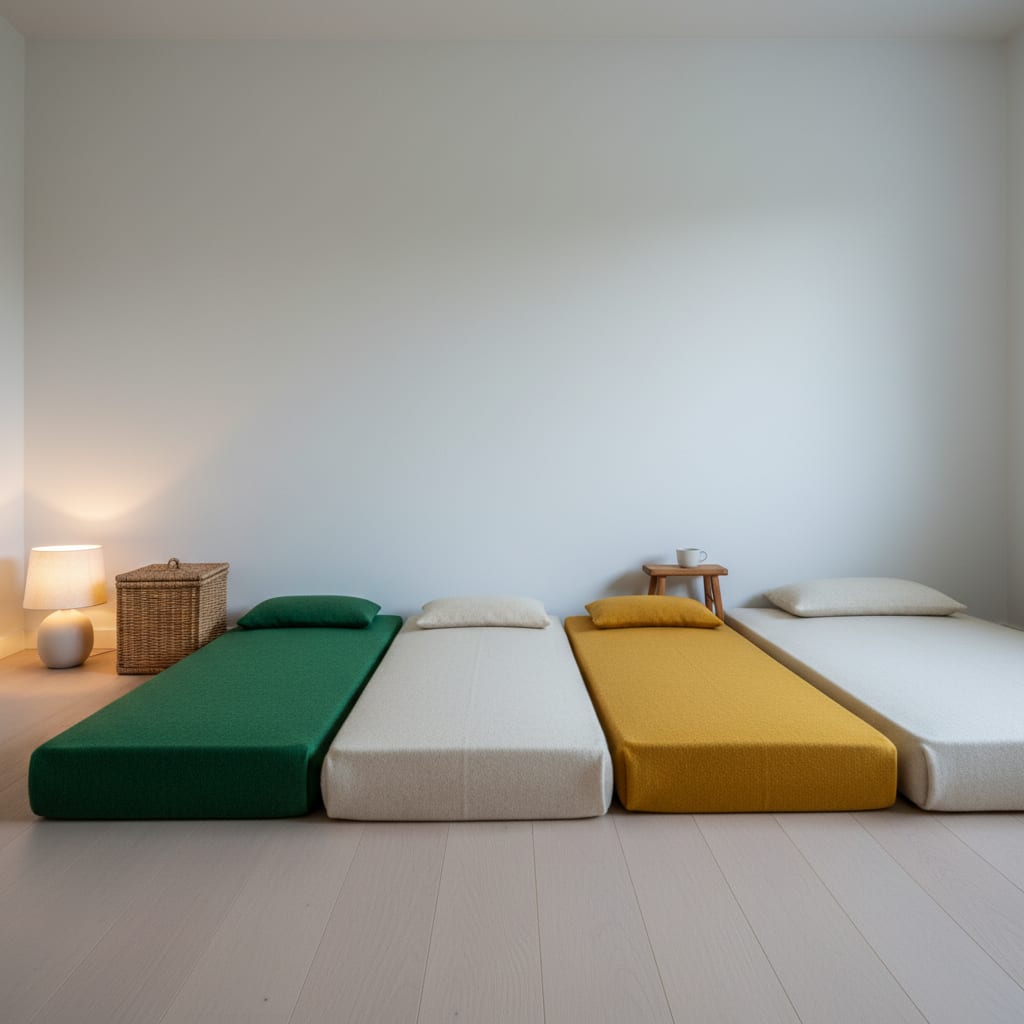
When the whole family is sleeping in one room while an extension goes up, run it as a project with an end date, not as your new normal. Get the builder’s calendar and working hours before the first night. Pick the sleeping room by the dust path, not by its size. Stagger bedtimes by who wakes whom, because the morning is now set by a van arriving, not by your kids. Move naps out of the house on the loud days. And when the builders leave, clean first and restore one sleeper at a time — never everyone on the same night.
The permanent version, with no end date, is bedtime when the whole family shares one bedroom: zoning by sightline, the baby’s own flat surface. This post covers only what a building job changes.
Start with the builder’s calendar, not the kids’ bedtimes
A temporary one-room setup runs on somebody else’s schedule, so get that schedule first. Ask your builder for:
- Site hours. When the first person arrives and when tools go quiet. That start time is now your household’s wake-up deadline.
- The loud days. Demolition, cutting and breaking through. Ask which week, not which month.
- Break-through day. When the wall between old house and new build opens, the work stops being next door and starts being inside. Plan to be out for it.
- The finish date, and how firm it is. Kids handle a countdown far better than “a few more weeks”. Put the end date somewhere they can see it, and move it honestly if it slips.
Pick the sleeping room by the dust path, not by its size
The right room is the one furthest from the works, off the trades’ route, with a door that closes — not automatically the biggest. EPA’s Renovate Right pamphlet, written for renovations in homes built before 1978, says plainly: “The work areas should not be accessible to occupants while the work occurs.” It asks for “a separate pathway for the contractor from the work area to the outside” that ideally is not “the same entrance that your family uses,” and suggests turning off forced-air heating and air conditioning during the work, because that “prevents dust from spreading through vents from the work area to the rest of your home.”
The age of the house is the question to settle first. EPA’s page on its renovation rule says that “any renovation, repair or painting project in a pre-1978 home or building that has lead-based paint can easily create dangerous lead dust,” and that anyone paid to disturb painted surfaces in a pre-1978 home must be lead-safe certified. EPA’s lead sources page adds the part that matters for a room full of mattresses: “Settled lead dust can re-enter the air when the home is vacuumed or swept or when people walk through it.” Newer houses have their own dust: OSHA lists cutting, sawing, grinding and drilling brick, block and concrete — the work of joining an extension to a house — as what creates respirable crystalline silica.
The house rules that follow from all this:
- The sleeping room is not a corridor. Nobody in work boots walks through it, ever.
- Door shut during site hours, and bedding folded into a closed bin or cupboard by the time the first van arrives, so it isn’t collecting whatever makes it past the door.
- Damp-wipe, don’t dry-sweep, in the rooms nearest the work.
- Anything medical goes to your pediatrician. If you live in an older house and you’re worried a child has been exposed to lead dust, ask them, and let them decide whether testing makes sense.
Stagger bedtimes around the van, not the kids
The one-room bedtime sequence doesn’t change: whoever is hardest to re-settle goes down first, everyone else gets ready outside the room, and adults come in last with nothing new switched on. The general rules for kids sharing a room are in siblings sharing a room.
What a build changes is the other end of the night. If the first builder arrives at 7:30, a kid who normally sleeps until 7:45 won’t this month, so work backwards: set lights-out from the wake time the site forces on you, not the one your kids would pick.
And run the sound floor through the morning, not just the night: a continuous machine like the Yogasleep Dohm near the door means the first van door and the first radio don’t land as a spike.
Naps on a builder’s schedule
Weekday naps are where a build really hurts, because they happen at peak site hours. A sound machine takes the edge off ordinary noise. It won’t beat a saw going through brick.
So sort nap days into two kinds. On ordinary days, run the standard play from protecting a baby’s nap in a big house: one anchor nap, a steady sound floor, and a job for everyone else during that hour. On loud days (the ones on the builder’s list), don’t try to nap at home. Take the nap in the stroller, in the car, or at a relative’s house, and accept that it’ll be shorter.
A short nap has a cost that shows up at bedtime. Betteroo’s explainer on how sleep pressure builds and drains across a day is the clearest account I know of why a wrecked afternoon can mean a wired child at 7pm, and why two kids on the same schedule can come out of it differently.
One lamp, and keep the site lights out
Sites bring bright, cool work lights. Keep them out of the sleeping room: one warm, dim lamp aimed at a wall, and something over the door gap if a work light shines under it. Betteroo’s piece on why warm amber light beats cool white after dark explains the colour question if you’re choosing a bulb for the month.
What to restore first when the builders leave
The end of a build is when families undo a month of good sleep by moving everyone back on the same night. Restore in this order:
- Clean before anyone moves back. For pre-1978 work, Renovate Right says the area “must be cleaned up using special cleaning methods before taking down any plastic that isolates the work area”, with a HEPA vacuum followed by “wet wiping and wet mopping with plenty of rinse water”. Then look: “There should be no dust, paint chips, or debris in the work area.”
- The lightest sleeper goes back first. Whoever wakes the room most gets their own room back first, and the shared room gets quieter for everyone else that same night.
- One move per night. Everyone else goes back one at a time, over several nights, starting with whoever settles most easily.
- The new room waits. Don’t hand out the extension’s new bedroom until the old arrangement is back and stable. The reasoning is the same as the don’t-stack-changes rule in sleep after a house move.

FAQ: sleeping in one room during an extension
Should we move out while the extension is built?
Sometimes. EPA’s Renovate Right says, for pre-1978 renovations, “you may even want to move out of your home temporarily while all or part of the work is being done.” If a full move isn’t possible, the middle route is to stay home for most of the build and be away for break-through and the dustiest stretch.
Can the baby sleep in the shared room?
Yes, on their own firm, flat surface next to an adult bed. The full safe-sleep setup for a one-room family is in our whole-family bedtime post. Nothing about a build changes it.
Is white noise enough to cover building work?
For ordinary site noise it helps a lot. For cutting and breaking-through days it isn’t enough. Plan those naps away from the house.
How long will it take the kids to go back to normal sleep?
It varies by child. Move people back one at a time and keep every sleep cue the same as it was during the build. That way the only thing changing is the room.