Bedtime for Kids Sharing a Room: The Staggered System
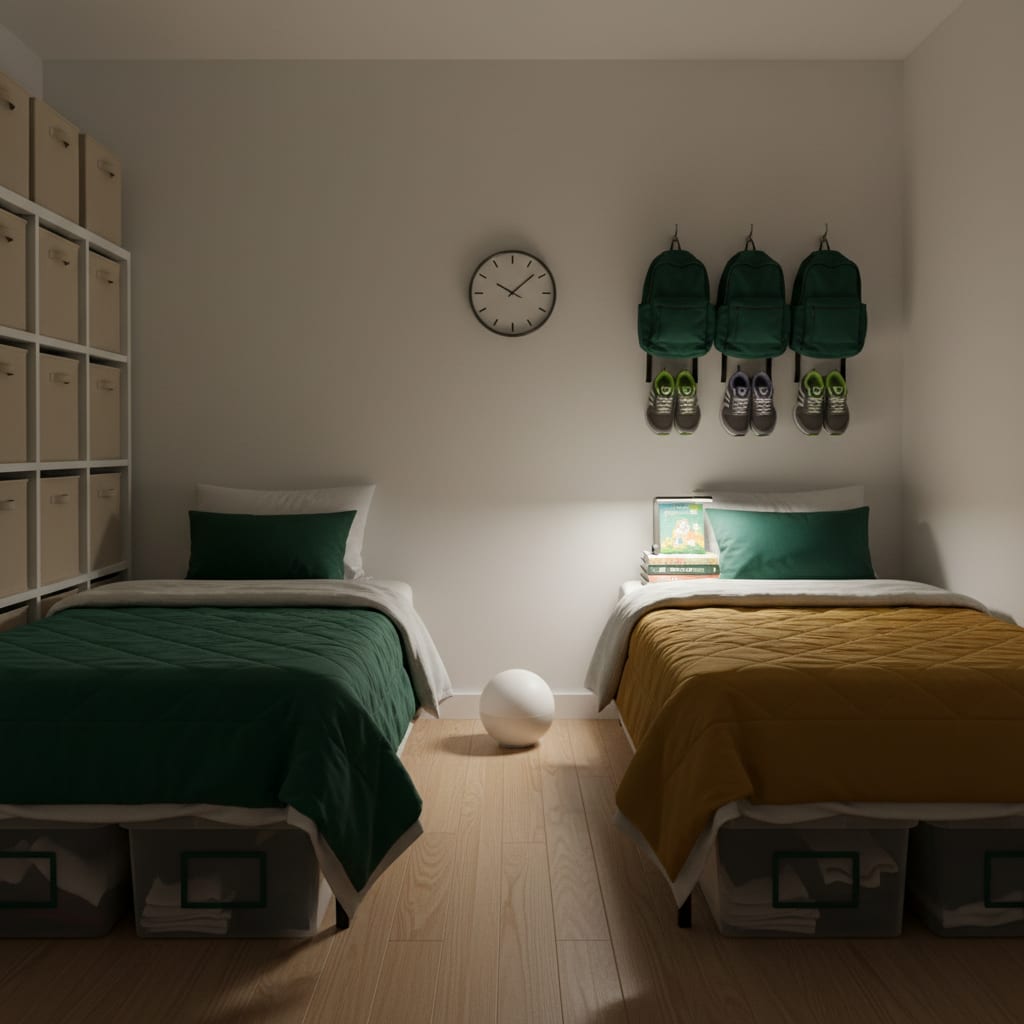
Bedtime for kids sharing a room works when you stop running one bedtime and start running two on a stagger: younger kid down first, a 20-to-30-minute gap, then the older kid enters a room that’s already asleep. Three mechanics carry the whole operation — the stagger itself, white-noise zoning so the second entry doesn’t wake the first sleeper, and a contract with the older kid that pays them for silence. Room layout, roommate pairings, and when-to-merge questions are a different post (the room-sharing playbook); this one is purely the 7pm-to-8pm mechanics, because that hour is where shared rooms are won or lost. I run two shared rooms nightly; here’s the play card.
The stagger: two bedtimes, one room, in order
The stagger exists because two different-aged kids don’t have the same sleep needs, and pretending they do produces the whisper-party. The mechanics:
- Youngest goes down first, always. Younger kids need earlier bedtimes and fall asleep faster; an older kid entering quietly is a far smaller disruption than a younger one bouncing in on a settled sleeper.
- Size the gap at 20–30 minutes. Long enough for the first kid to be genuinely asleep, short enough that the older kid’s bedtime doesn’t drift into resentment territory. If the first kid is a slow settler, widen it; a stagger that’s too narrow is the number-one cause of “he keeps waking her.”
- Run the routines in different rooms. The younger kid’s stories and songs happen in the bedroom; the older kid’s routine — bath, teeth, books — runs in parallel elsewhere, finishing right as the gap closes. Two routines in the same room at once is a party with pajamas.
- The older kid enters on tiptoe protocol: lights already off, path to bed clear (stage pajamas and water bottle before kid one goes down), no door-side conversations. Rehearse it once in daylight; kids execute what they’ve practiced.
White-noise zoning: sound-proofing you can buy for cheap
White noise in a shared room isn’t ambiance, it’s infrastructure — it masks the second kid’s entry, the older kid’s page-turns, and the 6am rustling. Zoning it right:
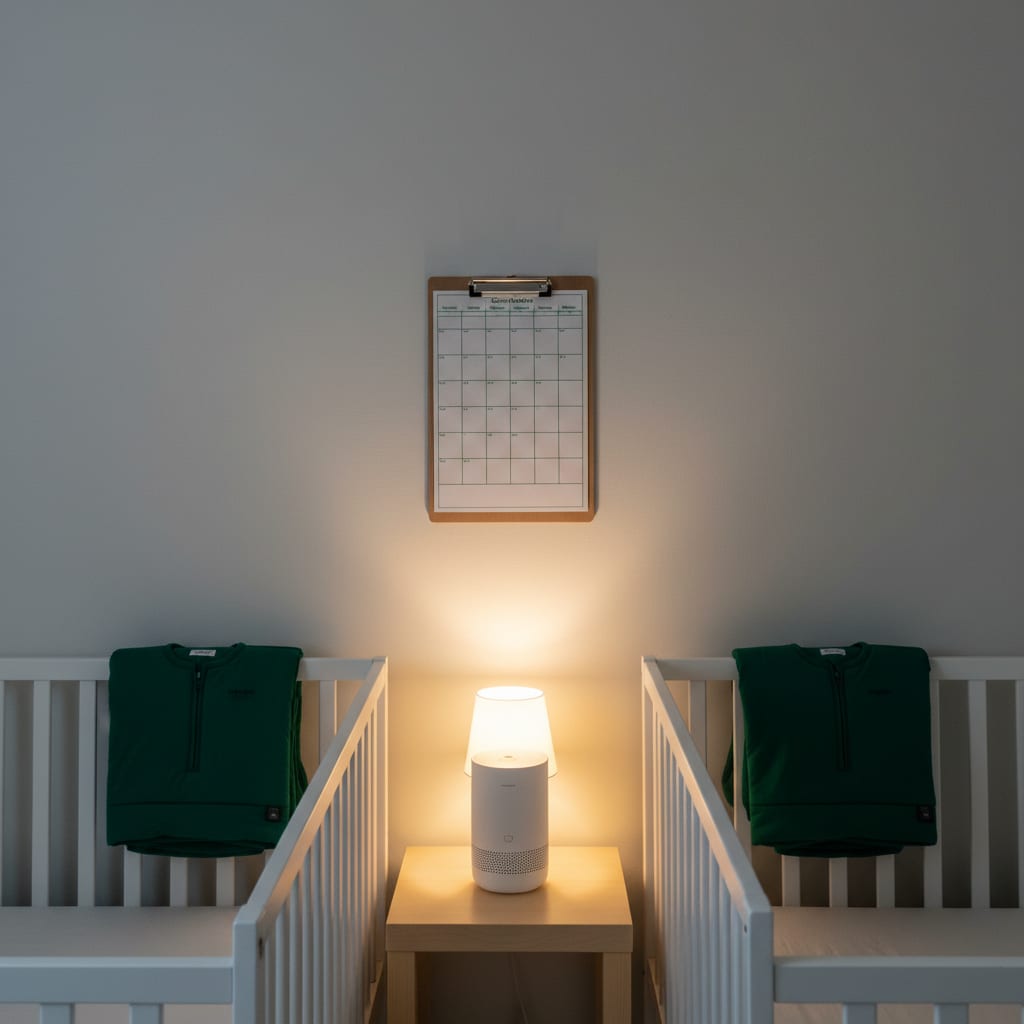
- One machine, placed between the beds or near the door (a Yogasleep Dohm is the classic) — wherever the intruding sound comes from — not jammed against the sleeping kid’s head. You’re masking the room’s noise floor, not broadcasting into an ear.
- Volume: audible, not industrial. The standing guidance is moderate volume at real distance from any kid’s head; it should cover a footstep, not a fire drill.
- Same track, every night, all night. Continuous beats motion-activated or timed shutoff — a machine that clicks off at 2am hands you a 2am problem.
- It also buys your evening back: with the noise floor covered, the rest of the house doesn’t have to live at library volume after 7:30.
The older-kid contract: pay for silence in privileges
The stagger asks something real of the older kid — enter silently, read by booklight, no chatting at the ceiling — so pay for it like the job it is. Ours is a literal posted deal: enter on protocol and you get 20 minutes of booklight reading in bed, a later lights-out than your roommate, and first-shift bathroom rights in the morning. Break protocol and tomorrow’s entry is lights-out-immediately. Frame the silence as owed to the roommate, not to the parents — sibling-to-sibling duty is the strongest enforcement mechanism bedtime has — and enforce it boringly, without debate. The contract converts the older kid from bedtime’s biggest risk into its co-manager, which is the actual goal: you won’t be supervising this room forever.
Getting the bedtimes right underneath the stagger
Here’s the part that breaks the system even when the mechanics are perfect: the stagger only works if each kid’s bedtime is actually right for that kid. Put a three-year-old down at the five-year-old’s hour and kid one is still awake when kid two walks in — the stagger collapses from the bottom. With multiple kids, keeping each bedtime dialed as naps drop and wake windows stretch is real bookkeeping, and it’s the job I hand to Betteroo — a personalized baby-and-toddler sleep app that builds each child’s nap windows and bedtime from a quiz and keeps adjusting as they grow, at roughly $20 a month. Run it per kid and the stagger designs itself: tonight’s target bedtimes, gap between them, done. It’s a tool, not magic — it won’t make your seven-year-old whisper — but it removes the schedule-math so the mechanics above have a solid floor. It’s the same machinery behind our twin bedtime system, pointed at different-aged roommates instead.

When the stagger collapses (because it will)
Sick kid: evacuate to the parents’ room or couch — one bad night must cost one kid’s sleep, not two. Regression or nap transition: re-check the younger kid’s schedule first — regressions hit at predictable ages — because a suddenly-fighting-bedtime kid usually needs a bedtime adjustment, not more discipline. Travel: rebuild the same stagger in the new space — the vacation-rental sleeping arrangements post covers running it in a house you’ve never seen before. The system surviving the exception is what makes it a system.
FAQ: bedtime in a shared room
How far apart should bedtimes be for kids sharing a room?
Start at 20–30 minutes, younger kid first, and widen it if the first kid is still awake at handoff. The right gap is defined by kid one being asleep — not by the clock — so slow settlers need bigger staggers.
Should siblings sharing a room have the same bedtime?
Only if they’re the same age with the same sleep needs — twins, essentially. Different-aged kids on one bedtime means someone’s schedule is wrong, and the whisper-party lives in that error. Same-age roommates can share a lights-out and skip the stagger.
What if the younger one wakes up when the older one comes to bed?
Audit in order: is the gap long enough (kid one genuinely asleep, not drowsy)? Is white noise covering the entry? Is the older kid’s path staged so there’s no drawer-rummaging? Nine times out of ten it’s a too-narrow gap wearing a disguise.
Does white noise need to run all night?
Continuous till morning is the play — a machine that shuts off mid-night un-masks every later disruption, including the older kid’s 6am stirrings. Keep it at moderate volume, placed away from heads, and treat it as part of the room, not a gadget.