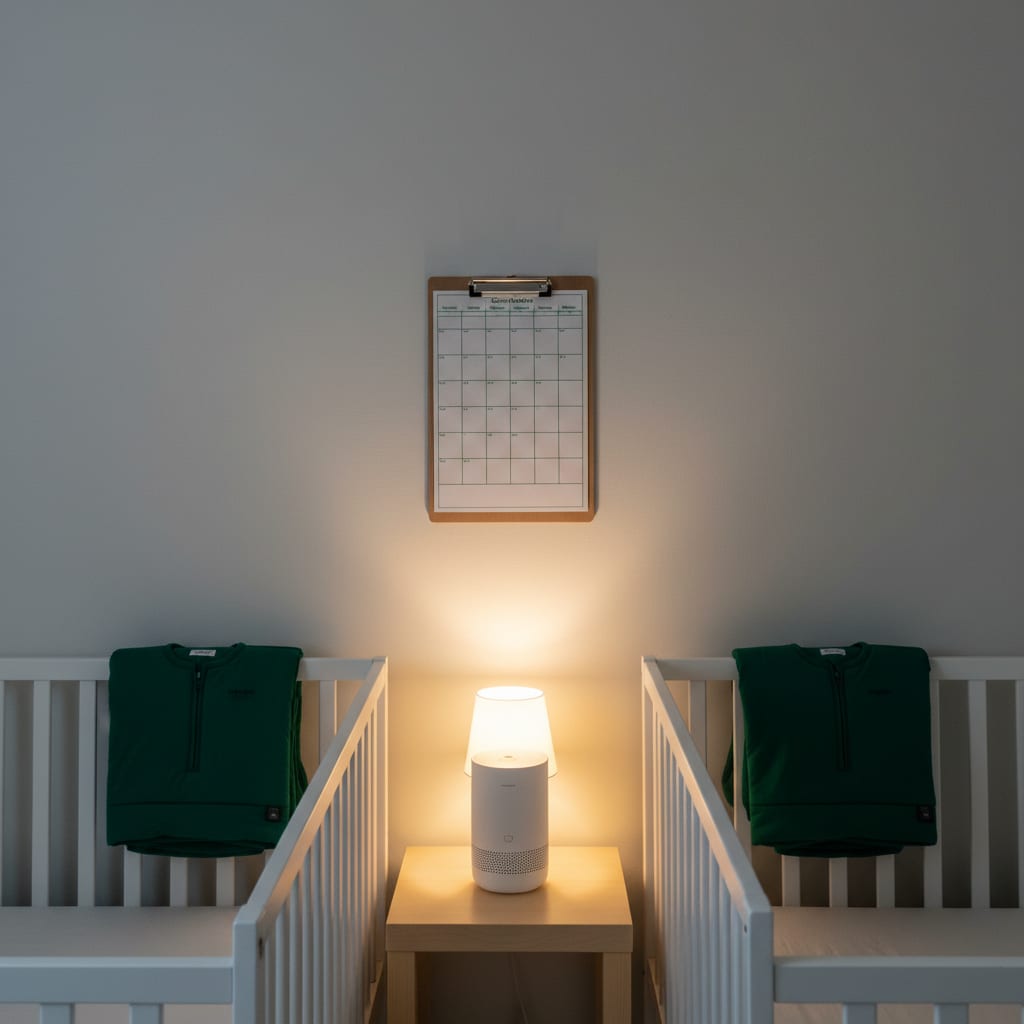
Older Sibling Wakes the Baby? Fix the Hallway First
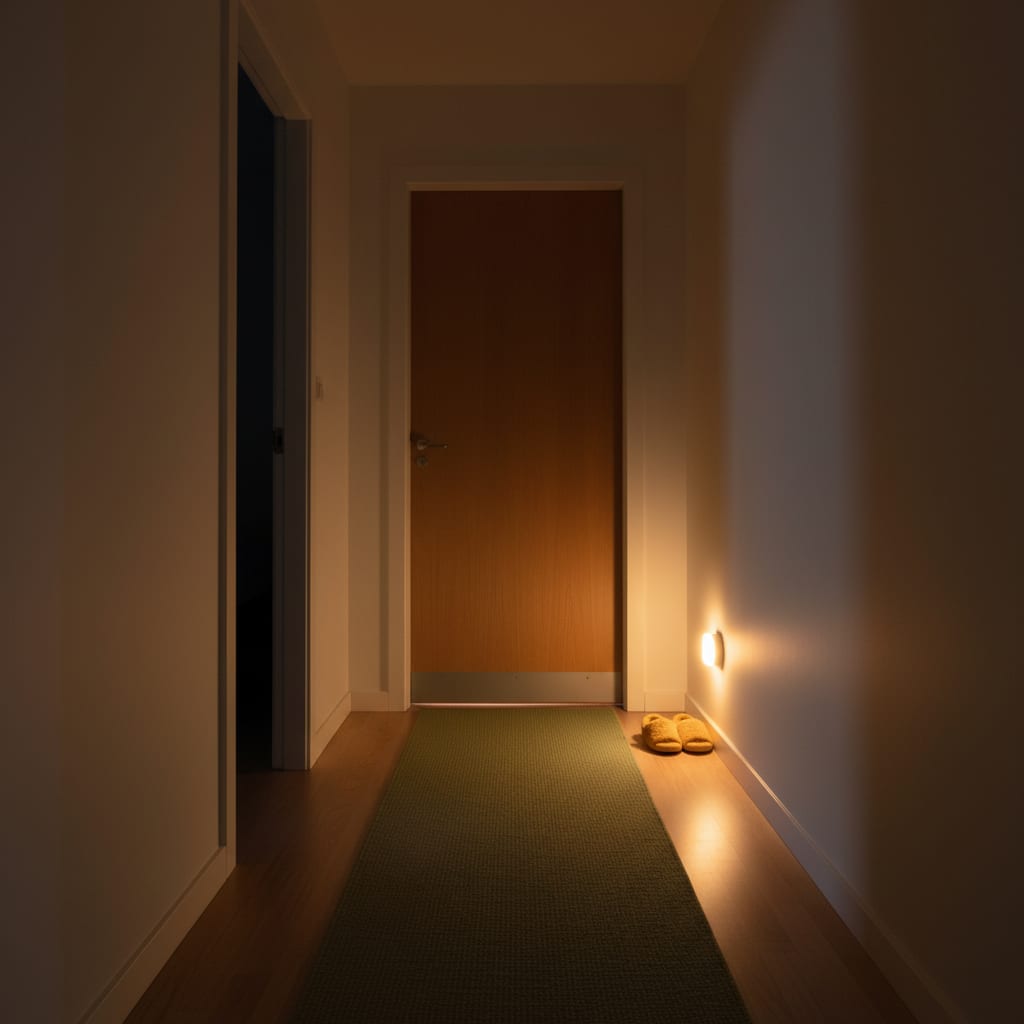
When an older sibling keeps waking the baby, the problem is almost never the child — it’s the corridor. Look at the route between the big kids’ rooms and the bathroom, the stairs and the kitchen, and count how many times a day it passes the baby’s door. Then fix the route itself: move the baby off the traffic path if you can, kill the door noise and the light leak, put a rug down, and give the early-rising kid somewhere to go that doesn’t require walking past a sleeping infant. Hardware and layout hold. Instructions to a seven-year-old to “be quiet in the hallway” do not — not at 6am, not for months.
Map the route before you change anything
Spend one day noticing where people actually walk. In most houses the collisions are boringly predictable, and there are only two windows that matter.
The evening window, roughly 7:30 to 9:30. The baby is down; older kids are still up, still using the bathroom, still coming downstairs for water, still being sent back up. Every one of those trips passes a door.
The morning window, roughly 5:30 to 7:00. One kid — there’s always one — is awake before everyone. They’re bored, they’re hungry, and the only way to the kitchen goes past the baby.
Now look at which door is on that path. In a big house the room assignments were usually made for space reasons, and nobody thought about traffic. If the baby is in the room nearest the bathroom or the top of the stairs, you are asking a lot of a hallway. Swapping the baby with an older kid — putting the baby at the dead end and the big kids on the through-route — is a one-weekend change that solves more than any amount of behavioural coaching. Room-swaps also change who shares with whom, which is worth thinking through against the ages and layouts that make room-sharing work.
The door is doing most of the damage
Assuming the baby’s room stays where it is, the door is your highest-leverage object in the house. Three separate failure modes, all fixable in an afternoon:
The latch click. A closing door’s loudest moment isn’t the swing, it’s the latch. A strip of felt or a rubber bumper on the strike plate turns a click into nothing. Alternatively, teach the crew to close it by turning the handle first — but hardware beats habit, especially at 6am.
The hinge squeak. Oil every hinge in the sleeping wing, not just the baby’s. A squeak from the bathroom door two metres away is the same wake-up.
The gap at the bottom. This is the underrated one, because it leaks both light and sound. A hallway light flicking on is a sudden bright bar across a dark floor, and a sound gap under a door defeats a white-noise machine’s whole job by letting hallway noise arrive unmuffled. An adhesive under-door seal like a Suptikes draft stopper costs less than a takeaway and does more for a nursery than most nursery purchases. A rolled towel works in the meantime.
Then handle the floor. A runner or a couple of rugs along the sleeping-wing hallway takes the crack out of footsteps on hard floors — and stops the specific sound of a nine-year-old who thinks they’re being quiet, which is a heel-first tiptoe that is louder than walking.
Light is the part everyone forgets
Hallway light is what turns a light-sleeping baby into a fully awake baby, and it’s usually an overhead fixture operated by a kid who needs the bathroom.
Put a low, warm, always-on nightlight in the hallway and in the bathroom, positioned low on the wall, and make the overhead light off-limits between bedtime and morning. Kids will use the overhead if it’s the only way to see; give them enough light to navigate and they won’t touch it. Motion-sensor plug-ins work well for this because nobody has to remember anything.
The bathroom door matters as much as the baby’s — a bathroom light blazing through a gap at 6am lights the whole corridor. Close it, seal it, or swap the bulb for something warm and dim.
Give the early riser a destination
Every fix above is about the route. This one is about removing the trip entirely.
The kid who wakes at 5:40 isn’t sneaking past the baby to be difficult. They’re going somewhere — usually the kitchen — because they’re awake and hungry and the alternative is lying in the dark. So give them a legitimate destination that doesn’t require the hallway, or make the trip a single quiet event instead of six noisy ones.
What works in our house:
- A morning kit, left out the night before. A snack, a water bottle, a book or a device with headphones, on the kid’s own dresser. Now the 5:40 trip doesn’t happen at all.
- One trip, downstairs, and stay there. If they do go, the rule is they go once and settle in a downstairs room. The wake-up isn’t the walking; it’s the fourth pass.
- A defined “you may” list. Kids follow concrete permissions far better than prohibitions. “Before 7:00 you may read, draw, or watch something with headphones downstairs” beats “don’t wake the baby” by a mile.
- A job with a reward attached. For a big kid old enough, being the one who handles the early hour quietly is worth putting on the chore roster with something in it for them.
And say the honest thing out loud, once: a baby who sleeps until 7:00 is a baby who isn’t screaming during your cartoon at 4pm. Older kids in a big family are entirely willing to cooperate with a system that benefits them, and entirely unwilling to cooperate with one framed as a sacrifice for the baby.
When it isn’t the hallway at all
Fix the route and the door, and most sibling-wakes-baby problems disappear inside a week. If yours doesn’t, the hallway was a coincidence and something else is going on.
They’re waking at the same early time regardless. A baby who surfaces at 5:15 whether or not anybody walks past is doing something structural, and early waking has its own causes — bedtime too late, too much day sleep, light in the room — none of which a rug fixes.
They wake up frantic rather than just awake. A baby who wakes screaming is usually overtired or mid-regression, and the sibling in the corridor gets blamed for arriving at the wrong second.
They wake from every nap, not just the ones with traffic. That’s a daytime schedule question, and it belongs with the anchor-nap system rather than the hardware store.
They share a room with the sibling doing the waking. Different problem entirely, and the answer is a staggered bedtime for kids sharing a room rather than a quieter hallway.
Underneath all of it: the schedule has to be roughly right or nothing else matters. That’s the piece I stopped eyeballing after baby number three.

FAQ: siblings waking the baby
How do you stop an older child from waking the baby?
Change the route rather than the child. Seal the door gap, quiet the latch and hinges, rug the hallway, add a low nightlight so nobody uses the overhead, and leave a morning kit in the early riser’s room so the 6am kitchen trip stops happening.
Should the baby have the bedroom furthest from everyone?
If you can arrange it, yes. Put the baby at the dead end of the hallway and the older kids on the through-route to the bathroom and stairs. It’s the single highest-value change available, and it costs one weekend of moving furniture.
Will white noise stop siblings waking the baby?
It helps a great deal, but only if the room is sealed. Continuous sound raises the floor so ordinary household noise stops registering as an event — while an open gap under the door lets hallway sound arrive unsoftened, which is why the seal and the machine belong together.
Is it fair to make older kids tiptoe for the baby?
No, and it doesn’t work anyway. A house where four kids are shushed for one baby breeds resentment fast. Fix the hardware, give the early riser a real alternative, and let the rest of the household live at normal volume.