Second Baby Essentials: What You Actually Need Again
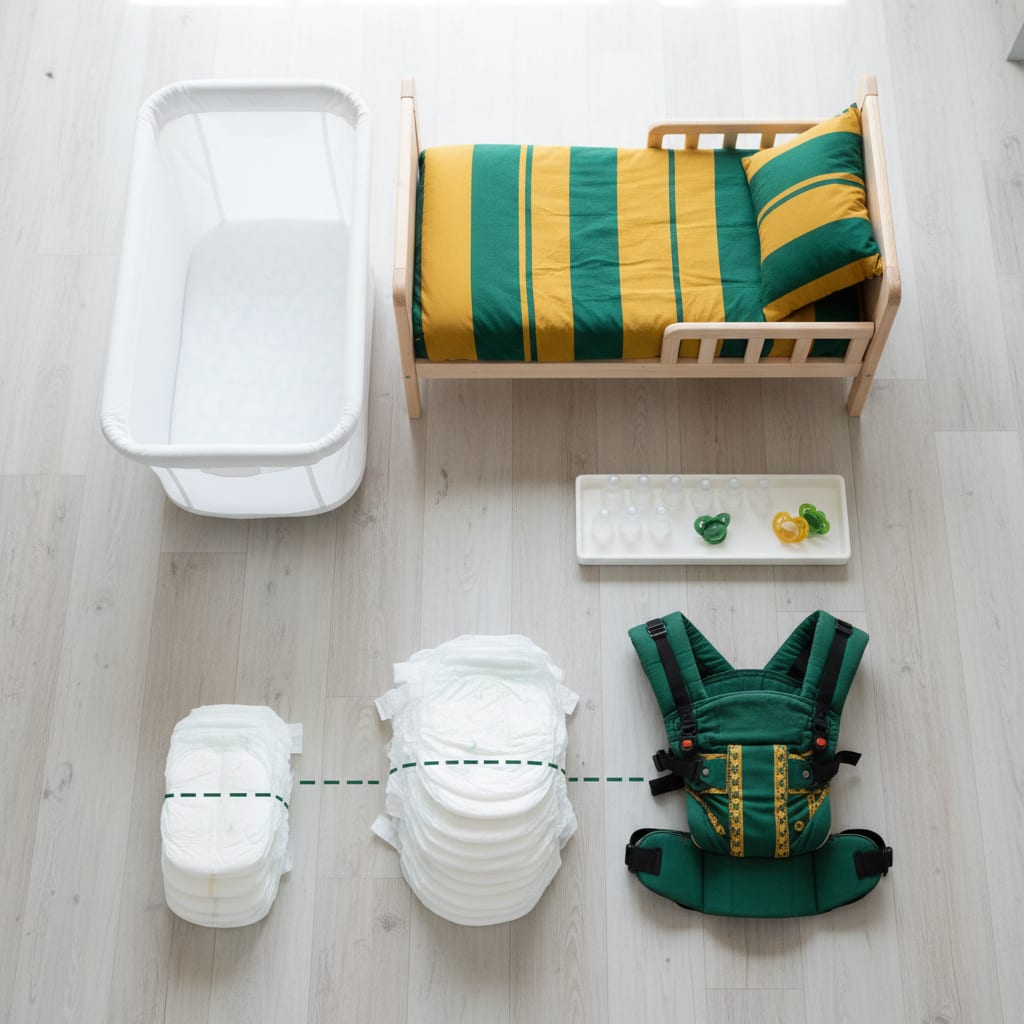
For a second baby you need far less than the registry industry suggests: a place to sleep (the crib is likely still occupied — that’s the real purchase), a double-kid transport plan, fresh bottle nipples and pacifiers, a new car seat if yours has expired or been crashed, and diapers in two sizes. Almost everything else — clothes, carriers, bathtub, the white-noise machine — carries over. The second-baby problem isn’t gear; it’s logistics: you’re adding a newborn to a household that already contains a toddler with opinions. Here’s the honest rebuy list, the carry-over checklist, and the sleep plan.
The actual rebuy list
- A sleep space. The number-one second-baby surprise: the crib has a tenant. If the toddler is within sight of two-and-a-half or three, transition them to a floor or toddler bed a couple of months before the birth — never the same week, or the baby gets blamed for the eviction. Otherwise: bassinet now, crib handoff later.
- Car seat math, not automatically a car seat. Check your existing infant seat’s expiration date (molded into the shell or on a sticker — typically around six to ten years from manufacture). Expired, damaged, or crash-involved: replace. Fine: reuse without guilt, and if three seats now need one bench, run the 3-across combo method before assuming you need a new vehicle.
- A double transport plan. Double stroller, or single stroller plus a soft carrier like the Ergobaby Omni Classic — decided by your toddler’s walking stamina, not by aspiration. Test the plan before the birth; discovering at the pediatrician’s office that you can’t move both children is a classic.
- Small rubber and silicone. Bottle nipples, pacifiers (a Philips Avent Soothie), teethers — anything that degrades. The bottles themselves usually survive; their nipples don’t.
- Diapers in two sizes. Newborn size for the baby, and the toddler’s current size, because a regression-flavored interest in diapers is common when the sibling arrives.
What carries over (which is most of it)
Clothes (washed, sorted by size, in labeled bins — future posts will defend the bin system at length), the bathtub, the carrier, swaddles and sleep sacks by size, the monitor (add a camera if you want two views), the high chair, most toys. Check recalls on anything with buckles or batteries, replace anything with frayed straps, and skip re-buying “newborn activity” gear entirely — second babies famously spend their first year watching the toddler like premium television.
What to actively not buy again: the wipe warmer (you now know), the twelve newborn outfits with buttons up the back, the changing table if a dresser pad worked, and any single-function machine your first baby ignored.
The real second-baby project: sleep while a toddler exists
Nobody tiptoes around a newborn in a house with a toddler — rooms are loud, schedules collide, and bedtime becomes a two-front operation. Three rules carried me through babies two through five:
- Protect the toddler’s sleep first. A well-slept toddler is your margin. Keep their nap and bedtime unchanged through the newborn chaos, even when it’s inconvenient — a toddler sleep-strike plus a newborn is the hardest week in family logistics.
- Run bedtimes staggered, youngest-first. Baby down first (their bedtime drifts earliest naturally), toddler second with one-on-one minutes built in — the same synchronization logic that powers the twin sleep schedule system, just staggered instead of synced. The one-on-one is the toddler’s payment for sharing you all day; skipping it buys you a bedtime insurgency.
- Put the newborn on a written schedule early. With one baby you could improvise. With a baby plus a toddler, the improvisation budget is spent by 9am. This is where I point people at Betteroo — its quiz builds a personalized day-by-day sleep plan for the baby (nap windows, bedtime, adjustments as they grow), which matters double when you’re scheduling around a toddler’s fixed points. The quiz takes about two minutes; the balanced note is that it plans the baby’s sleep, not the toddler’s interruptions of it — rules one and two are still your job.
Room-sharing question — where does the baby eventually land if bedrooms are scarce? The full ages-and-layouts answer is in siblings sharing a room, but the short version: newborn near the parents per safe-sleep guidance, sibling room-share becomes realistic once the baby’s nights consolidate.
The toddler-preparation sidebar
Gear is easy; the incumbent is not. What works: promote, don’t demote (“you’re the big kid” beats “you’re replaced”), let the toddler own one helper job that’s genuinely theirs (diaper delivery is the classic), and expect regression in exactly one area — sleep, potty, or clinginess — as a normal toll, not a crisis. It passes faster when nobody panics about it.
FAQ: second baby essentials
Do I really need a double stroller?
Only if your toddler can’t reliably walk your typical distances — and many can’t at under three. The alternative that works for lots of families: baby in the carrier, toddler in the existing single stroller. Borrow a double for a week before buying one.
Can I reuse my first baby’s car seat?
Yes, if it hasn’t expired, been in a crash, or been recalled — check the shell sticker for the expiration and the manufacturer’s site for recalls. It’s one of the most valuable legitimate hand-me-downs in the house.
How far before the birth should the toddler leave the crib?
A couple of months, minimum, if they’re developmentally ready — the move must not coincide with the baby’s arrival. If the toddler is too young to transition, a bassinet buys months and the crib handoff happens later.
What’s the one thing second-time parents forget?
A newborn schedule that coexists with the toddler’s fixed points (school runs, nap, bedtime). Gear problems cost money; schedule collisions cost sleep — plan the baby’s day around the toddler’s anchors from week one.