What to Buy in Bulk (And What Goes Stale First)
Buy in bulk when three things are true: you already use the item weekly, it stores longer than it takes your household to eat it, and the per-unit price actually beats your regular store — which you only know if you’ve checked. That filter sounds obvious and eliminates about half of what leaves warehouse clubs in oversized carts. Bulk buying saves big families real money on a core of twenty-ish staples, and quietly loses money on everything bought because the package was impressive. Here’s the sorted list from a seven-person household that runs on it.
The rule: bulk is a storage problem, not a shopping problem
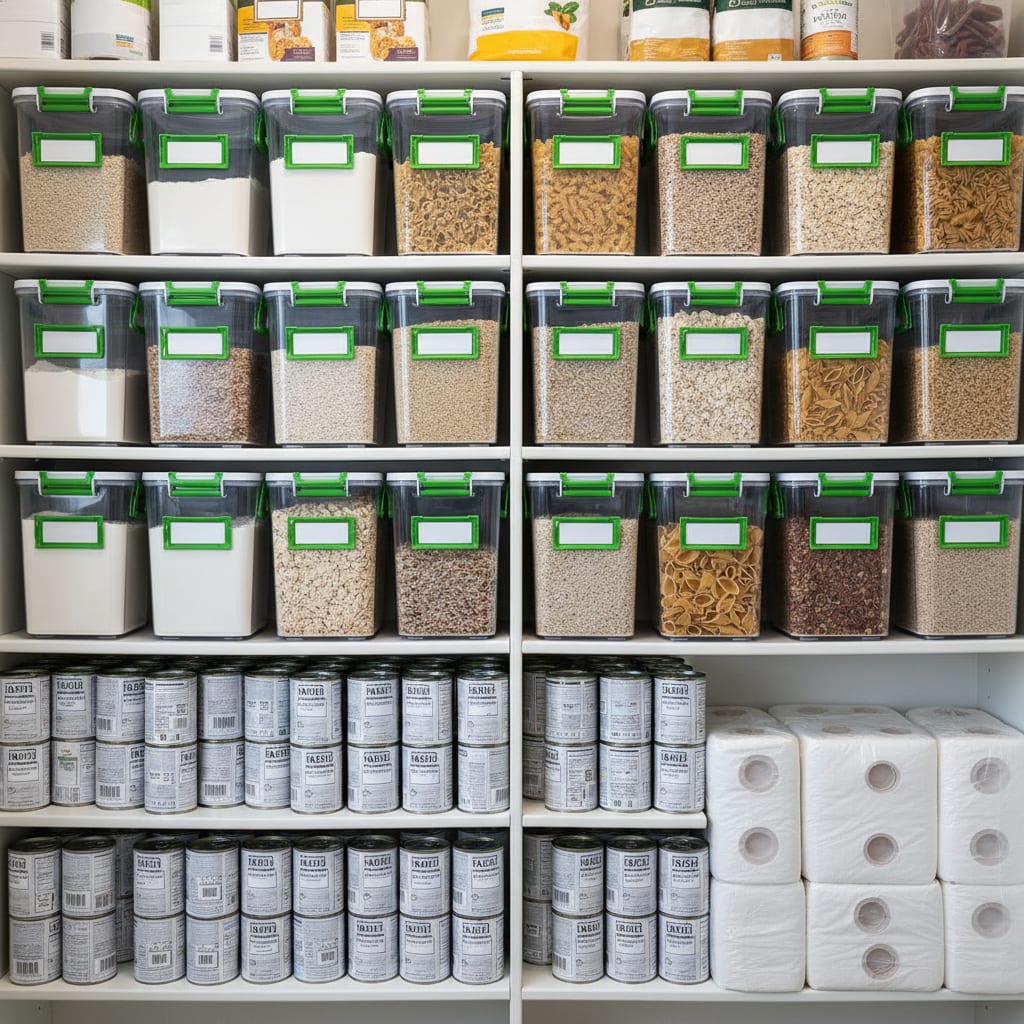
Before the trip, do the storage math. A gallon of anything needs fridge real estate; 25 pounds of flour needs a sealed bin unless you’re curious about pantry moths (don’t be — one infestation costs more than a year of flour savings); a flat of berries needs to be eaten at a pace even my crew can’t always hit. If you can’t name where it will live and when it will be gone, it’s not a deal — it’s future waste at a discount.
And always compare per-unit prices, not package prices — that’s what the price book from our grocery budget system is for. Warehouse prices usually win on staples, but not always, and “usually” is doing less work every year.
Always worth it (the big-family core)
- Rice, oats, and dried pasta — shelf-stable for months to years in sealed containers, and the backbone of every cheap dinner that scales
- Dried and canned beans — the cheapest protein in the building
- Flour and sugar — if you bake weekly; decant into airtight bins like the OXO Good Grips POP container
- Cooking oil — a big household burns through it before quality drifts
- Peanut butter — a food group for children
- Cheese in blocks — freezes fine shredded; pre-shredded costs more per pound for the privilege of anti-caking starch
- Butter — freezes for months; buy deep on sale
- Frozen vegetables — no spoilage clock; nutritionally solid
- Meat, when the price is right — portioned into meal-size bags the day you buy it, then straight to the freezer for batch-day cooking
- Paper goods, laundry detergent, dish soap, toothpaste — no expiration anxiety, and per-unit wins are consistent
- Diapers and wipes in the size AHEAD — buying deep in the current size is how you end up donating half a box
Worth it with discipline
- Eggs — a big family clears the huge flat; a smaller one may not
- Tortillas — freeze well, but only if you actually freeze them the same day
- Coffee — buy whole bean; ground fades faster
- Snack crackers and cereal — per-unit fine, but an open mega-box evaporates at the same speed as a small one; ration or it’s a wash
- Yogurt in big tubs — cheaper per ounce than cups, if your crew accepts scooped yogurt as legitimate
Goes stale, rancid, or wasted first (buy small)
- Whole-grain flours, nuts, and seeds — natural oils go rancid at room temperature within months; fridge or freezer only, or buy small
- Brown rice — same oil problem; it keeps notably shorter than white
- Spices in giant jars — flavor fades long before the jar empties; the giant jar is a museum piece by year two
- Fresh produce flats — unless there’s a same-day plan (freeze the bananas, sauce the tomatoes), a flat is compost with a receipt
- Condiments in restaurant sizes — open mayo and dressing live on fridge time, not pantry time
- Anything “new to us” — never bulk-buy an untested product; the crew’s verdict on a mystery granola arrives after you own 40 servings of it
The bulk audit: twice a year, ten minutes
Every six months, walk the pantry and freezer and ask one question per bulk item: did we finish the last one before quality dropped? Yes — keep it on the list. No — strike it without sentiment. The bulk list should shrink to the boring, undefeated core; boring is what saving money looks like up close.
FAQ: buying in bulk for a big family
Is a warehouse club membership worth it for a large family?
If your storage can hold the core list and you can walk past the seasonal aisles, the staples savings typically cover a basic membership for a big household. Run your own price book against the fee — if the core list doesn’t beat your regular store by more than the membership, skip it without guilt.
How long does bulk flour actually keep?
White all-purpose flour in a sealed, airtight container keeps for several months to about a year at room temperature. Whole wheat is the trap — its oils can go rancid in a few months, so freeze it or buy it small.
What’s the biggest bulk-buying mistake?
Buying for the family you wish you were. The 10-pound bag of quinoa for a household that eats it quarterly, the produce flat for a week you’re barely home. Bulk rewards your actual, boring, repeating habits — and punishes aspiration.
Should I bulk-buy for the freezer if I only have a fridge-freezer?
Yes, but ruthlessly: flat-frozen and vertical, and only meat, butter, cheese, and vegetables you demonstrably use weekly. A packed freezer you can’t inventory becomes a slow-motion waste bin with a door.