Grocery Budget for a Family of 6: Real Numbers
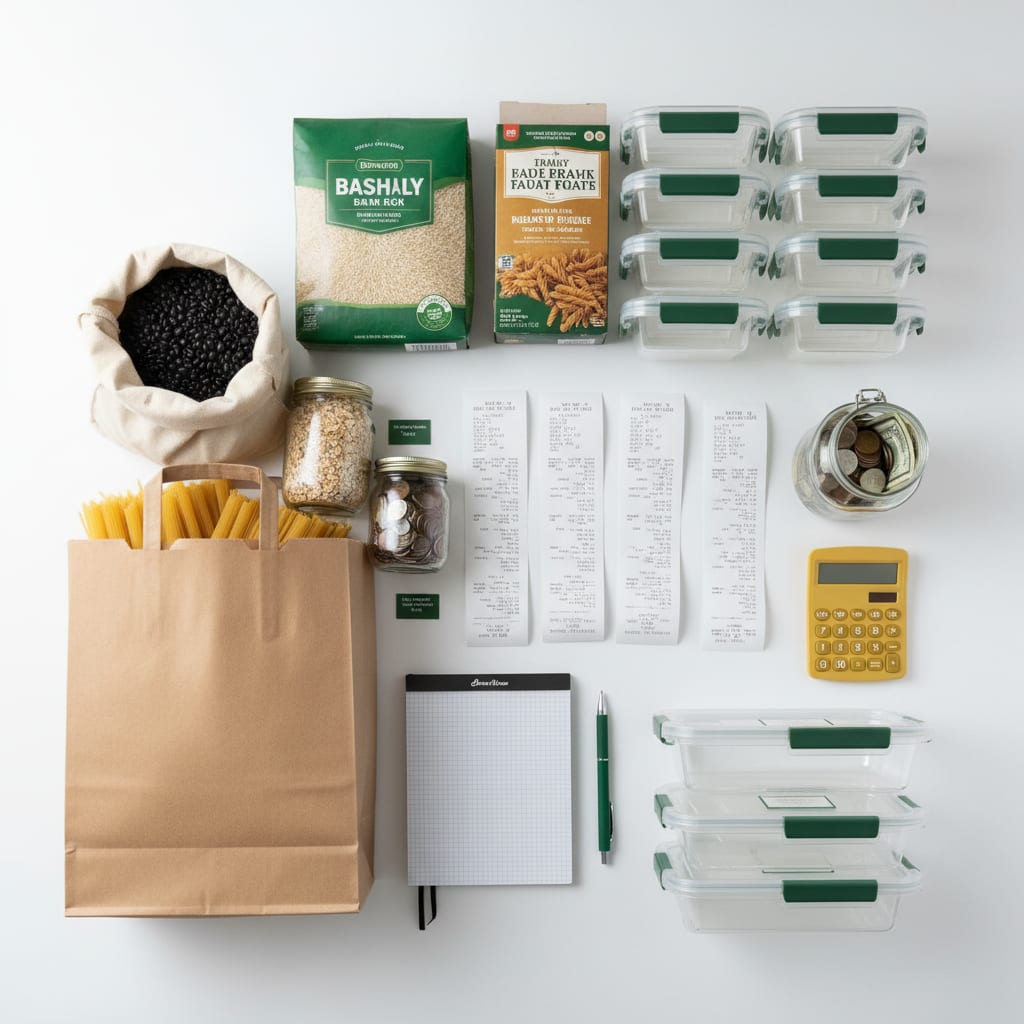
There is no single “right” grocery number for a family of six — real households land anywhere from several hundred dollars a month to well over a thousand, depending on region, kid ages and how much cooking happens from scratch. What works is not chasing someone else’s number but running a system: track your own baseline for two weeks, cut the three biggest leaks (waste, repeat trips, convenience formats), and rebuild around a rotation of cheap scalable dinners. This post is that system, with the honest math and none of the fantasy budgets.
Why every “family of 6 budget” article is lying a little
Published numbers swing wildly because the inputs do. Two toddlers and two teenagers are different species at the table; a rural Costco family and an urban corner-store family shop different economies; food prices genuinely differ by region and year.
The USDA’s own figures confirm the spread rather than closing it. Take the four people in its published reference family — a male and a female aged 20–50 and two children aged 6–8 and 9–11. On the Thrifty Food Plan for July 2026 those four cost $236.50 a week, $1,024.90 a month; the same four people priced off the Liberal plan in the same month come to about $1,683 a month. Identical household, identical month, roughly $658 apart. So treat any specific target, including mine, as a reference point, not a report card. (Both reports loaded 2026-09-19; USDA reissues them monthly, so re-pull rather than quoting these figures next year.)
The useful move is relative: whatever you spend now, a system reliably cuts a meaningful slice of it — going from no-plan to full-plan drops it enough to notice in the first month. Here’s the system.
The arithmetic for 5, 7 and 8 — same method, different multiplier
Almost every “family of six” article treats six as a unit. USDA doesn’t, and its method scales to whatever your roster actually is. The reports publish a cost per person by age and sex, then say this, verbatim:
The costs given are for individuals in 4-person households. For individuals in other size households, the following adjustments are suggested: 1-person—add 20 percent; 2-person—add 10 percent; 3-person—add 5 percent; 4-person—no adjustment; 5- or 6-person—subtract 5 percent; 7- (or more) person—subtract 10 percent.
So: add a real number for each actual person at your table, then apply one multiplier for household size. Two minutes with the current month’s report beats any article’s headline figure, including this one’s.
Worked on the Low-Cost plan for July 2026, adding one person at a time — two adults aged 19–50, then children aged 4–5, 6–8 and 9–11, then a 2–3-year-old, a 12–13-year-old, and a 14–18-year-old boy:
| Household | People added | Sum of individuals | Size adjustment | Monthly total |
|---|---|---|---|---|
| 5 | 2 adults + 3 kids (4–5, 6–8, 9–11) | $1,307.20 | −5% | $1,242 |
| 6 | + a 2–3-year-old | $1,481.00 | −5% | $1,407 |
| 7 | + a 12–13-year-old | $1,750.60 | −10% | $1,576 |
| 8 | + a 14–18-year-old boy | $2,072.70 | −10% | $1,865 |
Two things fall out of that table that no single headline number can tell you.
The seventh person is cheaper than the sixth. A 12–13-year-old puts $269.60 of individual cost into the sum, but the household total rises only about $169 — because crossing from six to seven drops the multiplier from −5% to −10% and re-prices everyone. That is USDA saying what every big family already knows: per-head cost falls as the household grows, because the pot, the pack size and the batch all get more efficient.
Ages move the number more than headcount does. Swap the 2–3-year-old for the teenage boy and it’s one person either way, but $148.30 of individual cost. When the bill jumps and nothing about your shopping changed, check the birthdays before you check your discipline — the appetite-unit math for teenagers is the same idea at full size.
Use these as a scale, not a target: national averages for all-meals-prepared-at-home, republished monthly, and your region and rotation will move them.
Week one and two: find your real baseline
Don’t change anything yet. Keep every receipt — groceries, convenience runs, the gas-station milk, the 5:40pm pizza surrender. Total it, then split it three ways:
- Planned food — bought on a list, eaten as intended
- Leak food — repeat trips, impulse adds, duplicate condiments
- Surrender food — takeout and convenience formats that exist because dinner wasn’t planned
Most families have never seen column three isolated, and it’s usually the number that ends the argument about whether planning is worth it.
The three leaks, in cutting order
- Waste. A big family throws away food by the crisper-drawerful when there’s no plan to use it. The fix is planning backward from what you own — the audit step of the 30-minute weekly meal planning system exists for exactly this.
- Repeat trips. Every extra store run adds unplanned items; the industry counts on it. One list, one weekly trip, and a “we’re out of it until Sunday” house policy. The first week of enforcing that policy is loud. The second is quiet.
- Convenience formats. Shredded cheese, individual snack bags, pre-formed patties — you’re paying labor costs on food. At two plates a night, fine. At seven, you’re tipping the factory hundreds a year. Buy the block, the big bag, the bulk pack — with the storage caveats in what to buy in bulk.
The price book: the unglamorous tool that does the work
A price book is a note on your phone listing the per-unit price of your twenty most-bought items at the stores you use. It takes two shopping trips to build and it converts you permanently from “is this a good deal?” to knowing. Per-unit price (per ounce, per pound) is the only honest number on a shelf tag — package sizes are engineered to blur comparisons, and “family size” labels are marketing, not math.
The price book is also what makes sale-and-stock work: when a rotation staple hits a genuinely good price, you buy deep and let the pantry carry you. Without the book, “stock-up prices” are vibes.
Rebuild: per-plate thinking
Run dinners from a rotation of scalable cheap meals — the 40 dinners that scale are built for this — and start eyeballing cost per plate rather than cost per cart. A cart total for six people is scary and uninformative; per-plate numbers tell you which dinners are quietly expensive and which are carrying the team. When a dinner’s per-plate cost is roughly double the rotation average, it becomes a treat-night dish, not a Tuesday dish. That single reclassification is worth real money over a year.
Two structural notes for six-plus households: breakfast and lunch deserve their own boring rotations (five cheap breakfasts on repeat beats cereal-aisle roulette), and snacks need rationing — an open-access snack cabinet is a budget line with no ceiling.
FAQ: family-of-6 grocery budgets
What should a family of 6 spend on groceries per month?
There is no single right answer — the tier spread on the same household runs to hundreds of dollars a month. As a scale: two adults and four children aged 2–11 price out around $1,400 a month on USDA’s Low-Cost plan for July 2026, and several hundred either side of that on the thrifty and liberal tiers. Benchmark against your own two-week baseline, then cut the leaks rather than chasing a stranger’s number.
How much does a family of 7 or 8 spend on groceries?
Build it from people, not from a headline. Sum the current month’s USDA per-person figure for each person at your table, then subtract 5% for a 5- or 6-person household or 10% for 7 or more. On the Low-Cost plan for July 2026 that lands a seven-person household around $1,576 a month and an eight-person one around $1,865 — with teenagers moving it more than an extra body does.
What’s the single fastest cut?
Killing repeat trips. It requires no cooking changes, no coupon labor, and no family buy-in beyond tolerating “we’re out until Sunday” — and it typically shrinks the leak column immediately.
Are warehouse clubs worth it for a family of six?
Usually, for the twenty-staple core — flour, oats, rice, cheese, proteins on rotation — if you have the storage and the discipline to skip the fun aisles. Run your price book against the membership fee before deciding.
How do I budget for teenagers?
Recount your “appetite units” every few months and let the budget grow honestly rather than being surprised by it. A teen boy can genuinely out-eat an adult; pretending otherwise just relabels grocery money as “mystery overspend.”