Sheet Pan Dinners That Feed Six From Two Pans
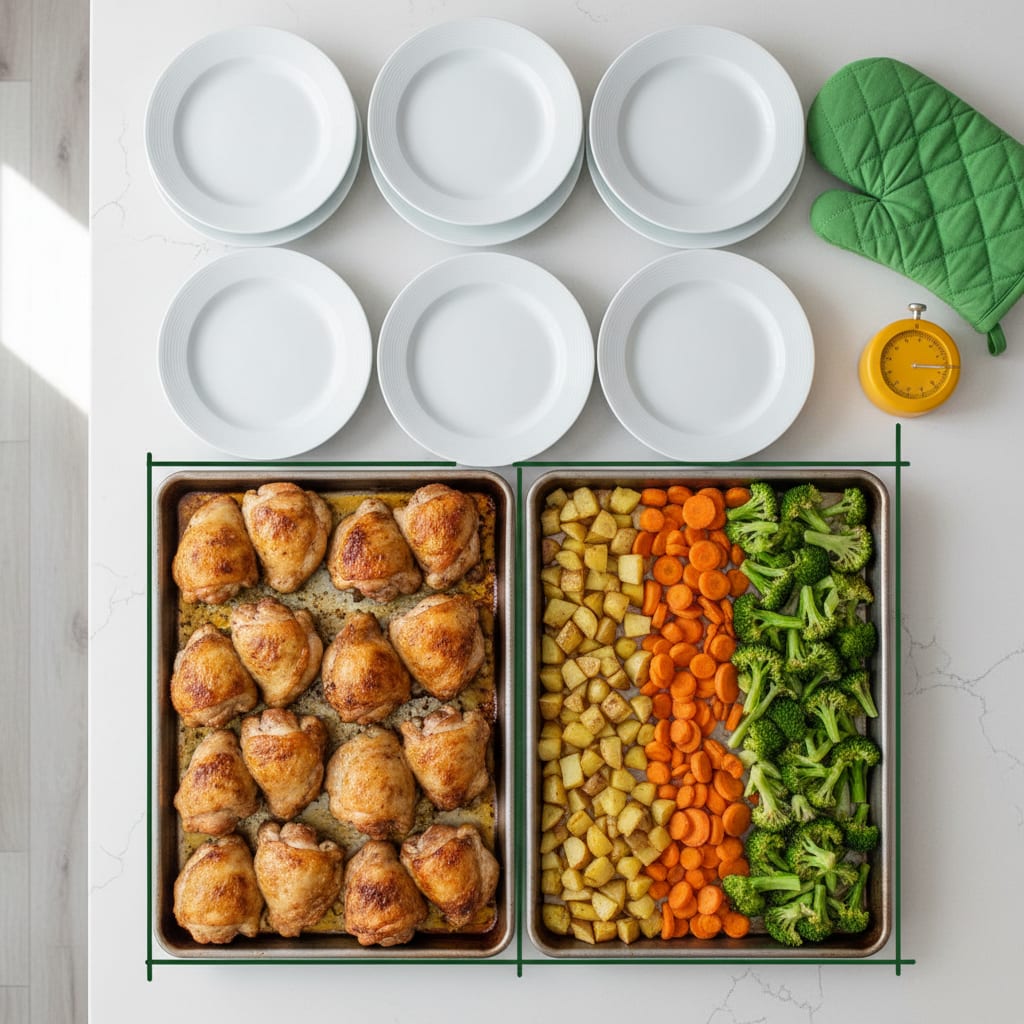
Two half-sheet pans will feed six people if you run them like stations, not like one recipe spread across two pans: pan one carries the protein, pan two carries the vegetables and starch, they go into the oven staggered so everything finishes together, and the pans come out zoned so plates get built assembly-line style. That’s the entire system. The reason “sheet pan dinner” recipes fail big families is that they’re written for four plates on one pan — the food crowds, crowded food steams, and steamed dinner is how you lose the crew.
The real estate math
A half-sheet pan (the standard 13×18) roast-fits about four portions of protein or one crowded family’s worth of vegetables — roughly what fits in a single layer with visible metal between pieces. That single-layer rule is non-negotiable: browning is a dry-surface event, and pieces that touch trade browning for steam.
So the headcount math is simple. Four plates: one pan, the classic recipe works. Five or six plates: two pans, and now you’re running a system. Seven or more: two pans plus a pot of rice or a tray of rolls doing the stretching — the same carb logic that anchors the whole cheap dinners rotation.
Most ovens take two half-sheets side by side on one rack, or one per rack. Two racks means swapping and rotating halfway — annoying but automatic once it’s habit. If your oven runs hot at the top, protein goes low, vegetables go high, because overdone broccoli is dinner and overdone chicken is a complaint.
Pan one, pan two
Pan one is protein. One kind, cut even, spread flat. Chicken thighs, sausages, meatballs, pork tenderloin cut into medallions — things that cook in a predictable window. Even sizing matters more than seasoning: a pan of same-size pieces finishes together, and “finishes together” is the whole promise of this method.
Pan two is everything else, in zones. Here’s the move that makes two pans feed six: don’t toss the vegetables together. Load the pan in stripes — potatoes on the left third, carrots in the middle, broccoli on the right. Three zones, one pan, and every kid can be served from the zone they’ll actually eat. This is also the quiet picky-eater play: the one-dinner system works a lot better when the pan itself offers a choice without anyone cooking twice.
Zones also solve timing inside the pan. Dense things (potatoes, carrots) need a head start on quick things (broccoli, zucchini, peppers) — so pan two goes in first with the dense zones loaded, and the quick zone gets added when the protein pan goes in.
The stagger
The clock, in order:
- Oven to 425. High heat is the sheet pan’s whole personality — it’s what turns “baked” into “roasted.”
- Pan two in, dense zones only. Potatoes and carrots start their 35–40 minutes.
- Fifteen minutes later: pan one in, and the quick zone joins pan two. Chicken thighs and broccoli both live happily in the 20–25 minute range at this temperature.
- Halfway from there, rotate and swap racks. One motion, ovens are uneven, don’t skip it.
- Everything out together. Two pans, one finish time, six plates built in a line.
Total elapsed: about 40 minutes, maybe ten of which is hands-on. The stagger is the skill — after two runs it stops being a timeline and becomes a rhythm, the same way a line cook fires the steak before the fish without looking at a ticket.
Making it a slot, not a recipe
Like every system on this site, sheet-pan night earns its keep as a standing slot in the weekly plan — mine is the night between practice pickups, because the hands-on time is short and the oven does its work unattended. Rotate what’s on the pans weekly; never rotate the method. Protein pan, zoned pan, stagger, done.
The other slot it fills: sheet-pan night is the natural pressure-release the day before a batch cooking day, when the fridge needs emptying — odd half-bags of vegetables become zones, and the pan absorbs whatever the crisper was about to waste.
Two pieces of gear advice, hedged honestly: buy real half-sheet pans (a two-pack of Nordic Ware Naturals half sheets covers the system; the flimsy dark cookie sheets warp and burn), and line with parchment on cheese-or-glaze nights only — bare metal browns better the rest of the time. That’s the entire equipment list. No gadget required; the oven was the gadget all along.
FAQ: two-pan dinners for a full table
Can two sheet pans really feed a family of seven?
Yes, with the carb assist: two pans cover protein and vegetables for six to seven, and a pot of rice, couscous, or a tray of rolls closes the gap. Past eight plates you’re into three pans or a second oven cycle, and at that point the crockpot is usually the better machine.
Why does everything come out steamed instead of roasted?
Crowding. Once pieces touch, the pan traps moisture and the oven steams instead of browns. The fix is always the same: spread onto a second pan. Two half-full pans beat one crowded one every single time.
What if my oven only fits one pan per rack?
Use both racks and commit to the halfway rotate-and-swap. Put the protein on the lower rack if your oven runs hot on top. The results are indistinguishable from side-by-side — the swap is the price.
Do sheet pan dinners work for make-ahead?
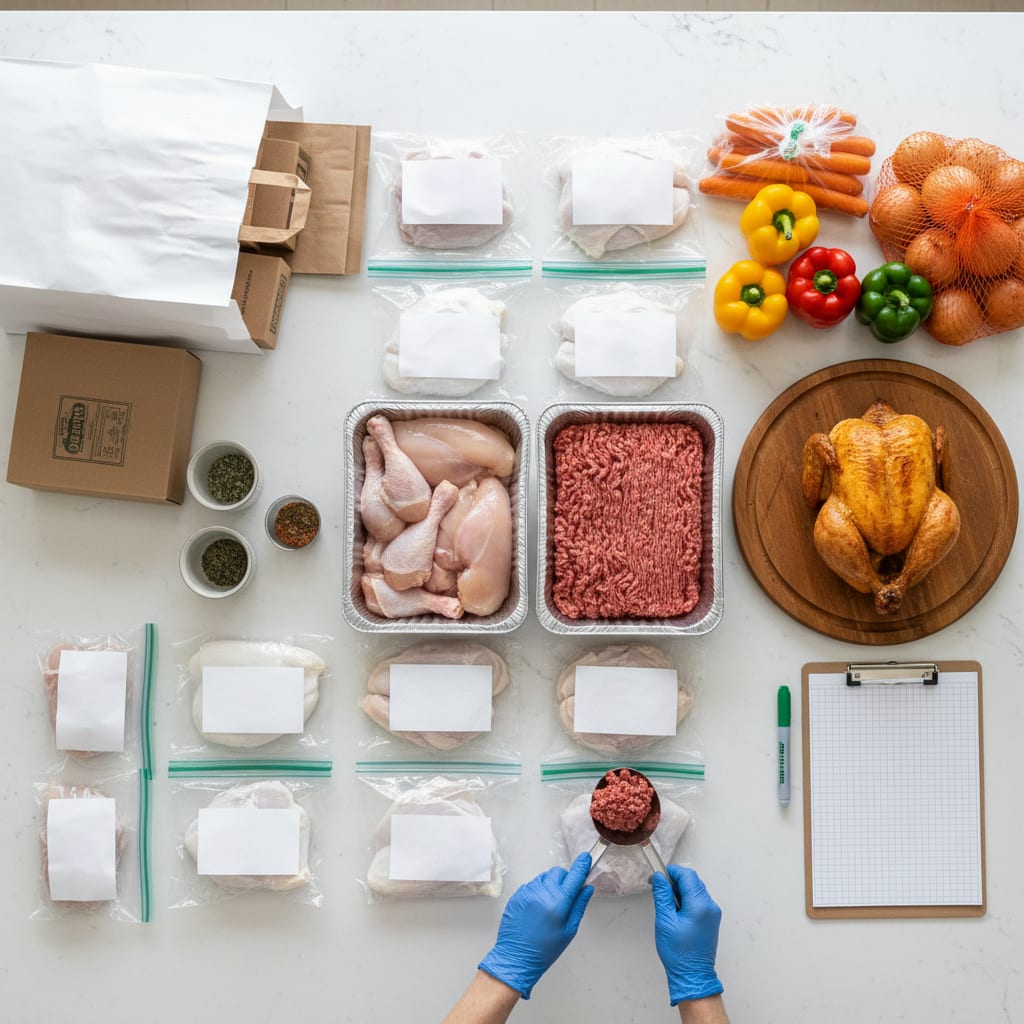
The prep does; the roasting doesn’t. Chop vegetables and portion protein into labeled bags the night before, but roast fresh — reheated roasted vegetables lose the exact texture that made them worth roasting. Fifteen minutes of night-before prep turns the whole dinner into a 40-minute unattended run.