Protecting a Baby's Nap in a Big, Loud House
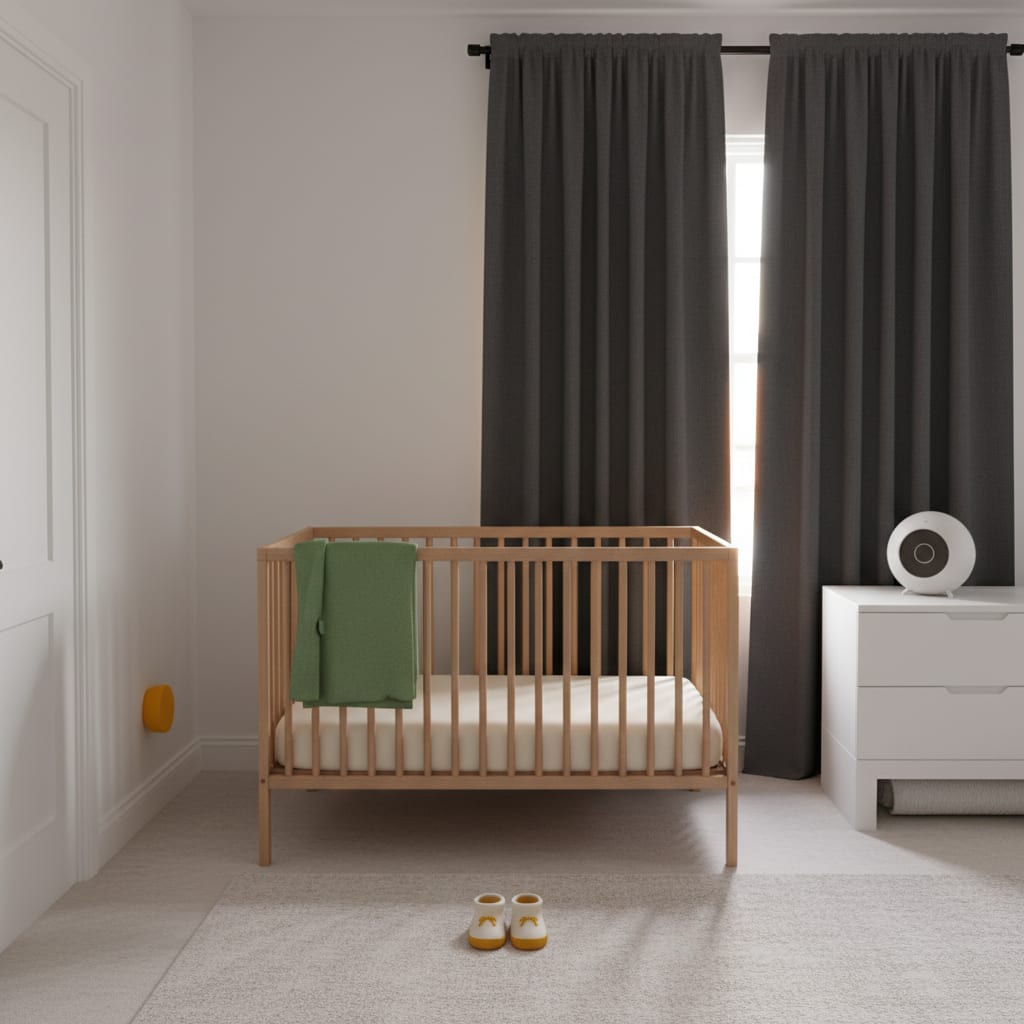
You protect a baby’s nap in a big family by choosing one nap to defend and letting the others happen wherever the day takes you. Pick the longest, most reliable nap — usually the midday one — build the household schedule around it as a fixed appointment, raise the noise floor with continuous sound instead of trying to silence four other kids, and give the rest of the crew a defined, quiet-ish job for that hour. Everything else is negotiable. A baby in a house of seven will never get the sacred hush a first baby gets, and doesn’t need it — what a baby needs is predictability, and predictability is something a big family can actually manufacture.
One nap, five people: pick the anchor
With one baby, you protect every nap. With a baby plus four older kids, that’s not a plan, it’s a hostage situation — you’d be housebound from 8am to 5pm and three kids would miss everything they’re signed up for.
So you pick one. The anchor nap is non-negotiable: nobody schedules over it, and the whole family’s day flexes around it the way it already flexes around school pickup. For most babies past the newborn fog, the midday nap is the longest and most restorative, which makes it the obvious candidate. Everything else — the morning nap, the late-afternoon catnap — happens in the car, the stroller, the carrier, on the way to a sibling’s practice. Those naps are real sleep; they’re just not sleep you’re going to defend.
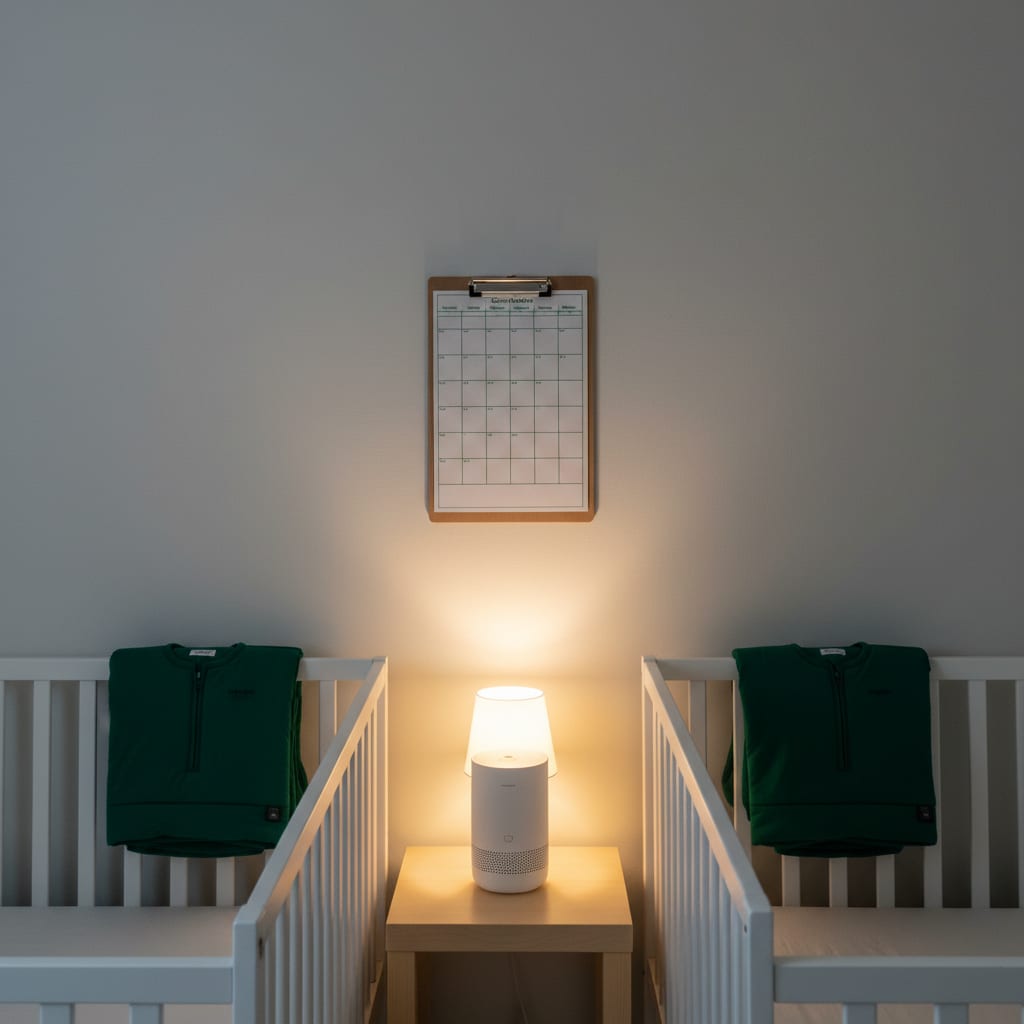
The reframe that matters: an anchor nap is a family fixture, not a baby-care task. Once it’s on the household calendar in ink, the dentist appointment goes somewhere else and the grocery run moves. Nap protection stops being about the baby’s temperament and becomes a scheduling discipline — which, in a big house, you already have.
Raise the noise floor, don’t chase silence
Every family with a new baby and older kids tries the same doomed strategy first: shushing the house. It cannot work. You cannot make four kids quiet for two hours a day, and every attempt costs you goodwill with the kids who were here first.
The fix is acoustic, not behavioral. Continuous sound in the baby’s room raises the floor so household noise stops registering as an event. A door slam over silence is a spike; a door slam over steady sound is just texture. A mechanical white-noise machine like the Yogasleep Dohm does this well because the sound is genuinely continuous rather than a short loop — loops have a seam, and babies notice seams. Run it at a moderate volume, placed across the room from the crib rather than beside the baby’s head, for the whole nap.
Then fix the two or three noises that actually break naps, and ignore the rest:
- The doorbell. Disconnect it or tape a note over it. It’s the loudest, most sudden, most unnecessary sound in any house.
- The dog. Ours goes out or into a back room for the anchor hour, because a bark is a spike and it’s the one noise a machine can’t smooth over.
- The hallway outside the door. A rolled towel at the base of the door does more than any amount of shushing, and a room-share stagger — the same mechanics behind our staggered bedtime system — works for naps too if the baby shares a room.
Notice what’s not on the list: normal talking, the TV at a sane volume, kids playing, the dishwasher. A baby who only sleeps in silence has been trained to need it, and no big family can supply that.
Give the crew a job during the anchor hour
“Be quiet” is not an instruction a six-year-old can execute for 90 minutes. “Quiet hour is LEGO in the basement, and there’s a snack out” is. The difference between those two sentences is the difference between a protected nap and an hour of enforcement.
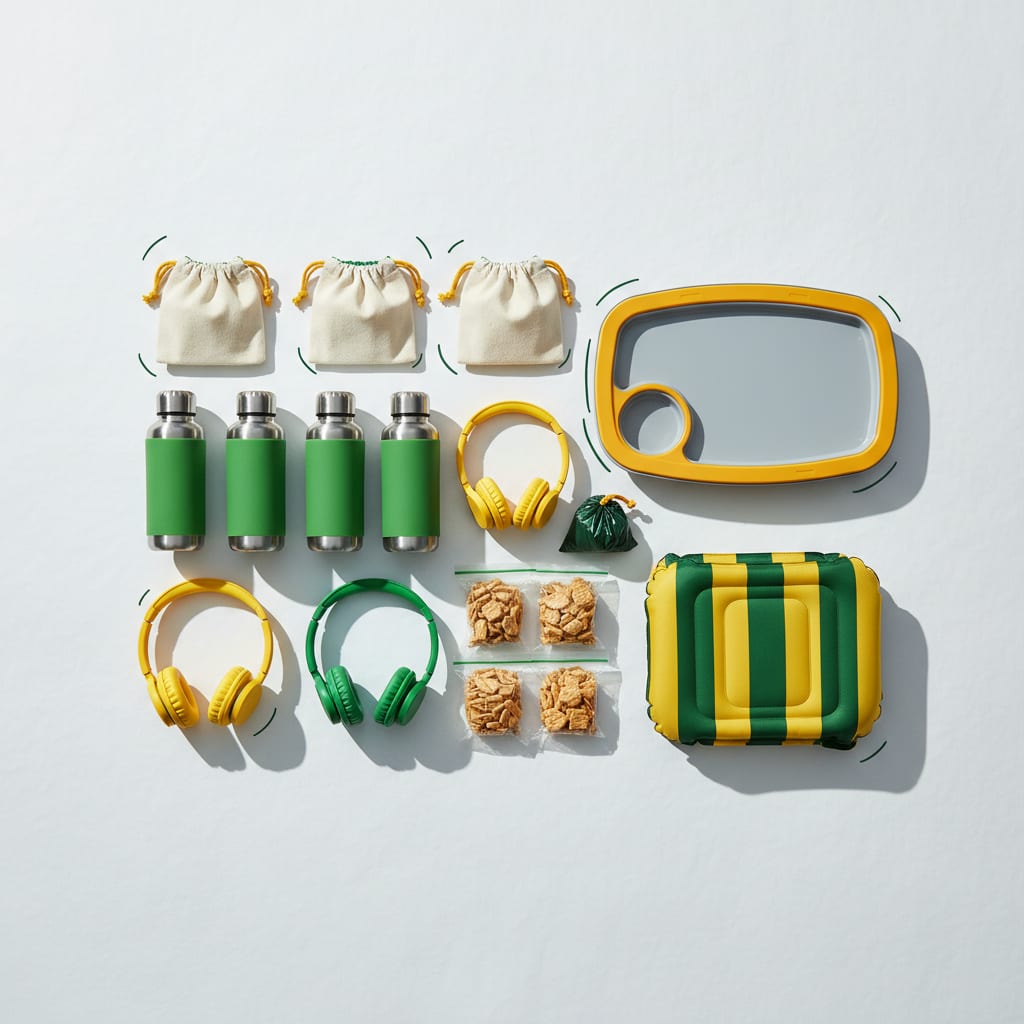
Ours runs as a fixed block with a fixed menu — everyone gets one of: reading in a bedroom, drawing or building at the kitchen table, an audiobook with headphones, or screen time if I’ve spent that currency. Snack goes out before the baby goes down, because a kid who needs something from the kitchen mid-nap will find you no matter where you are. Older kids get homework or a job from the chore roster — the anchor hour is the most productive hour in our house.
Sell it to the kids honestly, once: a baby who naps is a baby who isn’t screaming through dinner. Big kids are extremely responsive to arguments about their own quality of life, and dramatically unresponsive to arguments about the baby’s.
Getting the nap timing right in the first place
Here’s the thing about protecting naps in a busy house: all of the above only pays off if the baby is actually tired at the hour you’ve chosen. A protected nap at the wrong time is 45 minutes of a baby standing up in a crib while four other kids tiptoe for nothing — and then you conclude that nap protection doesn’t work, when what didn’t work was the schedule.
That’s the piece I stopped guessing at somewhere around baby number four. Betteroo builds a personalized nap-and-bedtime schedule from a short quiz and keeps adjusting it as the baby grows, for roughly $20 a month — which mostly means I get told what today’s wake windows are instead of doing that arithmetic at 6am with a toddler on my hip. It won’t quiet your house and it won’t make a four-month-old sleep like a toddler. What it does is put the anchor nap at an hour the baby will actually take, which is the load-bearing assumption under this entire system.

When the anchor nap stops working
It’s suddenly 30 minutes. Short naps in a loud house get blamed on the house — but short naps have causes worth ruling out before you reorganize your family around soundproofing. Check the wake window before you check the volume.
The naps are consolidating. Babies drop naps on a rough but recognizable timeline, and a nap that’s been fought for two weeks straight is often a nap transition rather than a discipline problem. When it happens, re-pick the anchor — the surviving nap becomes the new fixture, and the family calendar moves with it.
A sibling has a crisis at 1:15pm. They will. The anchor nap survives interruptions; it doesn’t survive your absence — go handle the crisis, come back, resettle. One broken nap is a bad Tuesday, not a broken system.
Two babies. If you’re running twins, the whole calculus changes and the answer is synchronization rather than protection — that’s the twin sleep schedule playbook, and it’s a different sport.
FAQ: naps in a big family
Do you have to keep the house quiet during a baby’s nap?
No — and trying is counterproductive with older kids. Run continuous white noise in the baby’s room, eliminate the two or three genuinely startling sounds like the doorbell and the dog, and let household life carry on at normal volume.
How do you nap a baby when older kids need driving around?
Defend one anchor nap at home and let the rest happen in the car seat, stroller or carrier. Car naps are real sleep. Trying to protect three naps a day with school-age siblings means either the baby loses sleep or the older kids lose their activities.
What should older siblings do during nap time?
Give them a defined block with a short menu — reading, building, drawing, an audiobook with headphones — plus a snack put out before the baby goes down. A concrete alternative activity works; an instruction to “be quiet” for an hour does not.
Will a baby raised in a loud house sleep worse?
Generally the opposite: babies who nap through ordinary household noise from the start tend to be less fragile about it later. The bigger risk in a big family is an inconsistent schedule, not volume.