Sleep After a Move: The First Week in a New Bedroom
Expect three to seven ragged nights after a move, not a permanent regression. The fix is order of operations: bedrooms get unpacked before anything else, every sleep cue travels intact (same sheets, same sound, same darkness), room assignments stay as they were for at least two weeks, and one adult owns nights while the other owns boxes. Kids don’t sleep badly because the house is new — they sleep badly because every signal they use to fall asleep changed on the same day.
We’ve moved twice with the full crew. Both times the difference between a bad week and a bad month was what got done between 4pm and 8pm on moving day.
Why night one goes badly and night four usually doesn’t
A move replaces every cue at once — the light at 7pm, the background sound, the smell of the bedding, which direction the door is. Adults re-map that in a night; a four-year-old needs several. Add the missed nap and dinner at 8:15, and night one is the week’s worst for reasons that are over by night two. Judge nothing on it.
Unpack the bedrooms first — before the kitchen
The whole post in one rule: beds assembled and made before a single kitchen box is opened. The moving-day sequence that works at headcount:
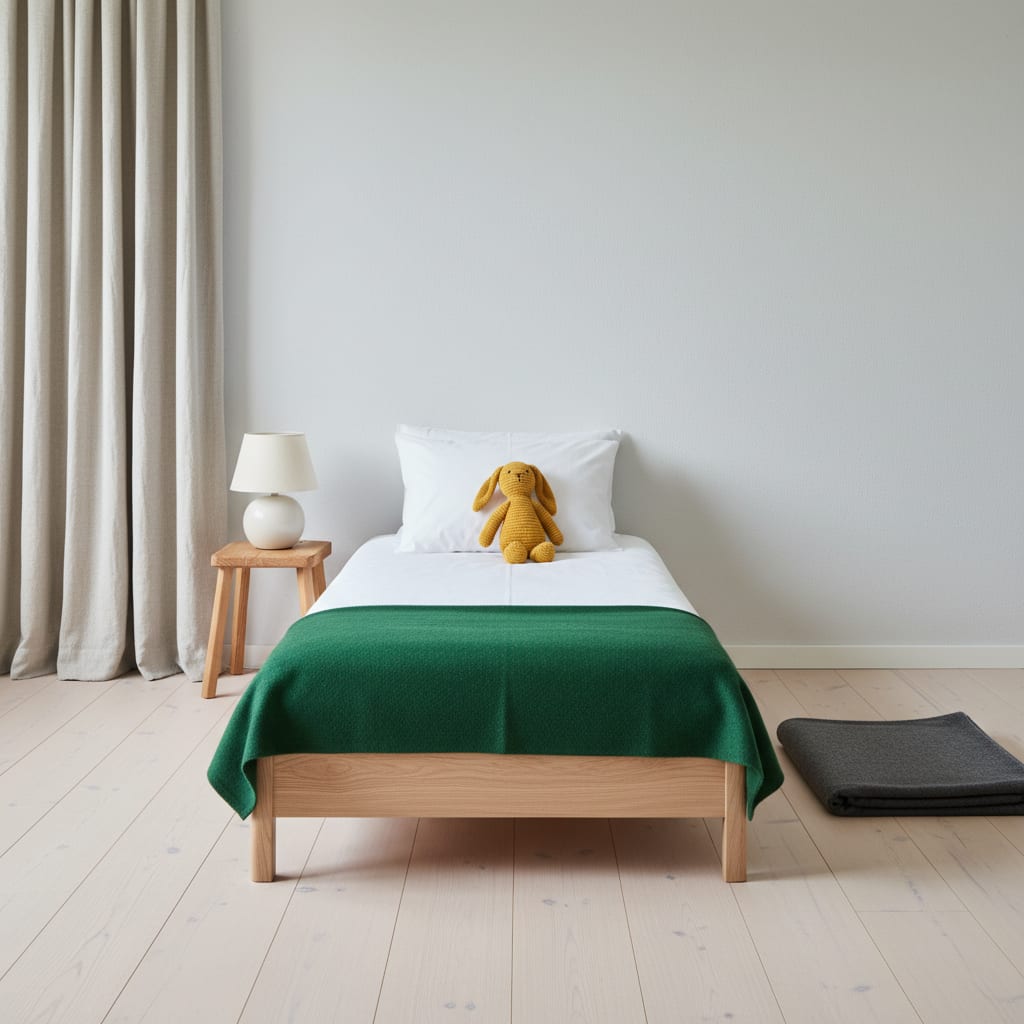
- Beds and cots up first, youngest to oldest, because the youngest sleeps earliest.
- Darkness next — whatever covers the windows, on the windows, before dusk.
- Sound machines plugged in and running, in every room that had one before.
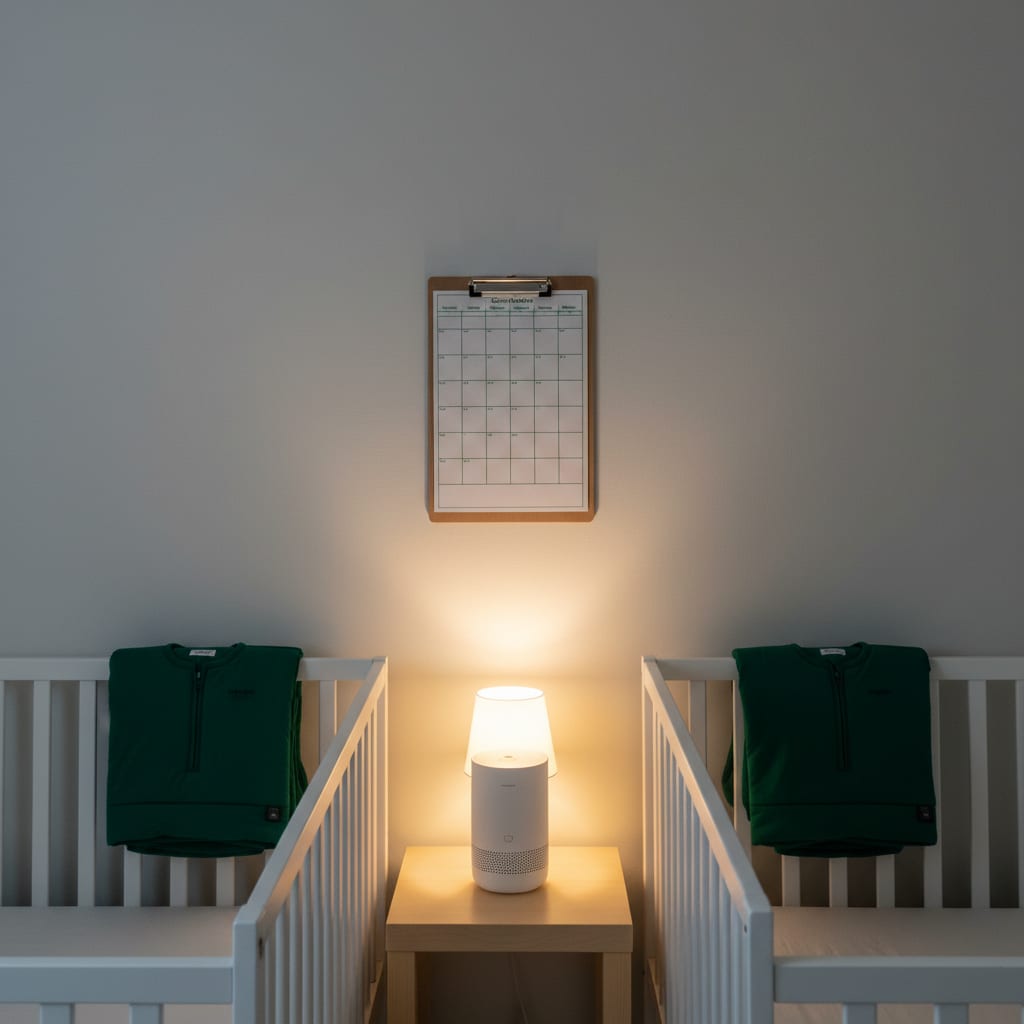
- One lamp per bedroom, so nobody does bedtime under a bare ceiling bulb.
- Then everything else, and not before.
Feed the crew takeaway on the floor. Nobody regrets a made bed at 8pm; everyone regrets hunting a fitted sheet at 9:40.
The night-one box, one per kid
Pack one box per child last, unload it first, colour-coded so a helper finds the right one. What goes in:
- The lovey and the specific blanket — in the car on a named adult’s lap, never in the truck.
- The sheets they slept on the night before, unwashed. Smell is a free sleep cue.
- The sound machine and its cable, coiled together so they can’t get separated.
- Nightlight, plus a plug adapter if you’re changing regions.
- A portable blackout blind. The window that faced a wall in the old room now faces a streetlight, and the curtains here are somebody else’s decision. A suction-cup travel blind like the Tommee Tippee portable blackout blind goes up in a minute without drilling and comes down when the real curtains arrive. Betteroo’s rundown of what actually blocks light in a bedroom is worth five minutes first — most of what’s sold as blackout isn’t.
- Pyjamas, toothbrush, one change of clothes for the morning.
- Two books they already know. New books are stimulation; familiar ones are a cue.
Keep the sleep cues identical even though the room isn’t
You can’t make the room the same. You can make the routine inside it identical: same bedtime, same steps in the same order, same words, same sound machine at the same volume. Two things do change on a move, and both are worth fixing on night one rather than night five:
The light signature. New street, new orientation, new curtains — usually more light at bedtime and more at 5:40am. Early waking that starts after a move is a window problem far more often than a schedule one.
The sound floor. A different boiler, a different road, neighbours you haven’t met. Chasing individual noises loses; raising the background hum until they stop standing out wins. Turn the machine up a notch and leave it running all night rather than on a timer.
Don’t stack changes — hold the room swaps for two weeks
The temptation on move day is every upgrade at once: cot to big bed, split the twins, drop the last nap. Each is its own project with its own bad week, and run together you’ll never know which is failing. Move first; change one thing per fortnight after.
If the new house forces a change — fewer bedrooms, a room too small for two — make it on night one rather than a week later, so there’s one adjustment instead of two, and change the OLDEST child’s arrangement, not the youngest’s. Older kids narrate what’s wrong; toddlers just stop sleeping. Settle the pairings and the floor plan before the truck arrives: which siblings can share and at what ages and fitting three kids in one bedroom are both measuring exercises you can do on a viewing.
Week one, night by night
| Night | What’s normal | What you do |
|---|---|---|
| 1 | Long settle, repeated check-ins, someone at your door at 2am | Old routine, old sheets, stay boring. Camp bed on your floor if needed — one night only |
| 2–3 | Slow settling, night wakings, early waking starts | Same time, same order. Walk them back each time, minimal talking |
| 4–5 | Settling shortens; early waking is stubborn | Fix the window and the sound floor. Stop adding comforts |
| 6–7 | Near baseline, usually one wobbly kid left | Withdraw the extras — camp bed goes, check-ins to none |
| Day 10–14 | Baseline | Now do the room change, bed transition or nap drop you planned |
Still worse at three or four weeks? Stop blaming the move — by then it’s the room’s darkness, a nap that shifted in the chaos, or a change you stacked on top.
One bad night shouldn’t wake four kids
In a big family the cost of a rough night isn’t one tired kid, it’s the chain. Decide these before night one, not at 1am:
- A landing spot. One made-up camp bed on your bedroom floor. Whoever cracks first goes there. Without it, the default is a kid climbing into a sibling’s bed and waking them.
- Who’s on nights. One adult owns wake-ups all week; the other owns boxes and is off duty. Swap on night four. Both of you half-doing both jobs is how families end a move hating each other.
- Which doors are shut. A kid navigating a strange house at 2am opens the wrong door, and the wrong door is usually the baby’s. Shut doors, low light in the hallway rather than a bright one in any bedroom — the hallway logic that stops an early riser waking the baby applies double here.
- Where the baby naps. Pick the anchor nap and defend it here exactly as you did there, unpacking noise and all: protecting one nap in a loud house matters more in a move week, not less.
Clingy at bedtime in a house they don’t know
A toddler who was fine for months can turn velcro for a fortnight after a move. It’s an environment response, and it answers to predictability rather than reassurance — the separation anxiety playbook for toddlers works here too. Tour the room twice in daylight, once empty and once set up. Use identical goodbye words every night. Say you’ll be back in two minutes, then come back in two minutes, before they call — a promise kept unprompted beats an hour in the doorway.

FAQ: kids’ sleep after moving house
How long does it take kids to sleep normally after a move?
Most are close to baseline within three to seven nights; toddlers can take two weeks. If it’s still worse at three or four weeks, look for a second cause — a room that isn’t dark enough, a nap that shifted in the packing, or a change you stacked on top.
Should we let kids sleep in our room the first night?
Fine as a deliberate one-off; a problem when it’s an accident that repeats. Set up a camp bed on your floor, say out loud it’s for tonight because the house is new, and take it away by night three.
Should siblings start sharing a room right after a move?
If the new house forces a share, start it on night one rather than after a week of separate rooms — one adjustment instead of two. If you have space to keep the old arrangement for a fortnight, keep it, then change deliberately.
What if only one of my kids is struggling?
That’s the usual pattern, not a bad sign. Run the fix for that child only: their darkness, their sound, their routine, and a landing spot that doesn’t route them past anyone else’s door. Changing the whole house’s bedtime for one kid costs you the ones who were fine.