One Bathroom at Bedtime: A Big Family's Running Order
Stop sending children through the bathroom one at a time and start batching by task. The bathroom is a single-server queue, and every minute a child spends in there doing something that could be done somewhere else is a minute the whole house is stalled behind them. So: teeth move to the kitchen sink, baths run on a rotation rather than nightly, pyjamas and toothbrushes get staged outside the room, and the only jobs left inside the bathroom are the ones that physically require it. Then you run a fixed order, youngest first, and nobody queues.
I have five. One bathroom upstairs. This is the running order that took our bedtime from ninety minutes to about thirty-five, and none of it is about making anyone hurry.
Time the bathroom before you redesign anything
Sit on the landing one night with your phone and record the actual in-and-out time per child. Most families are wrong about this by a factor of two, and they’re wrong in a specific direction: the small kids are fast and the nine-year-old is in there for eleven minutes doing nothing identifiable.
Three numbers matter. Total occupied minutes, the longest single occupancy, and how many trips are second trips. That last one is the biggest number in most houses and the cheapest to fix.
Batch the task, not the child
The instinct is to process one child completely — toilet, teeth, face, pyjamas — and then send in the next. It’s the slowest possible arrangement, because every switch costs a changeover and the room sits idle while a six-year-old wrestles with a pyjama top.
Run it the other way. All toilet trips first, in age order. Then all teeth. Then everyone gets dressed in their own room, not in the bathroom. Three passes, no changeovers, and the bathroom is empty during the slowest activity of the night.
Move teeth out of the bathroom
This is the single biggest unlock in a one-bathroom house, and it costs nothing. Brushing needs a sink, a brush and somewhere to spit. It does not need that sink.
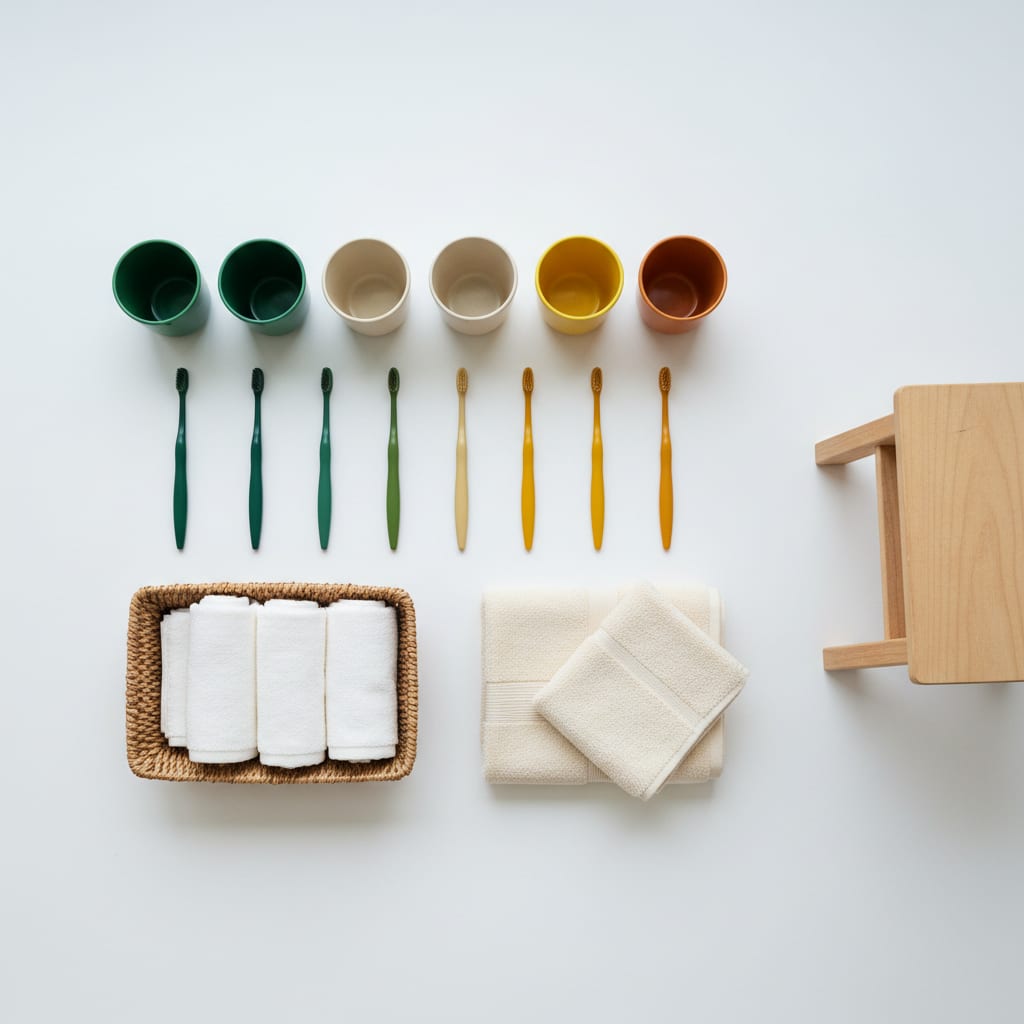
Put a second cup and a brush caddy at the kitchen sink, or the laundry sink, or a downstairs cloakroom if you have one. Split the kids: the two youngest brush downstairs with an adult while the older ones use the bathroom. You have just doubled your bathroom capacity for the length of the whole routine.
The standard doesn’t change wherever they do it — the ADA’s guidance is still to brush twice a day with a soft-bristled brush, and small children still need an adult doing or checking the job. Only the room changes.
Run bath night on a rotation
Nightly baths for every child are a habit, not a requirement, and in a big family they’re the thing that makes the bathroom the bottleneck.
For babies, the AAP is explicit: “three baths per week during baby’s first year may be enough,” and bathing more often “can dry out your baby’s skin.” Older kids who haven’t been in a pool, a sandpit or a football pitch are usually fine every other day.
So build a rota. Two or three kids a night, on named nights, written where everyone can see it. Everyone else gets a flannel at the sink — thirty seconds, in the room they’re already in.
Tandem the little ones. Two under five in the tub together is one bath, one clean-up and one adult, not two of each.
Cut the second trips
Second trips are the real hidden cost. The child who’s in bed, tucked, story done, and then announces they need the toilet.
Three fixes, in order of how much they buy you:
- Toilet is the last thing before the bedroom, not the first thing in the routine. If the toilet trip happens twenty minutes before lights-out, you are simply scheduling the second trip.
- A cup of water goes to the bedroom with them. Half the return trips are drinks, and a drink in the room is a drink that doesn’t reopen the queue.
- Name the window. “The bathroom closes when the light goes off” — with one genuine exception for anyone potty training or unwell, stated out loud so it isn’t a negotiation later.
Put the youngest through first
Small children degrade fast, and a four-year-old kept waiting on the landing for fifteen minutes is a four-year-old who will now take forty minutes to fall asleep. Older kids can absorb a wait; younger ones can’t.
The exception is the child who needs an adult in the room with them. If your toddler’s bathroom slot requires two hands, run it while an older sibling is doing something self-directed elsewhere — reading, packing a bag, feeding the dog. Never against another child who also needs those hands.
Under-twos come out of the queue altogether. Their bath and change happen earlier in the evening, on their own clock, for the same reason the baby’s nap gets protected separately — a baby folded into a five-child queue sets the whole thing on fire.
Stage everything the night before
The bathroom should contain nothing that needs choosing. Pyjamas, towels and clean underwear live in each child’s room, laid out before dinner. One labelled hook or basket per kid outside the door.
The rule that makes it stick: nothing gets carried into the bathroom except a body. Anything a child brings in with them is something they’ll stop and fiddle with while five people wait.
Write the running order down
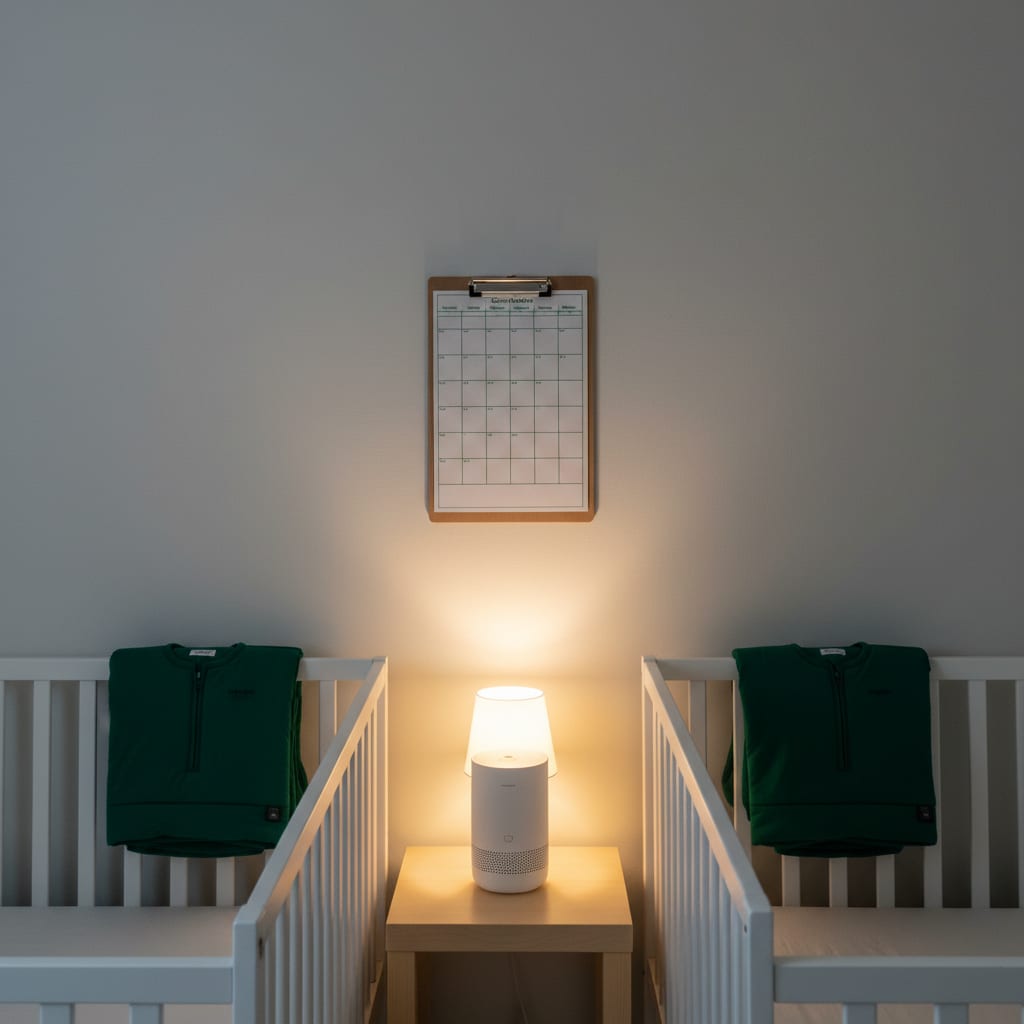
A big family bedtime is a rota, not a mood, and rotas belong on the wall. Ours is four lines: who baths tonight, who brushes downstairs, the order for the bathroom, and which adult is on which floor.
The audience for that list is the other adults, and the babysitter, and the grandparent who has the kids for a weekend. If the routine only exists in one parent’s head, it collapses the first night that parent is out — the same failure mode as an unwritten chore rota.
When the queue isn’t the real problem
If bedtime is still an hour after you’ve fixed the bathroom, the bathroom was never the bottleneck. The usual culprits: bedtime is set at the wrong time for the youngest, the toddler’s nap ran too late, or the kids sharing a room are winding each other up after lights-out — that last one is its own set of moves.
For the little end of the house, the timing question is worth checking on its own before you redesign anything else; Betteroo’s walk-through of a toddler wind-down is a reasonable baseline to compare yours against before you blame the plumbing.

FAQ: one bathroom, a lot of kids
What order should kids use the bathroom at bedtime?
Youngest first, and by task rather than by child: all toilet trips, then all teeth, then everyone dresses in their own room. Small children fall apart while waiting and older ones don’t, so the age order costs you nothing and saves the meltdown that would cost you twenty minutes.
Do kids really need a bath every night?
No. The AAP says three baths a week may be enough for a baby’s first year, and bathing more often can dry the skin. Older children who haven’t been muddy or sweaty are generally fine every other day, with a flannel wash at the sink in between.
How do you brush teeth without the bathroom?
At any sink. A kitchen or laundry sink with a second brush caddy works fine, and it doubles your capacity during the busiest twenty minutes of the evening. The brushing standard is unchanged — twice a day, soft brush, an adult doing or checking the job for the little ones.
What about the middle-of-the-night queue?
It’s rarely a queue — it’s one child at a time. Keep a step stool in place so a small child doesn’t need calling for, keep a nightlight on the route, and give anyone potty training a clear right of way. If two kids are waking at the same hour every night, that’s a schedule problem, not a bathroom one.