Feeding Teenagers on a Budget (Real Appetite Math)
Feeding teenagers on a budget starts with fixing your math: a teenager is not a big kid, they’re an extra adult — sometimes closer to an adult and a half at the table. Once you count them that way, the playbook is the same one that feeds any crew cheaply: stretch real protein over inexpensive bases (rice, beans, pasta, potatoes, eggs), lock in a snack system so grazing doesn’t eat the grocery budget between meals, and buy the bottomless categories in bulk. What breaks most families’ budgets isn’t dinner — it’s pretending the appetite didn’t change and wondering where the groceries went.
My oldest is eleven, which means I’m standing at the base of this mountain, not the summit — but I ran quantity math professionally for years, I feed seven daily, and the big-family veterans a decade ahead of me all report the same thing: the teen years are a portion problem, and portion problems have systems.
Appetite units: count eaters, not people
In this house nobody is “one person” at the table — everyone’s an appetite unit. My working scale: a toddler is about half a unit, an elementary kid about one, a teenager one-and-a-half to two, an adult one to one-and-a-half depending on the adult. It’s kitchen math, not science — calibrate to your own crew after two weeks of watching pans empty.
The point of the exercise: a family of six with two teens might be cooking for seven-plus units. Plan for units and the pan is empty because everyone ate, which is success. Plan for headcount and the pan is empty at 6:40 with a teenager staring into it, which is how second-dinner spending starts. This is the same unit-math that drives our 30-minute weekly meal plan — teens just move the multiplier.
Stretch protein, don’t cut it
Teenagers are growing hard and training for sports and staying up late doing all of it — cutting protein to save money backfires into constant snacking. The budget move is stretching it:
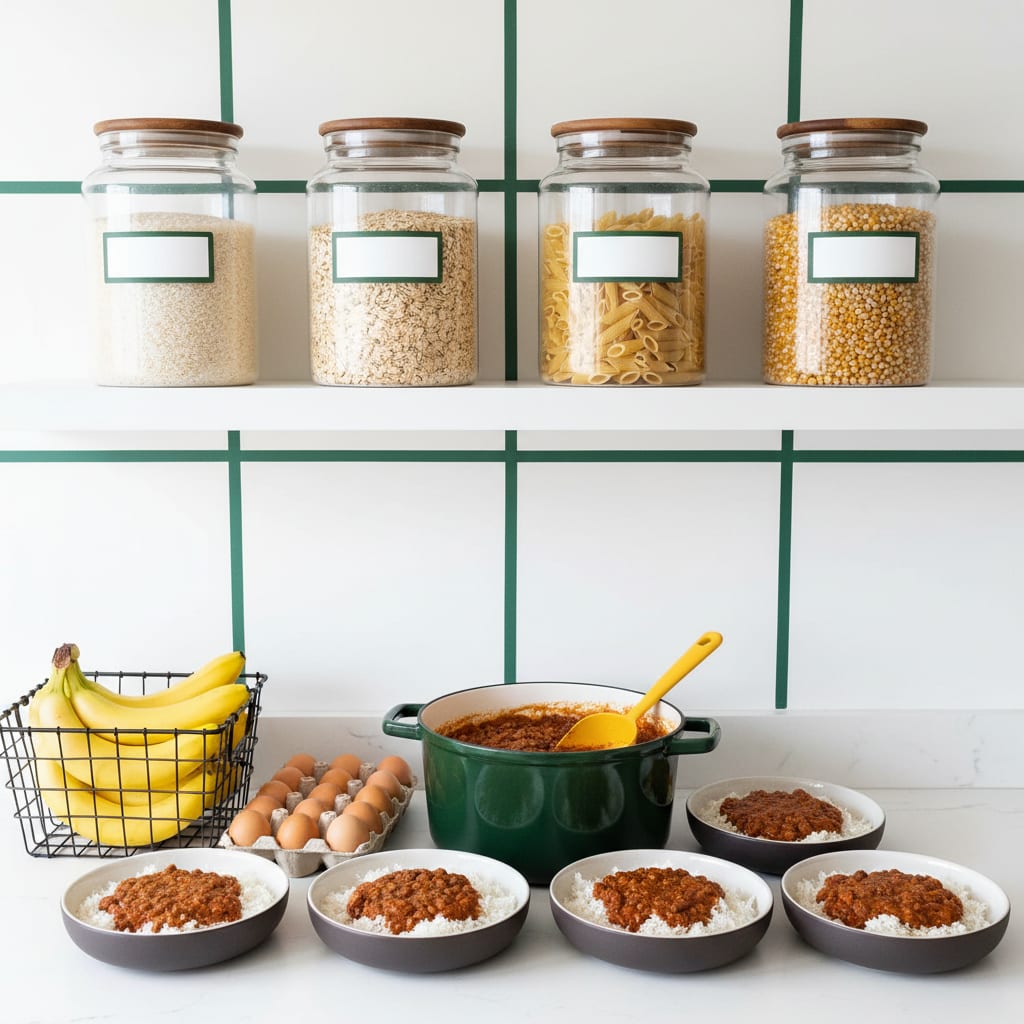
- Protein over a base, always. Chili over rice, taco meat into burrito bowls, shredded chicken into pasta — a pound of meat that plates four ways solo plates six-plus over a cheap base. The bases cost pennies per serving from bulk bags.
- Eggs are the teen-budget MVP. Cheap complete protein that a teen can cook themselves — a skill that pays off at 9pm, legally and endlessly.
- Breakfast-for-dinner is a budget dinner, not a treat. Eggs, pancakes, potatoes: filling, cheap, and greeted like a holiday.
- Beans ride shotgun. Half-meat, half-bean chili and tacos read as normal to kids raised on them. Start the ratio shift early.
The full roster of dinners built exactly this way is the 40 cheap meals that scale list — every one of them takes a “feed the teen” multiplier without changing the recipe, just the base quantity.
The snack system: where teen budgets actually die
Dinner is planned; the 3:30pm inhale is not, and that’s where the money leaks. Rules that hold the line here:
- A designated snack shelf, stocked once weekly. When it’s gone, it’s gone — the shelf teaches pacing better than lectures do.
- Bottomless tier vs. rationed tier. Popcorn kernels, oats, bananas, carrots, peanut butter: effectively unlimited. Granola bars, chips, cheese sticks: portioned for the week. Bulk-buy the bottomless tier — the bulk-buying guide covers which categories survive the pantry.
- Teach the “real food first” default. A quesadilla or eggs before packaged snacks — teens comply when the real food is fast and they’re allowed to cook it.
- Guard the drinks line. Sports drinks and sodas are grocery-budget termites. Water at home, powdered drink mix as the compromise, the good stuff for actual game days.
Budget guardrails at teen scale
Hold the same guardrails that run the family-of-6 grocery budget, with the multiplier applied honestly: a weekly cap tracked on one running total, a price-per-unit habit on the categories teens burn through (cereal, tortillas, cheese, ground meat), and a leftovers policy — leftovers are tomorrow’s lunch, not tonight’s second round, unless you cooked for it. And budget a real line for “the appetite,” because groceries for a household with teens simply cost more than the same headcount cost five years earlier. Pretending otherwise doesn’t lower the bill; it just relocates it to drive-through receipts.
FAQ: feeding teenagers on a budget
How much more does a teenager really eat?
Plan for one-and-a-half to two adult-sized portions and adjust to your actual kid — growth spurts and sports seasons move the number around. The reliable signal is the pan: if it’s scraped clean before seconds are offered, your multiplier is too low.
What are the cheapest filling foods for teens?
Rice, pasta, potatoes, oats, eggs, beans, bananas, popcorn, and whatever protein is on sale stretched over the first four. Cost-per-full-stomach is the metric — a bag of rice buys more satisfied teenager than any snack aisle item ever will.
Should teens be allowed to cook for themselves?
Yes — it’s the single best budget move on this list. A teen who can make eggs, quesadillas, and pasta feeds themselves from ingredients instead of packages. Start the training years earlier with the kid kitchen jobs ladder and the teen years get cheaper automatically.
Is buying in bulk worth it for a family with teenagers?
For the bottomless categories — grains, oats, popcorn, peanut butter, frozen fruit — almost always, because teens guarantee you’ll finish the bag before it goes stale. Skip bulk on anything perishable that only one kid eats; a deal you throw away is not a deal.