One-on-One Time Before Bed: 10 Minutes That Cut Stalling
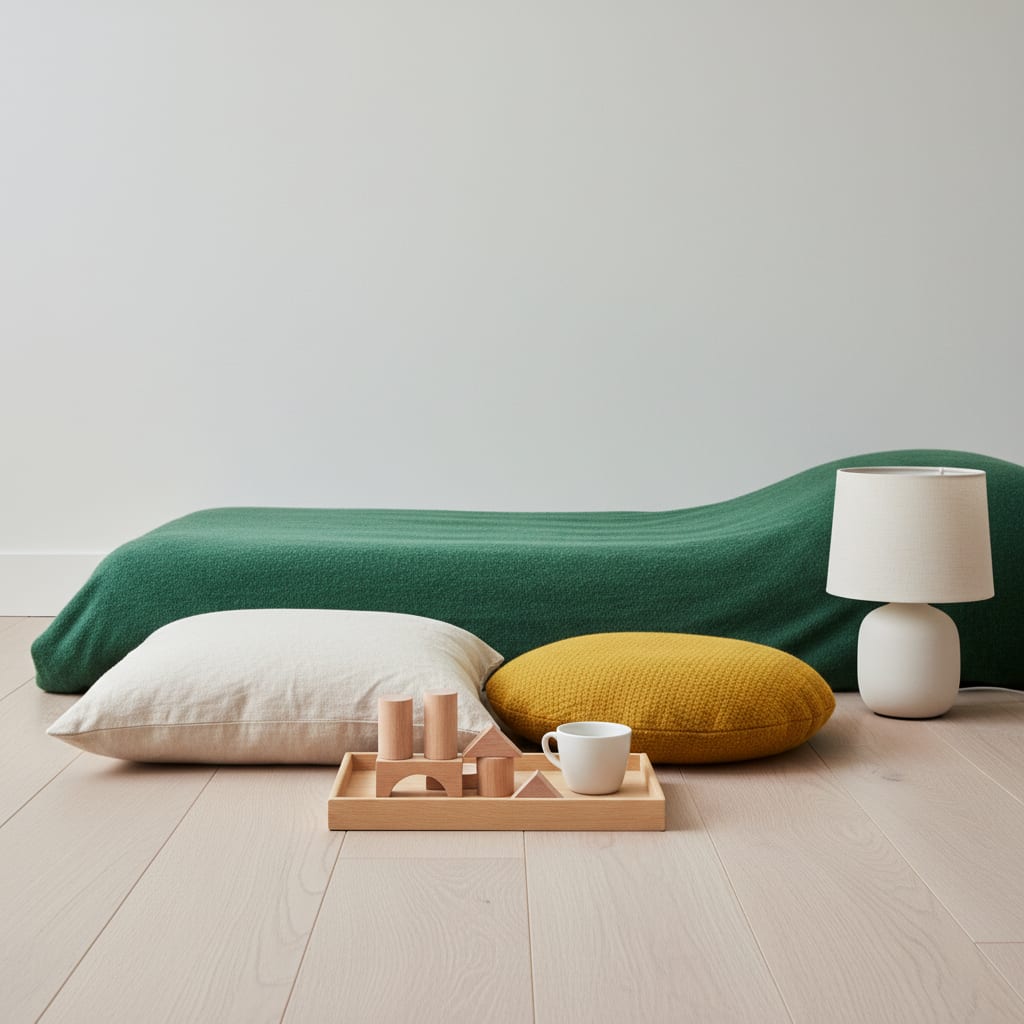
In a big family, a lot of bedtime stalling is a child collecting the one-on-one attention they did not get all day. The fix is to pay it up front, on your schedule. Give each child about ten minutes alone with a parent right before their own lights-out: same time every night, a timer they can see, a calm activity they choose, no siblings in the room. Then the goodnight, and the water and bathroom trips already done. It will not cure stalling caused by a bedtime that is too late or a real fear, but it removes the most common motive for the fifth curtain call.
Why the curtain calls multiply with headcount
The American Academy of Pediatrics puts the big-family version in one line on HealthyChildren.org: children “often resist going to sleep, especially if they have older siblings who are still awake.” The same toddler bedtime page names the motive: “children’s main goal is to get you to appear.”
Now count the evening from the child’s side. In a house of seven, a six-year-old can go from school pickup to pajamas without a single minute where a parent is looking only at them. Dinner is shared, homework help is shared, the bath is a queue. The first moment they have a parent’s full attention is when they call out after lights-out. So they call out.
The CDC’s guidance on attention explains why that sticks: “Any attention, whether positive or negative, given to your child immediately after their behavior, increases the likelihood of that behavior happening again.” Every return trip for a drink or a sock that feels wrong is attention delivered right after the stall.
Scheduled one-on-one time flips the order. The attention arrives before lights-out, reliably, and the stall stops being the only way to get it.
What the ten minutes is, and what it isn’t
The model is what pediatric clinicians call child-directed play. Seattle Children’s describes it as “a special form of one-to-one play between you and your child in which your child directs and leads,” and lists among its benefits that it lets a child “receive focused attention from you without having to misbehave to get it.” That sentence is the whole case for doing this at bedtime.
Their guidance on how to run it translates almost directly to a big house:
- Short on purpose. Seattle Children’s says “no more than 10 to 15 minutes each time,” because doing it properly “is very hard work.” Ten minutes per child is enough.
- No audience. They recommend “a quiet place with no TV, other screens, other children or other distractions.” In a big family, the “other children” part is the entire difficulty, and it is non-negotiable. A sibling in the doorway turns it back into shared time.
- A timer and a warning. Tell the child how long it lasts, warn them “when only a minute or two is left,” and consider a timer “so that your child will know when the time will end.” The ending should be as predictable as the start.
- The child leads. Skip commands, quizzing (“What color is that?”), leading questions and competitive games.
One honest adaptation. Seattle Children’s frames this as play at a time that “doesn’t compete with other activities,” not specifically as a bedtime routine. Moving it to just before sleep changes what counts as play, because HealthyChildren warns that “active play may make your child too excited to sleep.” So the bedtime version is quiet. A book the child picks, a slow puzzle, drawing side by side, or just talking with the lights low. The AAP’s Brush, Book, Bed routine already treats reading aloud as “special bonding time,” so for many kids the book is the obvious choice. What makes it one-on-one is not the activity. It is that nobody else gets a turn.
Fitting five slots into one evening
The objection writes itself: five kids times ten minutes is fifty minutes, and nobody has fifty spare minutes at 7:30pm. You don’t need them in a row. The slots nest inside the staggered bedtime a big house already runs, because each child’s ten minutes is simply the last thing before their own lights-out.
| Setup | How the slots fit |
|---|---|
| Two adults, staggered bedtimes | Each adult takes alternate kids in bedtime order. Two children’s slots run at once in different rooms. |
| One adult, staggered bedtimes | Youngest first. The slot IS the bedtime, not an extra: book, song, goodnight, out. Older kids’ slots fall later, when the little ones are already down. |
| Kids sharing a room | Run the slot somewhere else (the couch, the landing) before the child goes in, so the roommate isn’t the audience. |
| The oldest, with the latest bedtime | Their slot is often the best of the night: the house is quiet and it can run a little longer. |
If your stagger is not set up yet, start with the staggered system for kids sharing a room, then add the slots on top. For a wide age gap, the later slot for the big kid works exactly as in bedtime with a baby and a school-age sibling: the older child’s time comes after the baby is down, which makes waiting for it feel like a privilege rather than a punishment.
The rules that stop it becoming a new stall
One-on-one time can be turned into one more thing to bargain over. Five rules stop that:
- Same slot, every night. Predictability is what lets a child stop checking whether they will get their parent. Skipped slots get made up tomorrow, out loud: “You’ll get double book tomorrow.”
- Needs handled before it starts. HealthyChildren: “Take care of child’s needs before bedtime so they don’t use them as reasons to avoid going to sleep.” Water, bathroom and the stuffed animal come before the timer starts, not after the goodbye.
- The timer ends it, not you. When it goes, you close with the same line every night. Arguing with a timer is less rewarding than arguing with a parent.
- No phone. Half-attention is the thing the child is trying to escape. Ten minutes is short enough to leave the phone in the kitchen.
- After lights-out, go boring. A child who calls out later gets a brief, identical, dull response. The warm version of you was available during the slot.
When ten minutes won’t fix it
Scheduled attention removes one motive for stalling. It does nothing for the others, and it is worth being clear about which one you are dealing with.
The bedtime is too late. Overtired kids fight sleep harder. Preschoolers who have just dropped a nap are the classic case, and Betteroo’s walkthrough of why stalling often spikes once the nap goes explains that such a child usually needs lights-out 30 to 60 minutes earlier, not a better routine.
The child needs company to fall asleep, not just before it. Some kids settle only with a person nearby, and ten minutes then leaving will not satisfy them. That is a different setup, covered in bedtime when one kid needs quiet and one needs company.
Fear. A child scared of the dark is not stalling for attention.
If you have added the slots, fixed the obvious timing and the stalling still runs every night, a plan built for that specific child is the next step. Betteroo turns a free quiz about your child’s age, schedule and struggles into a step-by-step plan, and adjusts it as things change.

FAQ: one-on-one time and bedtime stalling
How long should one-on-one time before bed be?
About ten minutes per child. Seattle Children’s recommends “no more than 10 to 15 minutes” for child-directed play, and the shorter end suits bedtime, where the goal is to wind down.
Does one-on-one time really reduce bedtime stalling?
It removes one common motive: stalling to get a parent’s attention. It won’t fix a bedtime that is too late, a child who needs company to fall asleep, or real fear, so check those too.
What if I can’t give every child ten minutes every night?
Keep it predictable rather than long. A shorter slot every night beats a long one some nights, and with two adults the slots can run at the same time in different rooms.