Cheap Meals for Large Families: 40 Dinners That Scale
The cheapest way to feed a large family isn’t a list of “budget recipes” — it’s a rotation built from four dinner types that scale: stretched proteins, bean-and-grain bases, breakfast-for-dinner, and soup-plus-bread. Pick ten dinners from the forty below, run them on repeat for a month, and cost per plate drops fast, because repetition is what lets you buy in bulk, batch the prep, and stop wasting ingredients you bought for one-off meals. I cooked on a restaurant line before I had five kids; this is exactly how restaurants keep food costs down, shrunk to fit a kitchen with a toddler in it.
The system before the list
Forty ideas are useless without a rule for using them, so here’s the rule: a big-family dinner earns its slot by scaling without scaling the work. Doubling a casserole is one pan and the same effort. Doubling individually-assembled anything — stuffed peppers, say — is double the labor. Everything below passes that test.
Think in cost per plate, not cost per meal. A dinner that feeds my seven for roughly the price of two coffee-shop drinks is a win; the exact number depends on your store and your teenagers. Track your own for two weeks — it changes how you shop. My full planning method, including the 30-minute weekly session that makes this automatic, is in the large family meal planning system, and the money side lives in our family-of-6 grocery budget breakdown.
Play one: stretch a protein (12 dinners)
One pound of meat, made to feed six-plus by riding on something cheap. This is the oldest play in the book because it works.
- Tacos where the meat is half beans, half beef — nobody has ever noticed
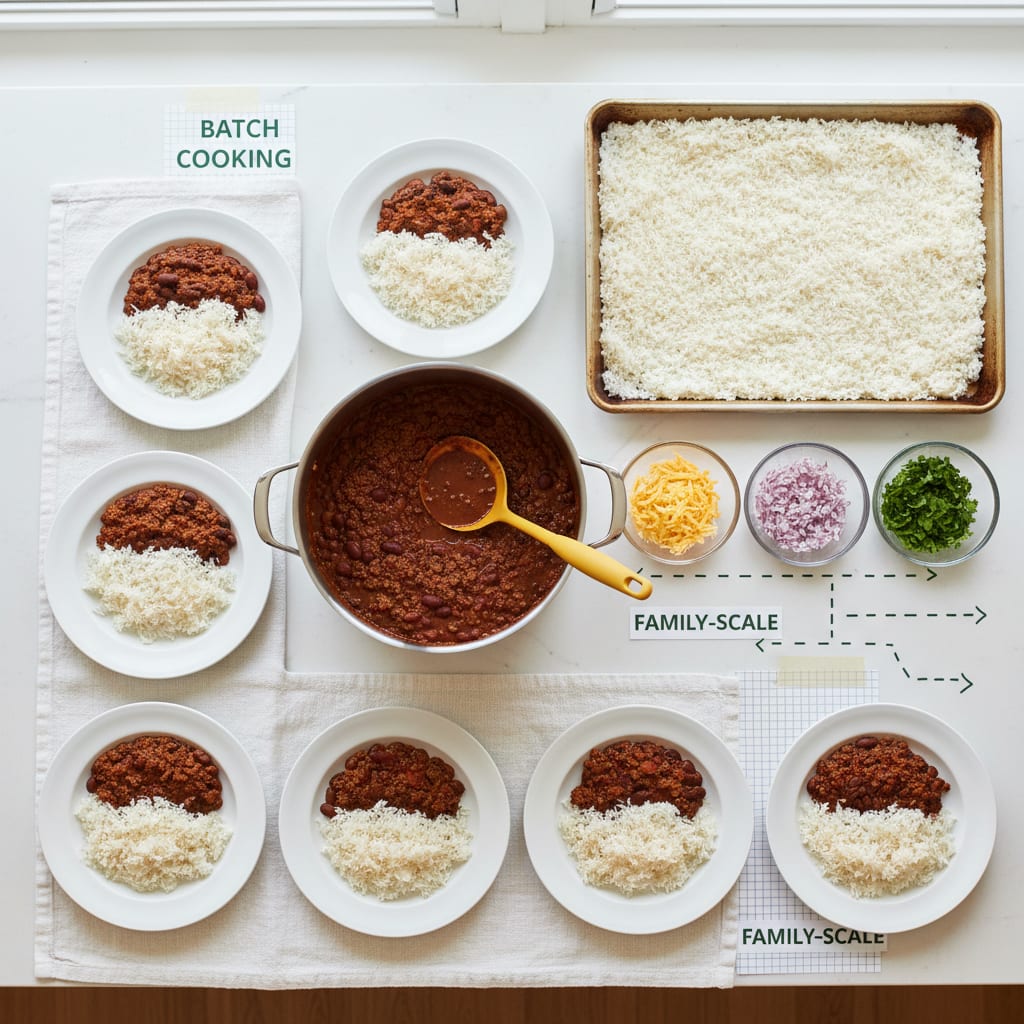
- Chili over rice (the rice is the point)
- Spaghetti with meat sauce, sauce stretched with lentils
- Fried rice with diced chicken thighs and a lot of egg
- Shepherd’s pie with a deep mashed-potato roof
- Stir-fry over noodles, one pound of protein for the whole wok
- Sausage with peppers, onions, and a mountain of rice
- White-bean chicken chili
- Loaded baked potatoes with a modest chili topping
- Pasta with sausage crumbles and white beans
- Quesadillas with shredded chicken stretched by refried beans
- Sloppy joes cut with finely-diced mushrooms
Play two: beans and grains carry the night (10 dinners)
The cheapest plates in the rotation, and with a line cook’s seasoning they’re nobody’s punishment.
- Red beans and rice with smoked sausage coins
- Black bean burrito bowls, toppings bar style
- Lentil soup with grilled cheese dippers
- Chickpea curry over rice
- Rice and bean burritos, rolled assembly-line by the big kids
- Pasta e fagioli
- Refried bean tostadas
- Dal with flatbread
- Minestrone heavy on the beans and pasta
- Hoppin’ John with cornbread
Play three: breakfast for dinner (8 dinners)
Eggs are still among the cheapest proteins per serving, and the crew treats breakfast-for-dinner as a party rather than an economy measure. Take the win.
- Pancakes and scrambled eggs
- Egg-and-cheese breakfast burritos
- French toast from the bread heels nobody eats
- Veggie frittata (one skillet, eight eggs, whatever’s wilting)
- Breakfast quesadillas
- Biscuits and gravy
- Egg fried rice — yes, it counts twice, it’s that useful
- Oatmeal bar with a toppings tray, on your bravest night
Play four: soup, stew, and bread (10 dinners)
The stockpot is the single most cost-effective pan a big family owns, and every one of these freezes — which is why this play feeds directly into the one-day, 20-dinner freezer system.
- Chicken and rice soup from one carcass
- Potato soup with bacon crumbles
- Tomato soup with grilled cheese
- Beef and barley stew
- Corn chowder
- Taco soup (dump-and-simmer, pantry only)
- Split pea with ham
- Chicken tortilla soup
- Vegetable soup against whatever the crisper is threatening to compost
- Stew over mashed potatoes — a double-carb move I refuse to apologize for
Making it a rotation, not a list
Pick ten dinners — two or three from each play — and run them for a month before you change anything. Repetition is the mechanism: you’ll buy the same twenty ingredients weekly (in bigger, cheaper quantities — see what to buy in bulk), your prep gets faster every round, and picky kids stop negotiating because Tuesday is always taco night. Restaurants call this a menu. It’s the whole trick.
Two operational notes from my kitchen: cook double on the stockpot nights and freeze the second half, and prep all proteins for the week in one 45-minute Sunday block. Batching is what makes cheap sustainable — cheap that requires an hour of scratch cooking every night collapses by Thursday.
FAQ: cheap dinners at family scale
What’s the cheapest meal that still feels like dinner?
Red beans and rice with sausage coins is the strongest cost-to-morale ratio on the list. The sausage reads as “real dinner,” the beans and rice do the actual feeding, and the leftovers reheat better than they started.
How do I keep costs down without eating the same five things forever?
Rotate the plays, not just the meals: keep the structure (protein-stretch Monday, soup Thursday) and swap what fills it. The structure delivers the savings; the swaps deliver the variety.
Is cooking cheap for a big family actually faster than convenience food?
Not on night one — batching is what closes the gap. One Sunday prep block plus a stocked freezer means most weeknights are assembly, not cooking. Per plate, convenience food for six-plus people costs restaurant money without restaurant quality.
How much meat per person should I plan?
For stretched dishes, plan roughly a quarter pound per adult and less for little kids — the beans, rice, or pasta carry the rest. Only straight-protein dinners (roast chicken night) need the classic half-pound math, which is exactly why they’re the rotation’s rare treat, not its backbone.