Do Car Seats Expire? Where to Find the Date
Yes, car seats expire — and no, there is no single number that covers all of them. Every US seat carries a date of manufacture stamped or moulded onto it, and the manufacturer separately publishes a useful life for that model. Date of manufacture plus useful life is your expiry date, and the useful life differs by brand and even between two models sitting on the same shelf. So the honest answer to “how long is a car seat good for” is: read the label on your seat and the manual that came with it, because anyone quoting you a flat number is quoting an average, not your seat.
In a house that runs three, four, five kids through the same gear, this stops being trivia. A seat bought new for a first baby has to survive a queue.
The number belongs to the manufacturer, not the internet
Manufacturers set the useful life for each model and publish it. Graco, for example, states plainly that it stamps a date of manufacture rather than an expiry date, and that you add the model’s useful life to it — and its own line-up doesn’t share one figure across every seat. Britax runs the same structure: find the manufacture date on the seat, then find the useful life for that product.
That means two things in practice.
The figure is model-specific. Different shells, different reinforcement, different testing. A brand’s premium harnessed seat and its entry-level one can carry different lifespans, which is why the number printed on your neighbour’s seat tells you nothing about yours.
The clock starts at manufacture, not at purchase. A seat that sat in a warehouse for a year arrives with a year already gone. If you’re buying a seat that will need to last through more than one kid, check the manufacture date on the box before you leave the shop — this is the single cheapest thing you can do to buy yourself extra runway.
Why any of it? Plastic gets brittle with UV and temperature cycling, harness webbing wears, foam compresses, and testing standards move. None of that shows up in an obvious way from the outside, which is exactly the problem.
Where the date actually is on the seat
It’s rarely somewhere convenient. Check, in this order:
- The sticker on the side or the back of the shell. Most common location, and it usually carries the model number, the date of manufacture, and often the expiry date already calculated for you.
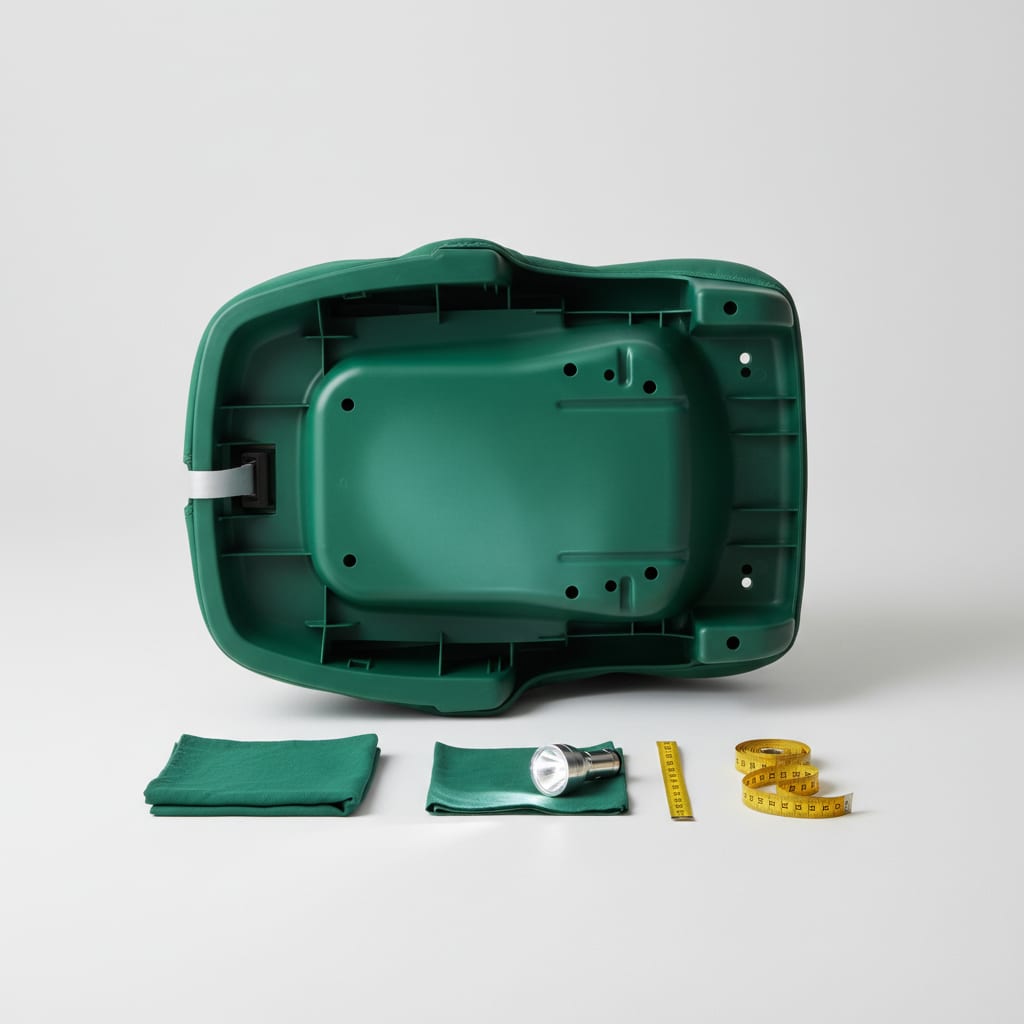
- The underside. Infant carriers and bases very often hide the label on the bottom, which means unbuckling and flipping the thing over.
- Moulded into the plastic. Some seats emboss the date directly into the shell, in raised or recessed lettering that’s the same colour as everything else. It is frequently underneath the seat pad, so you may have to peel the cover back.
- The manual and the registration card. Both usually state the useful life. If you’ve lost the manual, every major manufacturer publishes them free on its own site by model number.
Do this once for every seat you own, on the same afternoon, and write the results somewhere you’ll actually look — the inside of a cupboard door, a note on your phone. Digging a label out from under a seat pad is a ten-minute job you don’t want to redo in a hurry.
The bases, boosters and spare parts nobody checks
Three things that catch families out.
Bases expire too, and often on their own schedule. An infant carrier and its base are separate products with separate labels. If you run a base in each of two cars — a normal setup once you have a crew — that’s three dates to check for one baby, not one.
Boosters have a useful life as well. Because a booster looks like a moulded chair rather than a piece of safety equipment, it’s the one families keep longest and check least. It has a date. Go and look.
Crash history overrides the date entirely. A seat well inside its life is still done if it’s been in a crash that meets the replace-it threshold — that’s a separate question with a separate answer, covered in what to do with a car seat after an accident.
Hand-me-down math for a big family
Here’s the part generic car-seat coverage skips, because it assumes one kid.
Run the arithmetic before you buy, not after. Take your youngest planned rider’s age today, add the years until they’d finish with that seat, and compare it against the seat’s remaining life. A convertible that will carry a two-year-old to four, then a newborn from the year after, needs enough life left to cover both — and the second kid inherits it with the clock already partly run down.
What this changes about how we buy:
- Buy the long-life model for position one. The seat that will be passed down the most times is the one worth spending on, and remaining useful life is a spec worth comparing alongside width and weight limits. If you’re comparing seat types before you buy, our convertible car seat explainer lays out which type stays in service longest.
- Store it properly between kids. A garage that hits attic temperatures in August is the worst place to park a seat for two years, and it’s where everybody puts them. Indoors, out of sun, in a bag, off the floor — same discipline as the rest of the hand-me-down bin system.
- Never buy a used seat from a stranger. You cannot verify crash history, recall status, or whether parts have been swapped. Secondhand from someone whose car you’ve been in is a judgement call; secondhand from a marketplace listing is not.
- Stagger your replacements. Three seats bought the same month expire the same month. Buying them a year apart spreads what would otherwise be one brutal invoice.
When a seat is out of date
Stop using it. Not “one more school run” — an expired seat is not certified equipment any more, and you will not be able to tell by looking whether the shell is fine.
Then take it out of circulation properly. Don’t sell it, don’t donate it, don’t leave it on the kerb for someone to grab. Cut the harness straps, remove the cover and any padding, and mark the shell so nobody rescues it from a skip. Some manufacturers and larger retailers run recycling or trade-in schemes that come round periodically; local child passenger safety programmes sometimes take them too, so it’s worth one phone call before it goes in the bin. Check whether your local waste service takes rigid plastic — several do.
FAQ: car seat expiration dates
How long is a car seat good for?
For as long as the manufacturer says that specific model is, counted from the date of manufacture stamped on it. Lifespans differ by brand and by model within a brand, so the only reliable answer comes from your seat’s own label or manual — not from a general figure.
Where is the expiration date on a car seat?
Usually on a sticker on the side, back or underside of the shell, and sometimes moulded directly into the plastic beneath the seat pad. If only a manufacture date is shown, add the useful life stated in the manual to get the expiry.
Do car seat bases expire?
Yes. The base is a separate product from the carrier, carries its own label, and can have a different date. If you keep a spare base in a second car, check that one too — it’s the label families forget most often.
Can you use a car seat after its expiration date?
No. The manufacturer no longer certifies it, and deterioration in plastic, webbing and foam isn’t visible from the outside. Retire it, destroy it so nobody else uses it, and replace it.
Does an expired car seat still pass a safety check?
No — a certified child passenger safety technician will refuse to sign off an expired seat, and most fitting stations will not install one. If yours is close to the date, sort the replacement before your next check rather than after.