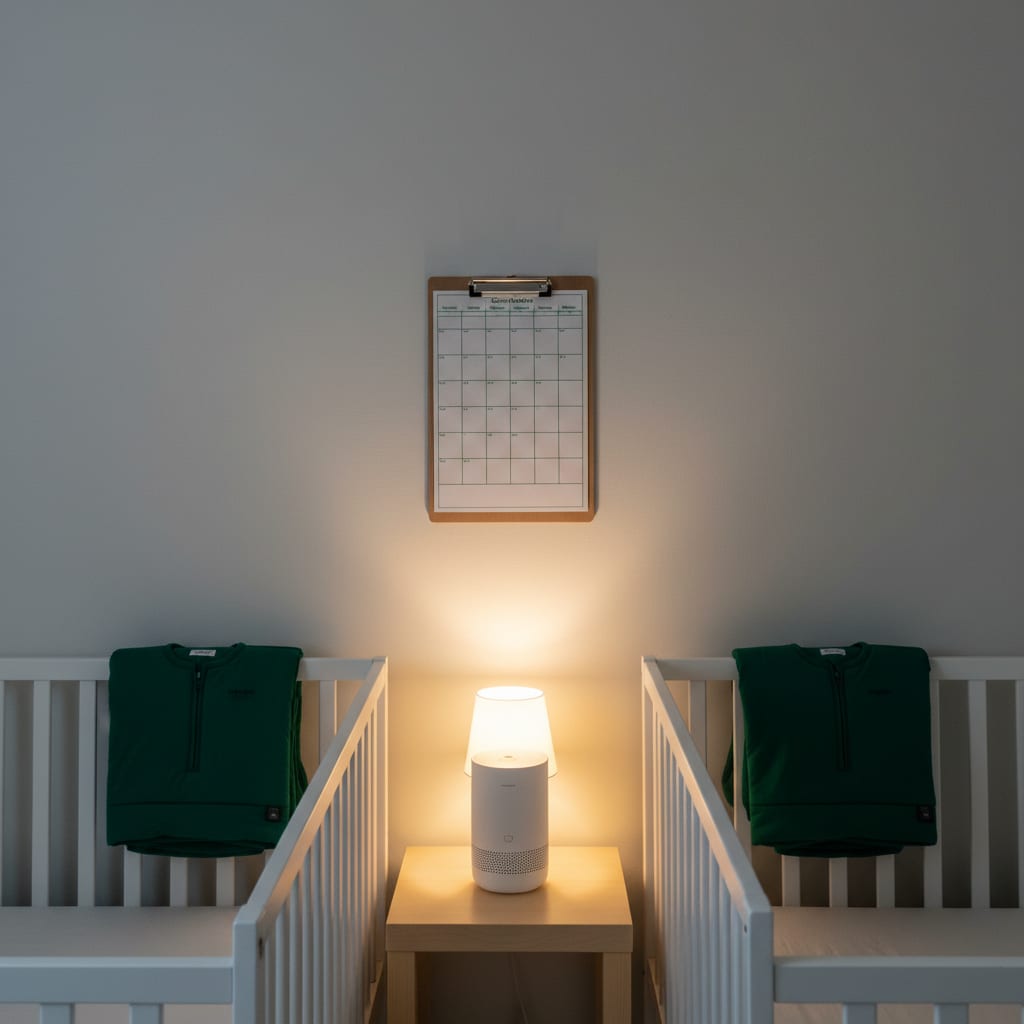
Bedtime When One Kid Is Sick and the House Is Awake
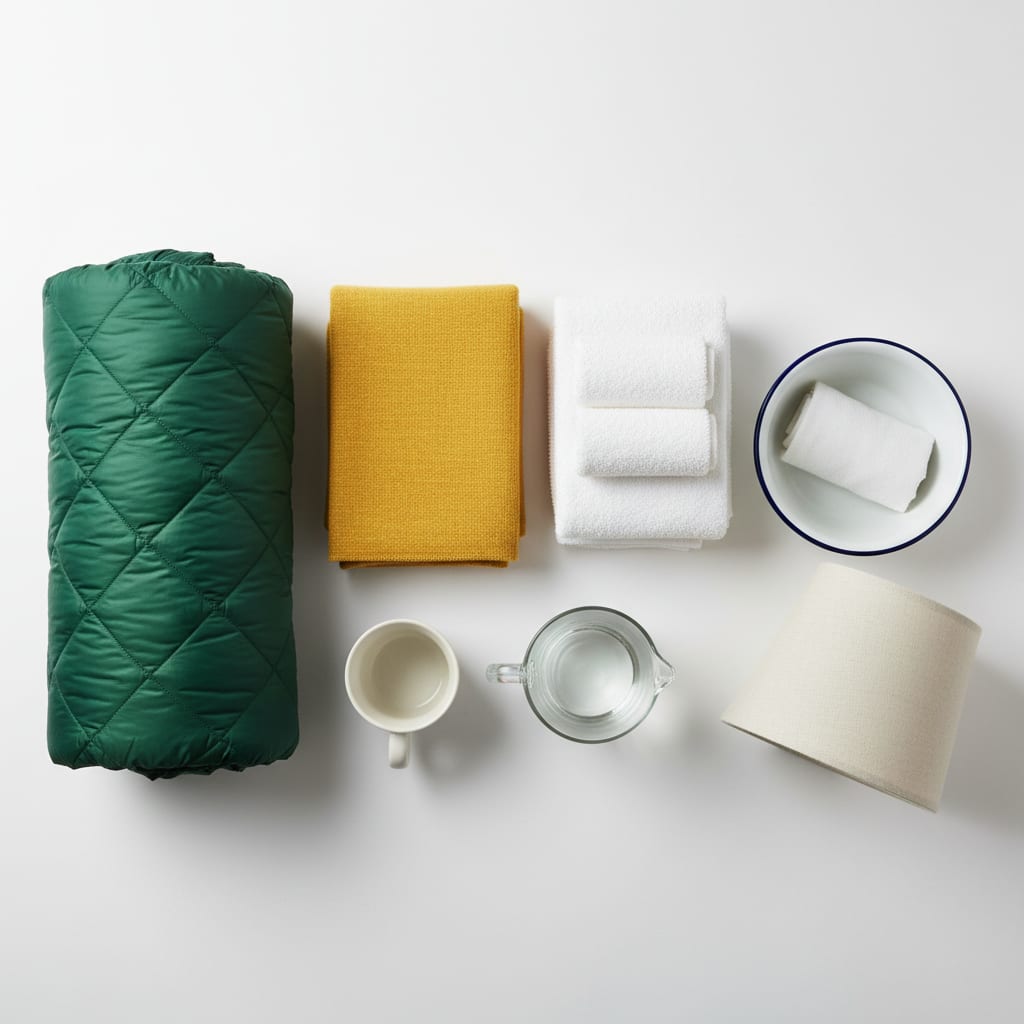
When one kid is sick, the job at bedtime is containment — keeping one child’s bad night from becoming five children’s bad night. Do the moving early: relocate the sick kid out of any shared room before lights-out, re-bed whoever they displaced, put the whole sickroom kit in that room while you can still see, and decide up front who is on duty and until when. Then run everyone else’s bedtime exactly as normal, at normal volume. The mistake is letting the household reorganize itself around illness at 1am, in the dark, with everybody awake and negotiating.
Move the patient, not the household
Two ways to run this, and only one scales. Leave the sick kid where they are and tell everyone else to sleep through it, and a cough at 11:40 wakes a room, the room wakes the hallway, and by midnight you have one sick child and three tired well ones.
Or move the one and protect the rest. Pick the room furthest from other sleepers, with a door you can close, that you can reach without waking anybody on the way: the dead-end bedroom, the den, the sofa bed. Sick kids need proximity to a grown-up more than their own mattress, and the room that costs everyone else the least sleep usually isn’t the one they normally sleep in.
If your sick kid shares a room, the split isn’t optional. A shared room is an amplifier — one cough and both kids are up, one throws up and both need a shower. Move whichever kid is easier to move, often the well one, into a sleeping bag on a sibling’s floor; most kids treat that as a treat rather than a punishment. Put the room back the next night, and if the shuffle happens four times a winter, look harder at how the room-sharing bedtime is set up.
Do the shuffle before lights-out
All of it takes fifteen minutes at 7pm and forty-five at 1am, with an audience.
- Call it early. The moment you’re reasonably sure a kid is genuinely sick, start moving. Waiting to see if they settle is how you end up carrying bedding past three doors at midnight.
- Set the sickroom first. Bedding on, bin lined, water down, lamp on low.
- Re-bed the displaced kid. Their own blanket matters more than the room does.
- Run the normal bedtime for everyone else. Same order, same stories, same times. A house that visibly abandons its routine tells every kid in it that tonight is negotiable.
- Say the plan out loud. “Micah’s sick, he’s in the den, everyone else sleeps normally.” Kids in a big family fill informational gaps with noise.
Split the night into shifts
Two adults on duty all night is two wrecked adults in the morning, and somebody has to run seven breakfasts and a school drop at 6:45.
So split it. One adult owns until roughly 2am and sleeps after; the other sleeps first and owns the back half, somewhere else entirely, door closed, phone face down. Half a night of real sleep each beats two half-nights of listening.
Solo tonight? Choose the half you’ll be functional in and lower the standard on the other. Set up so small wake-ups don’t need you vertical — mattress on the sickroom floor, water poured, everything in arm’s reach — and cross something off tomorrow’s plan now.
The rule I hold hardest: the off-duty adult is not woken for anything short of an emergency. Solidarity feels like the loving choice at 1am and it costs you both mornings.
Stop one wake-up becoming five
Most of the damage on a sick night isn’t the sick kid. It’s the cascade — a cough wakes the sibling, the sibling’s light wakes the baby, and now the whole house is running at 2am.
The fixes are the hardware ones that solve an older sibling waking the baby: door gaps sealed, hinges quiet, hallway lit low and warm so nobody reaches for the overhead, white noise running where the healthy kids sleep. Three sick-night additions:
- Keep the traffic on one route. Bathroom, water, thermometer — all of it past the fewest sleeping doors, even if that means the downstairs bathroom all night.
- Light discipline. One low warm lamp on in the sickroom from the start, or a phone torch at the floor. Overheads at 2am wake the kid you were protecting — and wake you all the way up too.
- Leave the mess until morning. Strip the bed, remake it, shut the door on the laundry. A 2am wash cycle is a whole-house event for a load that will still be there at seven.
If your baby is the well one here, their nap the next day is the load-bearing thing to defend — the anchor-nap system matters more than usual after a broken night.
Kit the sickroom while you can still see
In the room before the lights go down, not scattered across three floors:
- A lined bin and old towels by the bed, reachable without standing.
- Water in a lidded cup. Spilled water at 3am is a bed change.
- A cool-mist humidifier if your air is dry. The American Academy of Pediatrics’ HealthyChildren guidance on coughs and colds recommends moist air to stop mucus drying out; a filter-free unit like the Vicks FilterFree Plus survives six nights a winter in a house this size.
- Saline drops and a way to clear a small nose. Same guidance: loosen dried mucus with saline, then blow it or suck it out. For a baby who can’t blow, a NoseFrida SnotSucker beats a bulb syringe and is easier to clean.
- The thermometer. In the room, not two doors away in a cabinet.
Not on that list: over-the-counter cough and cold medicine for a young child. HealthyChildren is explicit that it is not recommended under age 4, that ages 4–6 should use it only if a doctor says so, and that honey should never be given to an infant under one year. Medicines, doses and how worried to be belong with your clinician; this post is about where people sleep.
If the patient is still a baby, the sleep side has its own rules, and Betteroo’s guide to sleep during an illness covers the part I always get wrong — how much to loosen and for how long. A cough that only turns up once they’re lying down is its own pattern too.
Put it back within about three nights
Illness doesn’t wreck a schedule. The week after illness does, when the extra rocking and the sleeping-in-the-den have quietly become the new arrangement.
Set an end date while you’re still in it. Name everything you loosened as temporary on night one, then unwind it over two or three nights once the kid is well — one thing per night, starting with where they sleep.
Expect a fight from the kid who liked being the patient. That’s a negotiation, not a relapse, and it’s easier to hold when you already know which of your kids needs quiet and which needs company.

FAQ: sick kids and everyone else’s bedtime
Should a sick child be moved out of a shared room?
If you can, yes — for one night or several. A shared room turns one cough into two awake kids and one vomiting episode into two bed changes. Move whichever child is easier to move, often the well sibling into a sleeping bag elsewhere, and put the room back once everyone’s healthy.
How do you keep the rest of the kids asleep when one is up all night?
Treat it as traffic and sound, not willpower. Route the night’s trips past the fewest sleeping doors, use one low lamp instead of overhead lights, seal door gaps, run white noise where the healthy kids sleep, and leave the laundry until morning.
Should both parents stay up with a sick child?
No. Split the night in half — one adult on duty until roughly 2am, the other sleeping somewhere else with the door shut, then swap. Two exhausted adults is a worse outcome than one, and somebody has to run the school morning.
How long does it take to get bedtime back to normal after an illness?
Usually two or three nights of deliberate unwinding once the child is well. Move one thing back per night — sleeping location first, then bedtime, then how much you stay in the room — rather than reverting everything at once.