Christmas Gift Exchange Ideas for a Big Family
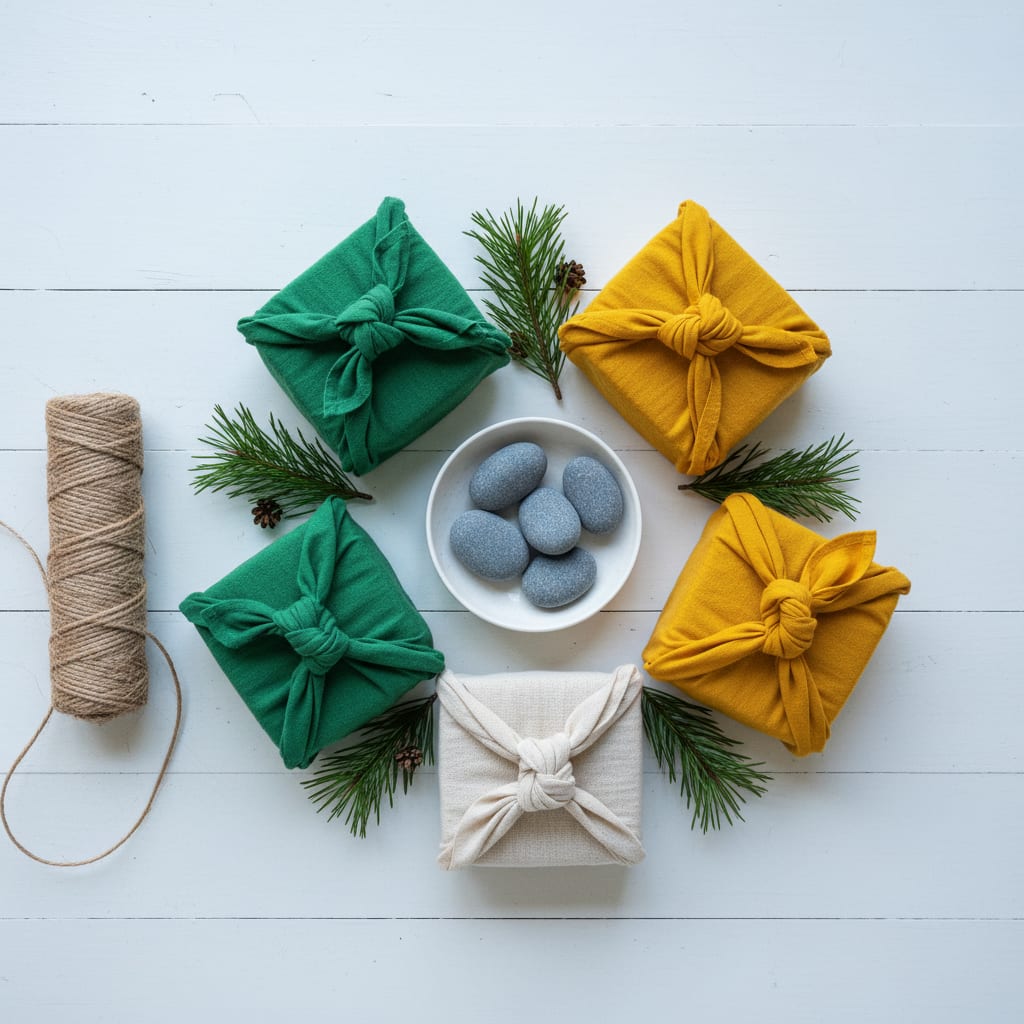
The gift exchange that works for a big family is a draw, not everyone buying for everyone. Each child draws one sibling’s name and buys or makes one gift for them, at a price cap that’s the same for every drawer. Add two exclusion rules (nobody draws themselves, nobody draws the same sibling two years running) and keep a written log so next year’s draw can check it. Run the extended family as a separate draw with its own cap, and settle both by the end of November, before December shopping starts. A preschooler draws with a parent as their shopping partner.
Why a draw beats everyone-buys-for-everyone
It’s arithmetic. When every child buys for every sibling, the number of gifts is the number of kids multiplied by the number of their siblings.
| Kids | Everyone buys for everyone | One sibling draw |
|---|---|---|
| 3 | 6 gifts | 3 gifts |
| 4 | 12 gifts | 4 gifts |
| 5 | 20 gifts | 5 gifts |
| 6 | 30 gifts | 6 gifts |
With five kids that’s twenty small gifts to fund, shop for, wrap and hide, most of them chosen by a parent anyway. A draw gives each child one gift to think about properly, and gives each child one gift that a sibling picked out for them. In a house of five, that second part is the point.
The sibling draw: two ways to run it
The hat: secret, with a log
Names go in a hat on a set day. Each child draws in turn, from youngest to oldest. If you draw yourself or last year’s person, you put the name back and draw again before anyone else goes. An adult keeps the log: one line per year, who drew whom.
This is the traditional Secret Santa format, and the secrecy is the fun. It has one weakness: with three or four kids, the re-draw rule can leave the last drawer with only a forbidden name in the hat. When that happens, put every name back and start again. That’s why the youngest draws first, so the oldest, who can cope with a redo, is the one left at the end.
The wheel: no secrets, no arguments
Write the kids’ names in a fixed circle, in birth order, and keep it with the decorations. In year one, everyone gives to the next name round the circle. In year two, everyone skips one and gives to the name after that. In year three, skip two, and so on.
With five kids, that gives four years of draws in which nobody ever gets themselves and nobody repeats, and by the end everyone has given to every sibling once. Then the cycle starts again. It isn’t secret, because anyone who can count works out who has them, but it ends the arguments completely. It works best for families with small children, or for anyone who has had a hat draw end in tears.
How a 4-year-old takes part
Preschoolers can join, and should. They just need a partner.
- They draw with a parent. The parent reads the name and keeps the secret.
- The parent pre-picks three options at the cap. The child chooses one. Three is enough to feel like a choice and few enough to finish before a meltdown.
- They make the card. A drawing on folded paper is their part of the gift.
- They wrap it, badly. Tape everywhere is a feature. The sibling will know who wrapped it, and that’s fine.
A handmade gift counts too. A painted rock, a decorated pencil pot or a coupon for “one go on my bike” is a legitimate gift from a four-year-old, and older siblings tend to keep them.
Setting the cap
One cap per drawer, the same for every child, whoever they drew. Without that rule, the teen with a job outspends the 7-year-old, and the 7-year-old’s gift looks small next to it on Christmas morning.
Who pays depends on age, and saying so up front prevents most of the arguments:
- Younger kids: the gift comes out of the family’s December budget, with the child choosing it.
- Kids with pocket money: they pay part or all of it, and the cap tells them what to save.
- Teens with jobs: they pay their own, at the same cap. The cap is a ceiling, not a target.
Plan the money with everything else in December. A sinking fund, a small amount put aside every month, means the exchange doesn’t land on one paycheck. The method is in our large family budget. It’s the same fair-not-identical principle as birthdays in a big family: the rule is public, and nobody has to argue their case.
The rules, written down
Keep these on one card with the log:
- Nobody draws themselves.
- Nobody draws the same sibling two years running. Check the log.
- One gift, at or under the cap. Handmade counts.
- The giver keeps the secret until the reveal (hat format only).
- Each kid writes a short wish list. Three ideas at or under the cap, on the fridge by the draw date, so the drawer has something to work from.
- The exchange is sibling to sibling. Stockings and gifts from parents are separate and don’t count.
An older child can run the draw as their December job. Holding the hat and keeping the log is a good fit for a 10- or 11-year-old, and it fits into the same chore roster by age as everything else.
The extended-family draw
When grandparents, aunts, uncles and cousins all buy for each other’s kids, the numbers grow even faster than in your own house. Run it as a separate draw with its own organizer.
- Two pools: adults and kids. Adults draw adults; cousins draw cousins. A 6-year-old shouldn’t be shopping for an uncle.
- Exclude your own household. Nobody draws their spouse, their own kids or their siblings in the same house. They already buy for each other.
- One cap for each pool. The kids’ cap can be the same as your sibling cap, so your children aren’t handling two different numbers.
- Draw by mid-November. Families spread across several homes need the names before anyone starts shopping. Whoever organizes it sends each household its names and keeps the only full list.
- Rotate the organizer. One household runs it each year.
White elephant is a different format, built for a party: wrapped gifts, numbers drawn, and stealing. It works for adults and older teens at a gathering, not as the main gift plan. If that’s what your family wants, modernmommyblog’s white elephant gift ideas covers the rules and the gifts.
The timeline
| When | What happens |
|---|---|
| Early November | Set the caps, update the rules card, collect wish lists |
| Mid-November | Extended-family names go out |
| Thanksgiving weekend | Sibling draw (hat or wheel) |
| Early December | Shopping or making, with parents as partners for the little ones |
| A week before | Gifts wrapped and hidden |
| Christmas | The exchange, one at a time, youngest giver first |
Opening one at a time matters. Five gifts opened at once is noise. One at a time, the giver gets to watch.
FAQ: big-family gift exchanges
How do you do a gift exchange with siblings?
Each child draws one sibling’s name and gives one gift at a set cap. Rule out drawing yourself and drawing the same sibling as last year, keep a written log, and let younger kids shop with a parent.
What is a good price limit for a family gift exchange?
Whatever your December budget can carry for every child at once. Set one cap for every drawer, the same whoever they drew, and treat it as a ceiling, not a target.
How do you do Secret Santa so nobody gets the same person twice?
Keep a log. In a hat draw, anyone who draws last year’s name puts it back and draws again. Or use a fixed circle that shifts by one place each year, which can’t repeat until everyone has given to everyone.
Should cousins be in the same gift exchange as adults?
Run them separately. Cousins draw cousins and adults draw adults, each with its own cap, and nobody draws within their own household.