Freezer Meals for Large Families: One Day, 20 Dinners
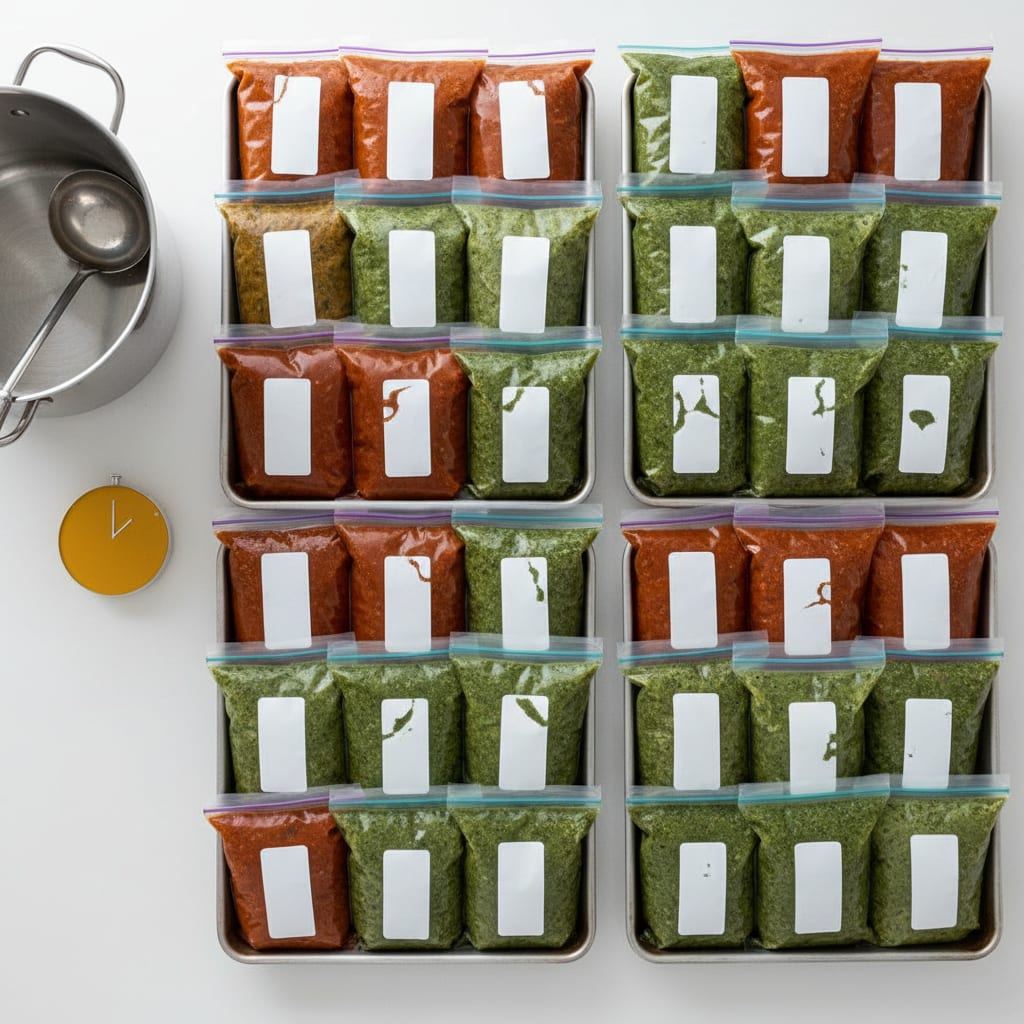
One well-run batch day can put around 20 family-size dinners in your freezer — if you cook like a line, not like a blogger. The method: pick five base recipes and quadruple each, run one shopping trip two days before, prep in stations (chop everything, then cook everything, then pack everything), and use flat gallon freezer bags so a normal freezer actually holds the haul. What kills most first batch days isn’t cooking skill, it’s ambition — twelve different recipes, all new. Five familiar bases, multiplied, is the whole secret.
Why five recipes, not twenty
Twenty different freezer meals means twenty ingredient lists, twenty sets of instructions, and a kitchen that looks like a crime scene by 2pm. Five recipes quadrupled gives you the same twenty dinners with one-quarter of the mental load — and multiplying a recipe you already cook weekly means zero surprises when it hits the table in October.
Pick your five from the soup-and-stew play in the cheap dinners rotation plus one or two tray bakes. My standing lineup:
- Taco soup — dump-and-simmer, freezes like it was born for it
- White-bean chicken chili — the stockpot workhorse
- Meat sauce stretched with lentils — pasta night for a month
- Breakfast burritos — the school-morning insurance policy
- Chicken and rice bake — assembled raw, frozen unbaked
Notice what’s not here: anything cream-based (separates), anything fried (sogs), anything assembled-per-person except burritos, which earn their labor by solving five breakfasts at once.
The batch-day timeline
This is a real Saturday with kids in the house, not a fantasy retreat. Big kids can run the label station; the toddler can be someone else’s job for four hours if you can possibly arrange it.
| Block | Time | What happens |
|---|---|---|
| Shop | Thursday | One trip, one list, sorted by store aisle |
| Stage | Friday night | Defrost nothing; label every bag BEFORE food touches it |
| Chop | Sat 9–10:30 | ALL onions, peppers, garlic for all five recipes at once |
| Cook | Sat 10:30–1:30 | Two stockpots + one skillet + the oven, running in parallel |
| Cool | Sat 1:30–3 | Shallow pans in the fridge — never bag hot food |
| Pack | Sat 3–4 | Flat-fill gallon bags, press air out, freeze flat on a sheet pan |
The chop-everything-first rule is the single biggest line-kitchen transfer. Recipe-by-recipe cooking means washing the same knife five times and losing your rhythm five times.
Labeling: the rule everyone skips and regrets
Every bag gets four things written before filling: name, date, headcount it feeds, and thaw-plus-cook instructions. “Mystery red bag, probably chili?” is how freezer meals die. Write instructions your least-interested adult can follow — “into the fridge the day before, simmer until steaming, add the cheese from the door” — because the whole point of the freezer stash is that dinner happens even when you’re not the one running it.
Frozen flat and stacked vertically like files, twenty gallon bags fit in a standard fridge-freezer with room left for the ice cream that keeps morale functional. A chest freezer makes it luxurious but is not required for round one.
Loading the freezer: twenty bags is a two-day job for most freezers
Batch day ends with a pile of warm-ish bags and a strong urge to cram them all in at once. Don’t. The National Center for Home Food Preservation’s freezing pointers say to add “only the amount that will freeze within 24 hours, which is usually 2 to 3 pounds of food per cubic foot of storage space”, because overloading “slows down the freezing rate, and foods that freeze too slowly may lose quality.”
So do the arithmetic before Saturday, not at 4pm. Find your freezer’s capacity in cubic feet (it’s in the manual) and multiply: a 5-cubic-foot freezer section takes 10 to 15 pounds of new food a day by that rule. If the haul weighs more than that, split the job — cook three recipes this weekend and two the next — rather than stacking warm bags in a freezer that can’t keep up. The same page suggests setting the control to -10°F about 24 hours ahead, and leaving “a little space between packages so air can circulate freely” until they’re frozen. Only then do you stack them upright like files. A freezer thermometer like the Rubbermaid fridge/freezer thermometer earns its shelf space here; NCHFP’s freezer management page says to keep storage at 0°F or lower.
What to hold back until reheat night
Quadrupling a recipe multiplies its weak spots too. NCHFP’s list of foods that do not freeze well reads like a checklist for this lineup:
- Pasta and rice. Cooked macaroni, spaghetti or rice frozen on their own come back “mushy, tastes warmed over”. Freeze the lentil meat sauce and boil the pasta fresh on the night.
- Toppings. Cheese or crumb toppings on casseroles go “soggy”. The cheese lives in a separate bag in the door, which is why it’s on the label.
- Milk sauces. For casseroles or gravies they “may curdle or separate”. This is the reason there’s nothing cream-based in the five.
- Seasoning. Pepper, cloves, garlic and some herbs “tend to get strong and bitter”, and salt “loses flavor”. The advice is to “season lightly before freezing, and add additional seasonings when reheating or serving.” When you quadruple, quadruple everything except the spice.
Thawing and reheating
Put the reheat rules on every bag, because the person reheating may not be you. NCHFP’s page on thawing and preparing foods says to thaw “in the refrigerator at 40°F or less, in cold running water less than 70°F, or in the microwave if you’ll be cooking or serving it immediately”, and never on the counter. Plan ahead: even small amounts “require a full day to thaw” in the fridge. It also notes that “most cooked or prepared foods do not have to be thawed before heating”, and that “casseroles, soups, stews and leftovers should be heated to at least 165°F in the center prior to serving.” So a frozen block of soup can go straight into the pot.
What this actually saves
Time is the obvious win: four hours of batch work replaces roughly ten hours of scattered weeknight cooking, and the “what’s for dinner” decision is pre-made twenty times. The money win is quieter but real — batch day means buying proteins and beans in bulk quantities at bulk prices (the full logic is in what to buy in bulk), and it torpedoes the expensive failure mode: the 5:40pm pizza order that happens because nothing was planned. Slot the twenty dinners into your weekly plan as two or three “freezer nights” a week — how they fit the calendar is covered in the 30-minute meal planning system.
FAQ: big-family freezer meals
How long do freezer meals last?
For best quality, aim to eat most cooked meals within about three months — they stay safe longer, but texture drifts. This is why the system is five recipes you rotate constantly, not a doomsday stockpile: the stash should turn over every six to eight weeks.
Do I really need a chest freezer?
Not for your first batch day. Twenty flat-frozen gallon bags fit a standard freezer if you evict the freezer-burned mysteries first. If the system sticks, a small chest freezer is the upgrade that lets you buy meat only when it’s cheap.
Can I freeze meals raw instead of cooked?
Yes — “dump bags” (raw ingredients frozen together, thawed into the slow cooker) trade batch-day cooking time for weeknight simmer time. I run them for chicken dishes; soups and sauces I fully cook so a distracted Tuesday only requires reheating.
What if my first batch day falls apart halfway?
Then you have ten dinners instead of twenty, which is still ten dinners. Cut scope, not the system: next round, three recipes tripled. The batch day you finish beats the one you planned.