When Can a Car Seat Face Forward?
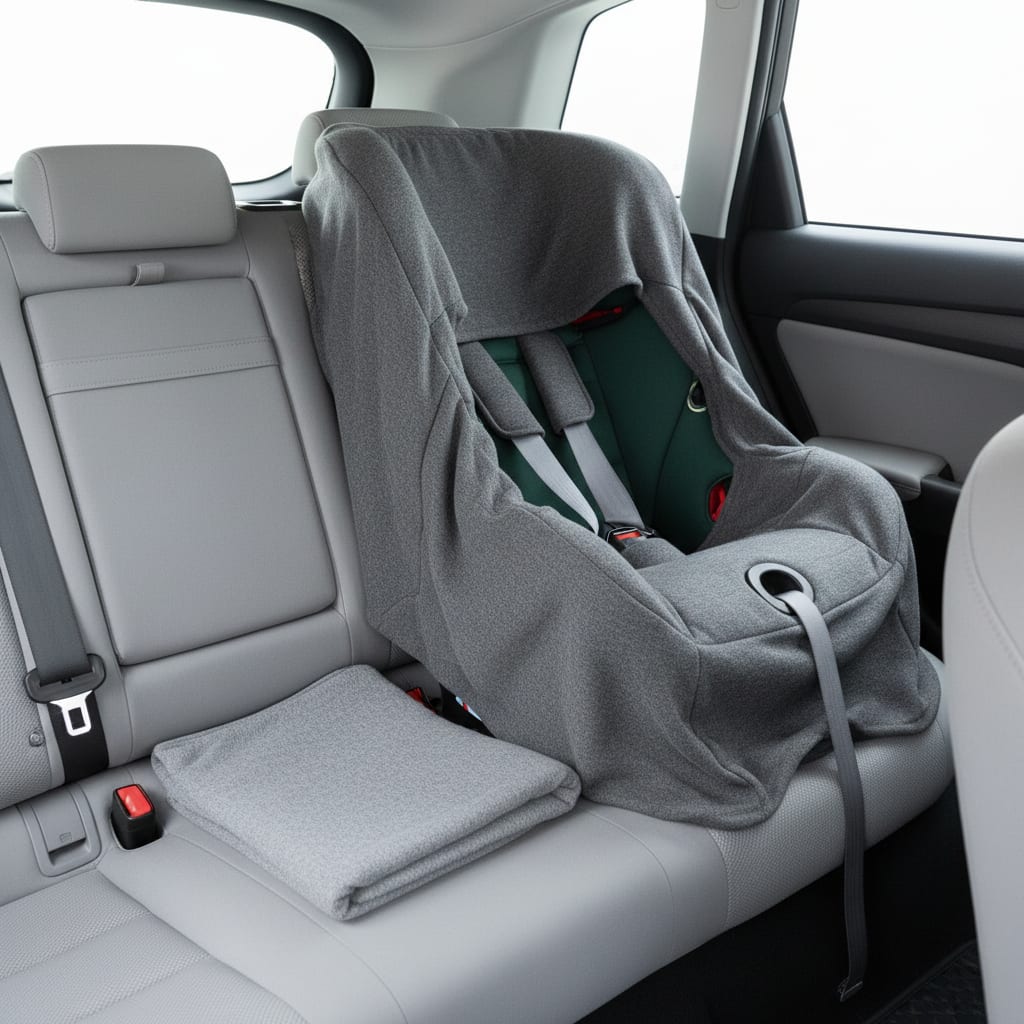
There is no universal weight or birthday that turns a car seat around. The recommendation from both the American Academy of Pediatrics and NHTSA is that children ride rear-facing as long as possible, until they reach the highest height or weight allowed rear-facing by their car seat’s manufacturer. That limit — printed on your seat’s label and repeated in its manual — is the answer to “when”, and it is different for different seats. Your state’s law sets a legal minimum, and those minimums vary; treat yours as a floor you must clear, never as the moment to flip the seat.
I have flipped a seat early. It was my second kid, I had a squashed-looking toddler and a lot of opinions from the school gate, and I was wrong. Here’s how to read the actual limits instead.
The answer is on your seat’s label, not on a milestone chart
Two numbers govern rear-facing use, and both are model-specific:
The rear-facing weight limit. The maximum weight the manufacturer allows in the rear-facing position for that exact seat. Infant carriers and convertibles have very different figures, and two convertibles from the same brand can differ. Yours is on the label on the shell and in the manual.
The rear-facing height limit. Usually expressed as a standing height, and often also as a rule about the child’s head relative to the top of the shell — many manufacturers require a specific clearance between the top of the head and the top of the seat. The exact wording is model-specific, so read yours rather than borrowing a number.
Whichever your child reaches first ends rear-facing in that seat. And “outgrown this seat rear-facing” is not the same as “ready to face forward” — a child who has maxed out an infant carrier usually has years of rear-facing left in a convertible (such as the Graco Extend2Fit) or all-in-one, which is exactly what both agencies recommend doing. The AAP puts it plainly: when a child outgrows an infant seat, they should continue rear-facing in a convertible or all-in-one.
Why rear-facing longer is the safer default
In a frontal crash — the most common serious crash type — a rear-facing seat lets the shell take the force and spreads it across the child’s whole back, head and neck together. Forward-facing, the harness holds the torso while the head and neck are thrown forward against them. Young children’s heads are proportionally heavy and their necks are still developing, which is why the direction the seat faces matters more for them than for anyone else in the car.
That’s the entire argument, and it doesn’t have an expiry date attached. Nothing about a first or second birthday changes the physics.
What is not a signal to turn the seat
Every one of these gets used as a reason, and none of them is one:
Bent legs. Rear-facing kids sit cross-legged, prop their feet on the seatback, or hang them over the side, and it does not hurt them. Leg-room complaints are an adult’s discomfort projected onto a child. If legroom is genuinely tight, a seat with an extension panel buys real inches — that’s one of the things the convertible seat class is built to solve.
A birthday. Age is not the limit. Height and weight are.
Motion sickness or protest. Real, and worth solving with window shades, ventilation and shorter unbroken stretches, but not a safety reason to turn the seat.
“They can see out better.” True, and irrelevant.
Their older sibling faces forward. In a big family this is the one that actually causes the flip, because the crew notices everything and negotiates constantly. The answer we use out loud: seats change when the seat says so, and everybody gets there.
A minimum on the forward-facing side of the label. Your seat also states minimums for forward-facing use. Meeting a minimum means the seat may be used that way — it says nothing about whether it should be yet.
State minimums are a legal floor, and they vary
Every US state has a child restraint law, and they are not identical — the minimum age or size at which forward-facing becomes legal differs from state to state, and states amend them. Look up the current rule for the state you live in, and check again if you move or if you’re doing a long drive across several.
Two things worth keeping straight. A state minimum is the point below which you are breaking the law; it is not advice about the safest choice, and it is generally set well below what the safety recommendation would give you. And a state law can never override your seat’s manual — if your seat says a child is too small for forward-facing use, that governs regardless of what the law would permit.
What changes when you do turn it
When your child genuinely maxes out rear-facing, the install is not simply the same seat spun round.
- The belt path changes. Convertibles have separate rear-facing and forward-facing belt paths through the shell. Using the wrong one is one of the most common installation errors there is.
- The top tether becomes part of the job. Forward-facing harnessed seats use a top tether, anchored to the vehicle’s tether point. Find that anchor in your vehicle manual before you install — and check that the position you’re using has one, which is a live problem in third rows.
- The recline usually changes. Most convertibles use a more upright setting forward-facing; the shell has a marked line or an indicator.
- The harness slots move. Forward-facing, the straps come from slots at or above the shoulders — the reverse of rear-facing.
- Check the seat is still in date. A seat that’s been through two kids may be closer to the end of its life than you think; it’s worth a look at the manufacture date while you have the shell out of the car.
Get the new install checked once. A certified child passenger safety technician will do it free in most areas, and a conversion is exactly the moment worth spending that half hour.
FAQ: turning a car seat forward-facing
How much should a child weigh to face forward in a car seat?
There’s no single figure. The relevant number is the maximum rear-facing weight printed on your specific seat — stay rear-facing until your child reaches that, or the seat’s rear-facing height limit, whichever comes first. Your seat also lists a minimum for forward-facing use, but meeting it isn’t a reason to switch.
When should you turn a car seat around?
When your child has reached the highest rear-facing height or weight allowed by that seat’s manufacturer, and not before. Both the AAP and NHTSA recommend rear-facing as long as possible, and moving into a convertible or all-in-one when an infant carrier is outgrown rather than turning forward.
Is it illegal to face a car seat forward too early?
Every state sets a legal minimum, and they differ, so check your own state’s current rule. But the legal minimum is a floor, not a recommendation — and it never overrides your car seat manual, which can require rear-facing use beyond what the law demands.
My child’s legs are cramped rear-facing. Is that a problem?
No. Rear-facing children fold their legs, prop their feet or dangle them, and it isn’t harmful or painful. If you want more room, some convertibles offer extended rear-facing legroom by design — that’s the fix, rather than turning the seat.
Can a one-year-old face forward?
The recommendation is to stay rear-facing well past the first birthday, until the seat’s rear-facing limits are reached — many convertibles allow years more. Age isn’t the deciding factor; the manufacturer’s height and weight limits are.