2.37 Section 2 · Family Logistics
Tween Phone Rules in a Shared Bedroom: Screens Off First
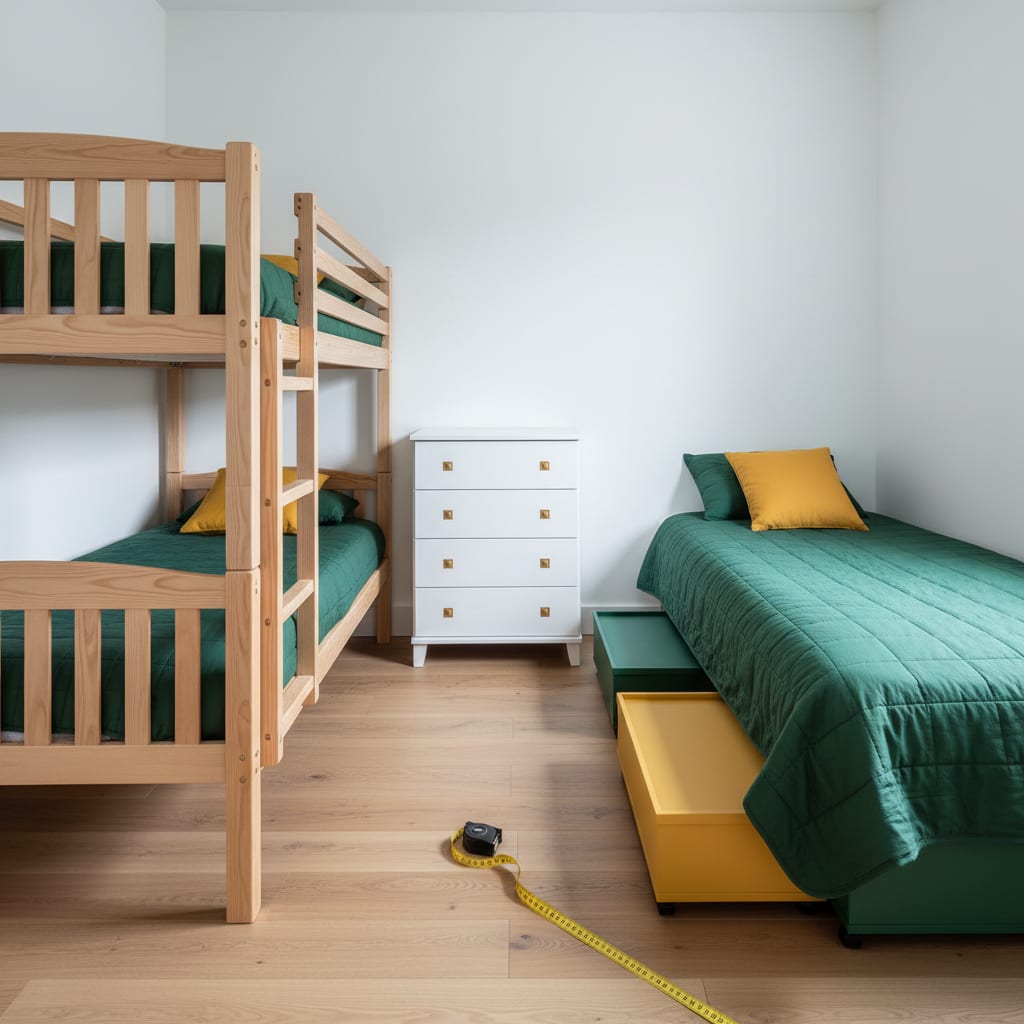
A tween phone in a shared bedroom wakes the younger sibling too. The fix: the phone docks outside the room before the little one's lights-out, not the tween's.
By Bree Hollis · October 27, 2026

When a tween with a phone shares a bedroom with a younger sibling, the phone leaves the room before the younger child’s lights-out, not the tween’s. It charges somewhere else overnight, and it doesn’t come back until morning. The American Academy of Pediatrics already recommends that. Its HealthyChildren site says to keep phones and other screens out of children’s bedrooms at night and to turn them off at least an hour before bed. In a shared room there’s a second reason. A phone in bed costs the tween sleep, and its glow and buzz can wake the sibling who went down an hour earlier.
Why a phone is worse in a shared room
In a room of one, a phone after lights-out is one child’s problem. In a shared room it’s two children’s problem, for three reasons:
- Light. A screen lights up a dark room. The younger child is asleep a few feet away, and every time the tween checks a message the room changes.
- Sound. Notifications, the buzz of a vibrate setting on a bedside table, a video that plays out loud before the tween can mute it. A sleeping six-year-old doesn’t need much to wake.
- The tween’s own sleep. HealthyChildren’s page on teens who can’t fall asleep says light from phones and tablets “can trick the brain into thinking that it’s daytime”, and that “Having screens right there is tempting and sets kids up for staying up too late.”
And the timing works against you. HealthyChildren notes that sleep-wake cycles “begin to shift up to two hours later at the start of puberty”. So the tween is getting later just as the phone arrives. Betteroo’s guide explains why the teenage body clock drifts later and what still helps. Its short answer is the same as the AAP’s: phones out of the bedroom.
The rule: the phone docks before the room goes dark
In a shared room the bedtime runs on a stagger: younger child down first, older child in 20 to 30 minutes later on tiptoe. That system is in the shared-room bedtime post. The phone fits into it in one place:
The phone is docked before the younger child’s lights-out. Not when the tween goes to bed, because by then the younger child is asleep and the tween is walking into the room with a lit screen in their hand.
Where it docks matters less than that it’s the same place every night and it isn’t the bedroom. HealthyChildren suggests “a family charging station away from bedrooms”. A kitchen counter works. A multi-port dock such as this MSTJRY five-port charging station gives every phone and tablet in the house one spot, which makes it a house rule rather than a rule aimed at one kid. The adults’ phones go there too, at least on school nights.
Working out the dock time
You need two numbers: the younger child’s lights-out and the tween’s.
| Younger sibling | Tween | |
|---|---|---|
| Lights out | 7:45 | 8:45 |
| Phone docked | — | 7:45 |
| Screens off (AAP: at least an hour before bed) | — | 7:45 |
Here the two times land together. In your house they may not: if the younger child’s lights-out comes first, dock then; if the hour-before-bed mark comes first, dock then. Use whichever is earlier.
The CDC’s ranges are the check on the tween’s own bedtime: 9 to 12 hours a night for ages 6 to 12, and 8 to 10 hours for 13 to 17. A 12-year-old up at 6:30 for school needs to be asleep by 9:30 to get nine hours.
What the tween does with the hour
Docking the phone at 7:45 leaves the tween an hour before their own lights-out, and that hour has to go somewhere. If it’s empty, they’ll ask for the phone back every night.
Give it a shape. Showers and teeth while the bathroom is free. Homework they didn’t finish. Twenty minutes with an adult, which is easier to find once the youngest is down. A book in bed, read by a booklight, once they’re in the room. That’s the same deal as the older-kid contract in the shared-room post: the tween gets a later lights-out and their own reading time in exchange for walking into a quiet room quietly.
Say it as a trade, not a punishment: “The phone docks at 7:45, and you get until 8:45.” A tween can live with a rule that comes with something.
The alarm problem
The phone is usually the alarm. Move it out of the room and the tween will say they can’t wake up without it.
In a shared room, an alarm wakes two children to get one up anyway. The early-bus post covers this: the adult on the first shift wakes the early child with a hand on the shoulder. If the tween and the younger sibling get up at the same time, an ordinary alarm clock on the tween’s side of the room is fine, because both need to be up. The phone still stays in the kitchen.
Music, podcasts and “I need it to fall asleep”
Some tweens fall asleep to music or a podcast. In a shared room, that’s sound the younger child hears too. If the room needs sound, give it a white-noise machine that runs all night for both children. Tell the tween they can listen to music or podcasts on the sofa, before the phone is docked.
Focus mode for the hour before
Before the phone is docked, notifications are the thing that keeps it in a tween’s hand. HealthyChildren’s guidance for young teens suggests teaching them to set “do-not-disturb” or “focus mode” for homework and bedtimes. Have the tween set a schedule that starts at dock time on school nights, so it switches itself on.
When the phone rule isn’t enough
If the tween is 12 or 13 and the younger sibling is 5 or 6, a phone rule can only do so much. A big age gap in one room is its own problem. The room-sharing playbook covers when siblings stop sharing and how to rearrange rooms when they do. A phone fight every night is sometimes the first sign that the room needs re-assigning, not a stricter rule.
 The little one's bedtime sets the dock time
Betteroo builds a personalized sleep plan for a baby or toddler from a short quiz, so the youngest's lights-out is right and every other bedtime in the room can follow it.
Take the sleep quiz →
FAQ: a tween’s phone in a shared bedroom
Should a tween have a phone in a shared bedroom at night?
No. The AAP recommends keeping phones and other screens out of children’s bedrooms at night. In a shared room the phone can also wake the younger sibling, so it charges outside the room overnight.
What time should a tween put their phone away?
Before the younger sibling’s lights-out, and at least an hour before the tween’s own bedtime. Whichever of those comes first is the dock time.
Can the tween use their phone as an alarm in a shared room?
Better not. The phone stays out of the room, and an alarm wakes the younger child too. Use an adult wake-up, or a plain alarm clock only if both children get up at that time.
What if the tween goes to bed after the younger one is asleep?
That’s the normal setup. The tween comes in later, but the phone is docked before the younger child’s lights-out, so they walk into a dark room without a screen.
More in section 2, Family Logistics.

Who runs this house
Bree Hollis
I'm Bree — mom of five (11, 9, twin six-year-olds, and a toddler) and a former restaurant line cook. I used to plate a hundred covers a night; now I feed seven every night and run the house the same way: prep in batches, label everything, time the plays. Every system here got tested on my own crew first — and no bedtime plan survives contact with twins.
More about Bree & the crew