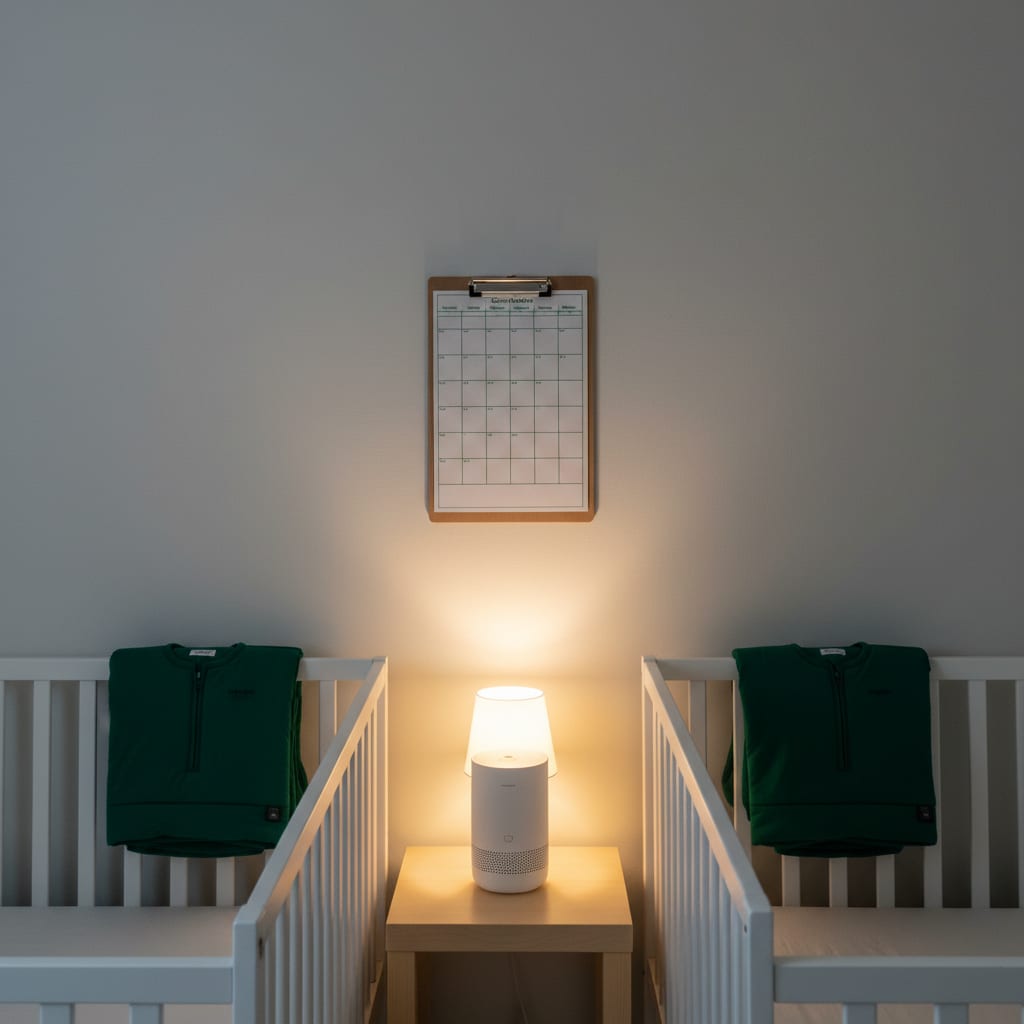
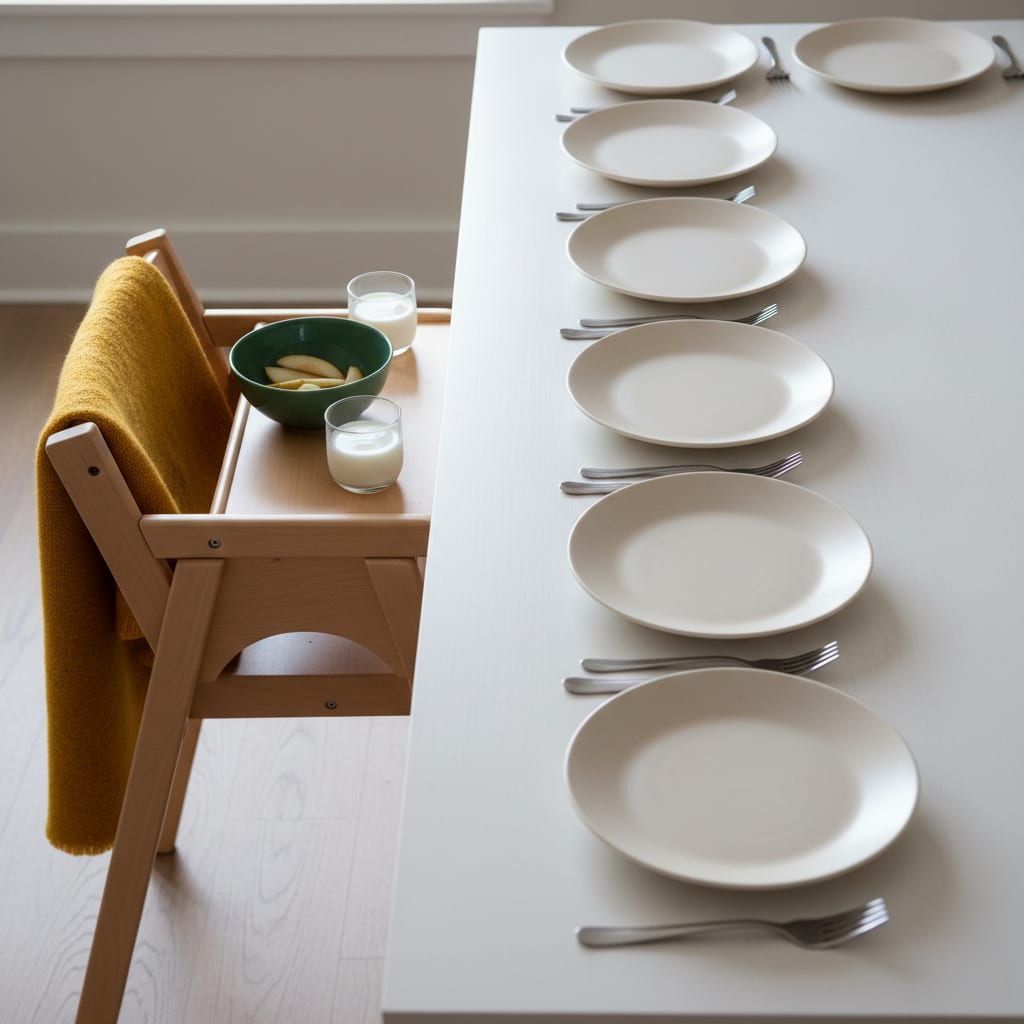
Should Kids Sleep In on Weekends? The Big-Family Rule
Kids can sleep in on weekends a little, not a lot. Keep each child’s Saturday and Sunday wake-up within about an hour of the school-day time. A long lie-in moves the body clock later, so nobody is tired at Sunday bedtime and Monday starts short. The American Academy of Pediatrics puts it plainly: “The same waking time (both on weekdays and weekends)” helps a child “feel secure and comfortable.” In a big family, don’t negotiate five lie-ins. Set one house wake-up window, and let the adults take turns on the early shift.
How a Saturday lie-in turns into a bad Monday
In a house of seven it runs like a relay.
Friday runs late. Movie night, a sleepover, the big kids “just finishing” something.
Saturday everyone sleeps it off. The 9-year-old surfaces at 9:30, the twins at 8:45, and the toddler, who never got the memo, at 6:15.
Sunday night nobody is tired, because their body clock moved with the lie-in. Bedtime runs an hour late.
Monday the alarm lands on kids who are short on sleep and, in body-clock terms, still on Saturday.
Dr. Innessa Donskoy, a pediatric sleep specialist at Advocate Children’s Hospital, explains the mechanism in an Advocate Health Care article. Weekend “catch up” sleep looks harmless, but it leaves a child’s internal “time zone” out of step with the school week. Her fix is the one this post is built on: have them “wake at the same time on the weekend as they would on a weekday.”
The big-house multiplier: one drifted clock is one hard bedtime. Five is a Sunday night that runs to 10pm and a Monday convoy that leaves without shoes.
How much drift is fine?
The sources sit on a spectrum. The AAP’s healthy sleep habits page and Children’s National (“Make sure sleep and wake times are consistent even on weekends”) say no drift. University Hospitals Rainbow Babies & Children’s is looser. It says “it’s okay to let them sleep in on weekends, a little, if your child isn’t having trouble falling asleep and going to school on time,” and gives the outer limit as a rule of thumb: “Don’t shift wake-up time by more than an hour or two on weekend mornings.”
My house rule sits between those: 60 minutes, and less for the youngest.
| Who | Weekend wake-up | Why |
|---|---|---|
| Baby or toddler still napping | The weekday time | Naps are timed from the morning wake-up, so a late start moves the nap day and the bedtime. |
| Preschooler with no nap | Up to 30 minutes late | Short enough that the evening barely moves. |
| School-age kids, 6 to 12 | Up to 60 minutes late | Feels like a weekend; Sunday bedtime still happens. |
| Tweens and teens | Up to 60 minutes, firmly | Their clocks already pull later (see below). |
UH’s qualifier is the test I actually use. If a child falls asleep fine on Sunday and gets up for school on Monday, the hour is working. If either one breaks, the hour is too much for that child, whatever the table says.
A child who needs a huge lie-in every weekend is usually short on sleep all week. Betteroo’s age-by-age sleep chart lists “sleeping two or more hours later on weekends than on school days” among the signs a child is running short, and its bedtime table counts back from the wake-up time. The fix is an earlier weeknight bedtime, not a longer Saturday.
One house wake-up window, not five lie-ins
On weekdays I stagger the wake times so the bathroom doesn’t jam. On weekends I keep the same order and stretch the window. Everyone is up between the toddler’s weekday time and one hour after the latest school-age wake-up.
Three rules make it stick:
- Light, not shouting. The AAP recommends exposing children “to bright light when it’s time to get up to help stimulate wakefulness.” Curtains open at the end of the window, which beats a wake-up call.
- Breakfast at one time. A single sitting at the end of the window, not four between 6:15 and 10. Once latecomers miss breakfast, the window enforces itself.
- The toddler’s day doesn’t move. Whoever is still napping runs on weekday time. That nap is the one fixed point in the weekend, and protecting it matters more on a Saturday than on a school day.
Fix Friday, not Saturday
The lie-in is usually a symptom of Friday night. Two adjustments do most of the work:
- Cap Friday at one hour late. Movie night starts earlier rather than ending later.
- When Friday blows up anyway, still wake on time. Keep the Saturday wake-up and pay the debt back with a Saturday lights-out up to 30 minutes early. That’s one tired afternoon, and the clock stays where it was. Donskoy’s advice for kids resetting to a school schedule is to “avoid naps during the day,” so a 4pm crash on the couch for the 9-year-old costs you Saturday night.
Making the steady wake-up bearable for the adults
Nobody follows a rule that only works for the kids, so the trade is simple: the kids don’t get a lie-in, but each adult gets one.
- Split the shift. One adult runs Saturday’s window, the other runs Sunday’s. The off-duty adult sleeps in with the door shut, fan or white noise (a Yogasleep Dohm, say) on, and nobody knocks.
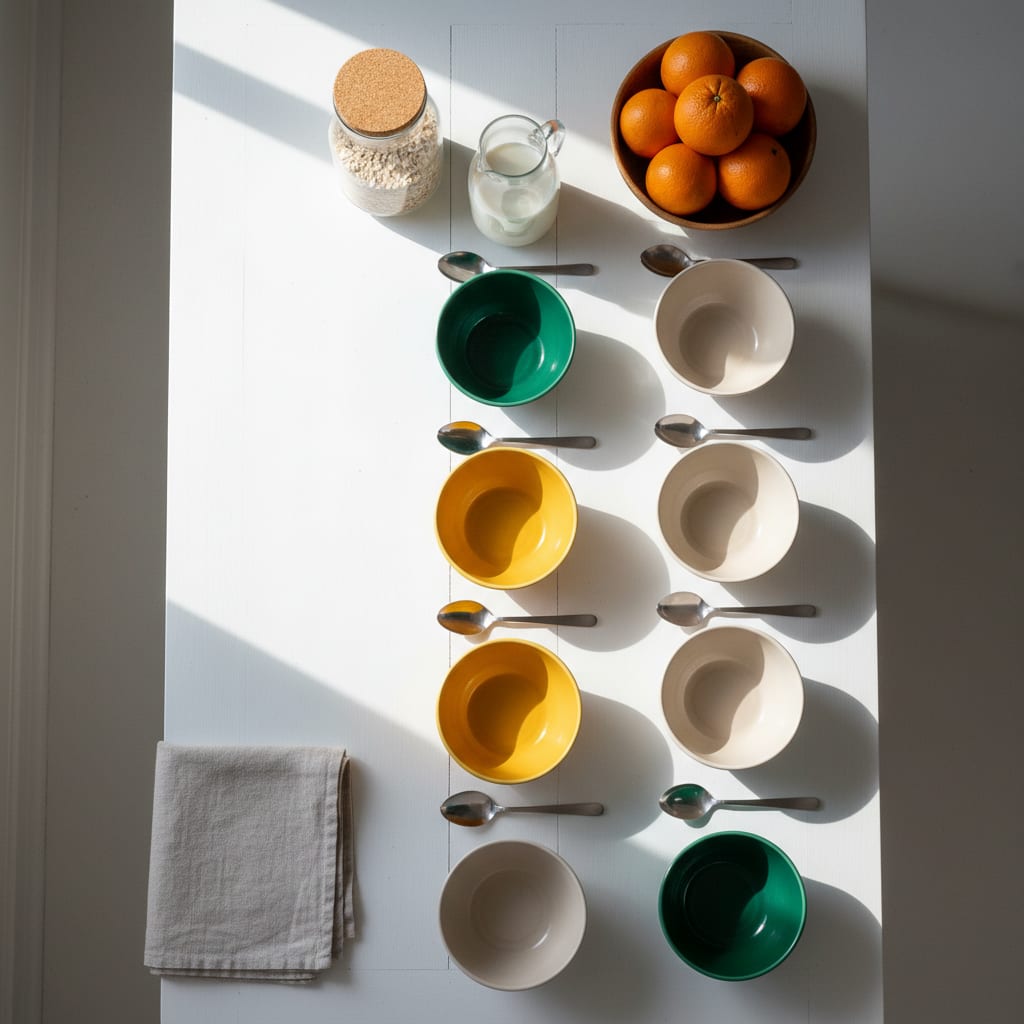
- Prep the morning on Friday night. Bowls, spoons and the cereal on the counter, the coffee maker loaded. The on-duty adult’s first 20 minutes should need zero decisions.
- Give the early risers a job. The kids who wake first get a known quiet activity in the living room, so the window opens for them without opening for everyone.
- Solo parent? Get through the window on autopilot and take your rest in the toddler’s nap, with the big kids on a known quiet hour.
Tweens, teens and the Sunday-night stand-off
Older kids drift hardest, and it isn’t defiance. The AAP notes that “sleep-wake cycles begin to shift up to two hours later at the start of puberty.” A 13-year-old who sleeps till noon on Saturday is hours off the school-week clock by Sunday night, and no bedtime rule beats that.
So hold their wake-up to the same 60 minutes and give them a later Sunday lights-out than the younger kids, which you probably do anyway. If a teen has early shifts, bedtime when your teen works early handles that version, where the weekend wake-up has to sit close to the shift-day time.
If Sunday bedtime still won’t happen, don’t force an early one. Hold the Monday wake-up, let Monday night come naturally, and start next weekend’s window on time.
Where Betteroo fits
The youngest kids set the pace for everyone. When the baby or toddler’s weekend wake-up is all over the place, the naps go with it. If you have held the window and that little one’s mornings are still unpredictable, a plan built for that child is the next step. Betteroo supports children from newborn to age 6. A free quiz about your child’s age, schedule and struggles turns into a step-by-step sleep plan that adjusts as things change.

FAQ: kids sleeping in on weekends
Should kids sleep in on weekends?
A little. The AAP recommends the same waking time on weekdays and weekends. University Hospitals allows a small lie-in for a child who still falls asleep and gets to school without trouble, with “an hour or two” as the outer limit. Within an hour is the more reliable target.
How late can kids sleep on Saturday?
For most school-age kids, up to about an hour past the school-day wake-up. Babies and toddlers who still nap do best on their weekday time, because their naps are timed from it.
Is it OK to let a teenager sleep until noon?
Not regularly. Puberty already shifts the body clock later, and a noon wake-up stacks hours on top. Cap the lie-in and give them a later lights-out instead.
My toddler wakes at 6am on weekends anyway. What now?
Then the toddler is already on schedule, which is the goal. The job is getting the rest of the house to meet them, so split the early shift between the adults and prep breakfast the night before.