Toddler Falling Asleep at Dinner? Fixing the 5pm Crash
A toddler who falls asleep at the dinner table is telling you about the afternoon, not about dinner. The nap was too short, too early, or dropped too soon, and 5pm is when the bill arrives. On the night it happens, check their mouth is empty, then decide by the clock: close to their normal bedtime, it is simply an early bedtime; well before it, it is a crash nap, and bedtime runs a little later. If it happens most nights, fix the nap. In a big family, the fastest structural fix is a first seating, with the toddler fed at 4:45 while the rest of the crew eats at 6.
Why the crash lands at the dinner table
Late afternoon is the longest stretch most toddlers go without sleep. Nemours KidsHealth lists a child who is “cranky, whiny, or moody, especially later in the day” among the signs a child needs more nap or an earlier bedtime. The same page notes that most toddlers “drop down to one nap a day by 18 months” and that many preschoolers give up the afternoon nap between 3 and 5. A child mid-way through either change runs out of fuel before the day does.
A big house adds its own delay. Our dinner is served when the 11-year-old is back from practice and the last pan is off the stove, which on a soccer night is 6:15. A two-year-old awake since 1:30 sits through a loud, slow meal timed for someone else. Of course they fold.
First: check the mouth before you move them
A toddler who nods off mid-meal may still have food in their cheek. The American Academy of Pediatrics’ choking prevention guidance is blunt: “Never let them run, walk, play or lie down with food in their mouths.” Rouse them enough to swallow or spit out what is there before you lift them. Keep the high-chair harness buckled at every meal, so a sleeping toddler slumps into the strap rather than out of the chair, and stop adding food to the tray once they start drooping.
The call at the table: early bedtime or crash nap
The decision is about the clock, not about how deeply they are asleep. Our house rule:
| When they fall asleep | What we do | What it costs |
|---|---|---|
| Within about an hour of their usual bedtime | Wipe hands and face, change the diaper, sleep sack on, straight to bed. No bath tonight. | Nothing. It’s an early bedtime that arrived on its own. |
| Well before bedtime (5pm on a 7:30 night) | Let it be a short crash nap, then run bedtime later than usual. | A later evening for one child, and the routine runs in a different order. |
| Most nights this week | Treat it as a nap problem (see below). | A week of adjusting the afternoon. |
Betteroo’s guide to dropping the last nap makes the same distinction. Falling asleep at dinner now and then is a crash-nap day, and bedtime moves “a touch later that night if the crash ran long.” Falling asleep at dinner every day means the nap went too soon, and the fix is to bring back a short, capped nap for a few weeks.
What we don’t do is wake them at 5:30, drag them through a cranky hour and put them down at the normal time. That buys a short sleep and an overtired bedtime.
Feed the toddler first: the two-seating dinner
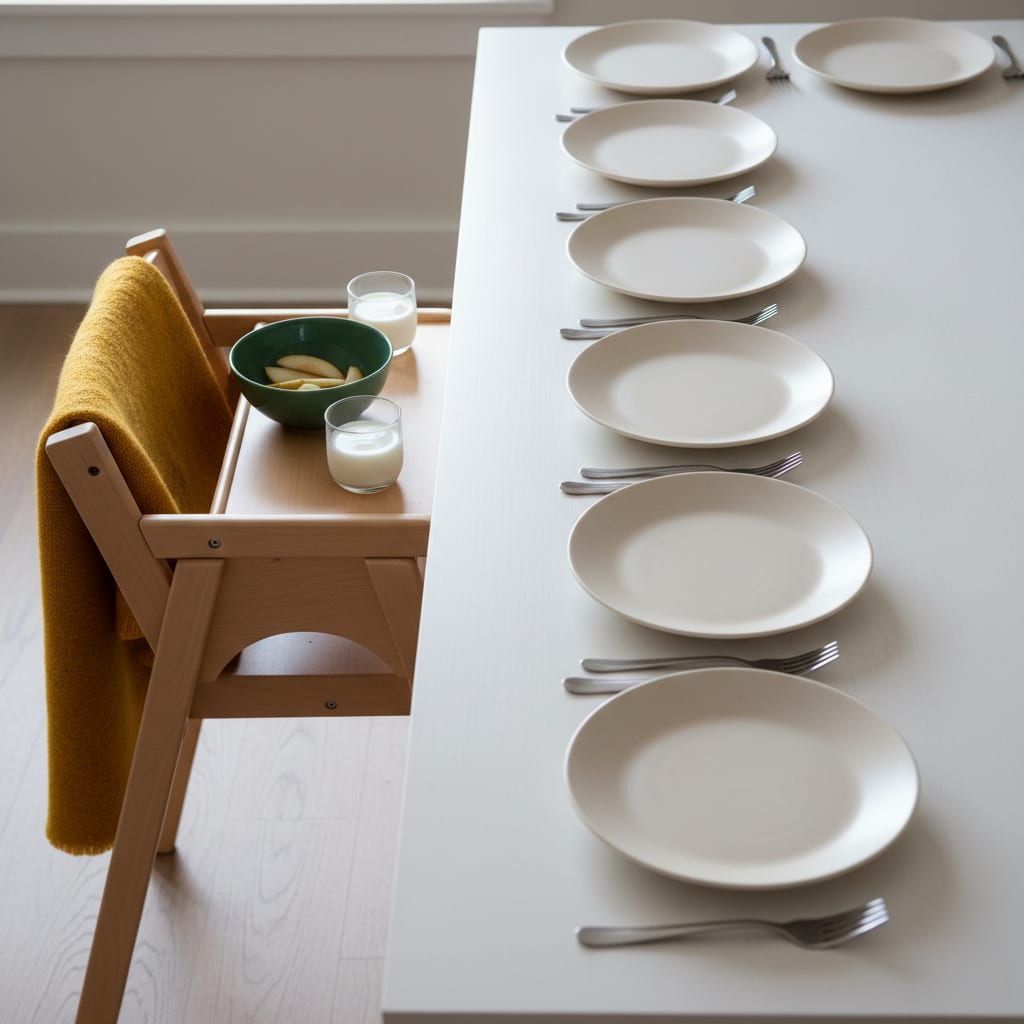
I spent years on a restaurant line, and every kitchen ran early seatings for a reason: the table that can’t wait gets served first. At home, that table is the toddler. The first seating runs at 4:45 or 5:00:
- The toddler’s plate comes off the family meal early. Pull their portion before the sauce goes on. No second dinner gets cooked.
- One adult sits with them. Supervision is a choking rule, and a toddler eating alone while you drain pasta is not supervised.
- An older kid sets it up. It’s a good job for a 9-year-old in the kid kitchen jobs rotation.
- At 6, the toddler joins the family table for a cup of milk, some fruit and the company, without facing a full meal on an empty tank.
Betteroo’s nap-transition guide also recommends “a substantial 3:00 pm snack” for the late-afternoon slump. In our house that is the same snack for everyone, which means the toddler is not the only one melting down at 4:30.
Fix the afternoon, not the dinner
If the crash is a daily event, work through these in order.
Check the nap is still there and long enough. Betteroo’s guide is direct about this: a child who skips the nap and “crashes at dinner is not ready to drop the nap.” If yours is under three and has been refusing the nap, treat it as a phase, not the end of naps.
Check where the nap sits. KidsHealth’s advice is to “set regular naptimes that are not too close to bedtime.” The mistake big families make runs the other way: the nap starts at 11:30 because that’s when the morning school run ends, and the afternoon becomes a six-hour stretch. A nap that starts nearer 12:30 or 1:00 usually closes the gap. For a younger toddler still on two naps, the dinner crash is often the move from two naps to one happening in real time.
Watch the 4:30 car ride. This is the big-family trap. School pickup at 3:15, practice drop-off at 4:30, and the toddler rides along for both. Ten minutes asleep in a car seat at 4:40 is a late nap. It takes the edge off bedtime and leaves a short, wired evening. The fix is staffing, not sleep training: the other adult or a licensed teen does the late run, or it moves to a time before the slump. Protecting the anchor nap covers the same problem for the midday run.
On no-nap days, move bedtime earlier. KidsHealth says it plainly: “If your child gives up daytime naps, consider setting an earlier bedtime.” If they won’t sleep, keep the time as quiet time in their room. A light that changes colour, like a Hatch sound machine and night light, marks the end of quiet time without you having to go in.
An earlier bedtime for one, without moving everyone’s
A 6:45 toddler bedtime doesn’t have to shift the whole evening. In a one-bathroom running order the youngest goes first anyway; on early nights they simply go before everyone else starts. One adult does the toddler while the other holds the table, so nobody else’s bedtime moves, and white noise in the toddler’s room covers the clatter of five people clearing up.
When it’s not a schedule problem
Talk to your pediatrician if the sleepiness is new and comes with a fever, an illness, or a child who is unusually hard to rouse. KidsHealth’s advice is to “talk to your doctor if you have questions or concerns about your child’s sleep,” and a sudden change is exactly that.
Where Betteroo fits
The 5pm crash is a nap-timing problem, and the right timing depends on your child’s age and the shape of your afternoon. Betteroo supports children from newborn to age 6: a free quiz about your child’s schedule and struggles turns into a step-by-step plan that adjusts through each nap change.

FAQ: toddlers falling asleep at dinner
Should I wake my toddler if they fall asleep at the dinner table?
Within about an hour of their usual bedtime, put them to bed and call it an early night. Much earlier, let it be a short crash nap and run bedtime later. Check their mouth is empty before you move them.
Why does my toddler fall asleep at 5pm?
Usually because the afternoon is too long: the nap was short, early, or dropped. A late car ride that turns into a doze makes it worse.
Should a toddler eat dinner before the rest of the family?
It can help. A first seating at 4:45 or 5:00, with an adult at the table, gets food in before the crash, and they can join the family meal later for company.
Is it a sign my toddler should drop their nap?
Usually the opposite. A child who refuses the nap and then crashes at dinner isn’t ready to give it up. Keep a shorter nap for a few weeks and try again later.