School Mornings With 4 Kids: The 45-Minute Routine

A school morning with four or more kids fits in 45 minutes if you do three things: move every decision to the night before, stagger the wake times instead of waking everyone at once, and run the last ten minutes as a fixed launch sequence nobody deviates from. That’s it. The 45 minutes isn’t a speed record — it’s what’s left when you stop making choices at 7am. Mornings in a big house don’t fail because kids are slow; they fail because four to six people are all making decisions simultaneously in two bathrooms, and decisions are the bottleneck.
Load out the night before
A restaurant doesn’t open by cooking breakfast at open; it opens because prep happened the night before. Same principle, same payoff. The night-before list is short and it is not optional:
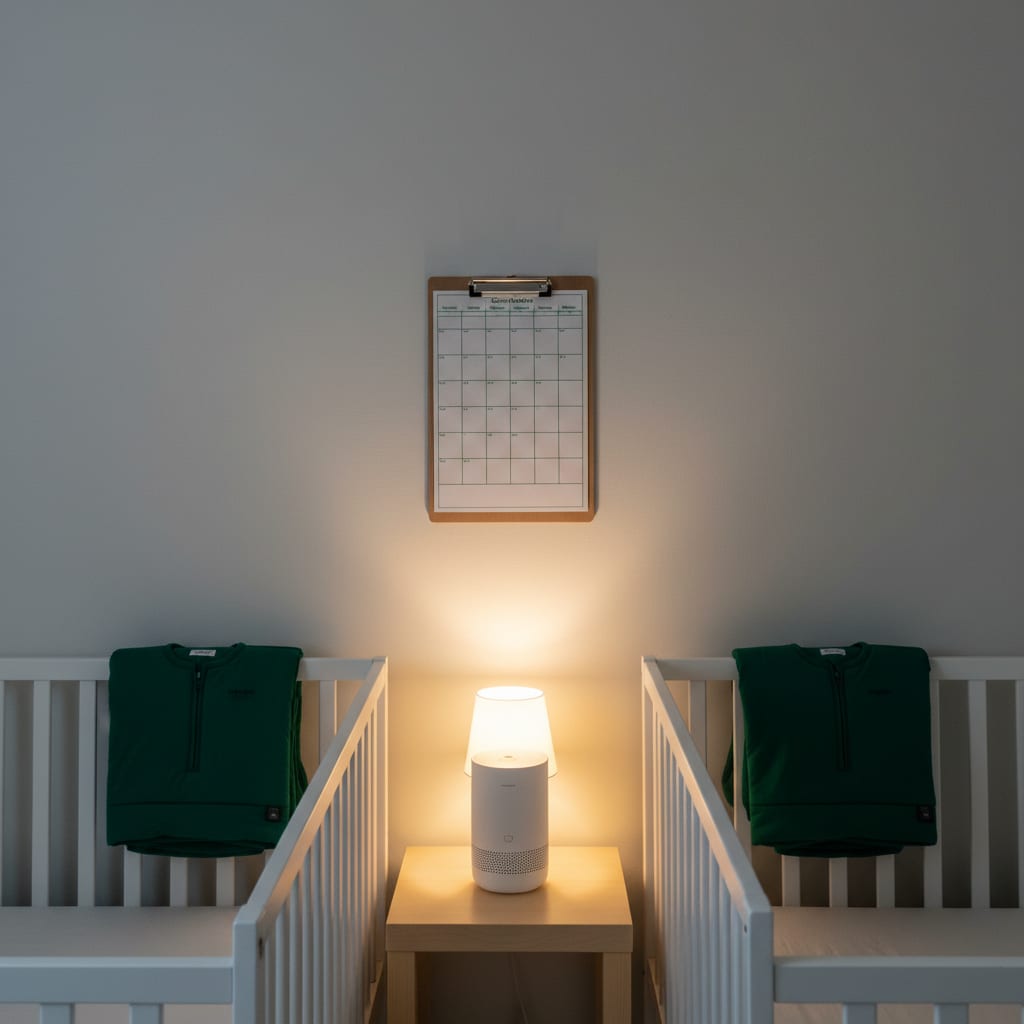
- Clothes out, complete, per kid — including socks, shoes and the hair thing. A missing sock at 7:20 costs the whole crew four minutes.
- Bags packed and by the door — homework in, forms signed, water bottles filled, library book returned to the bag it came out of.
- Lunches built or staged — the 10-minute assembly line runs after dinner at our house, not in the morning. Morning lunch-making is the single biggest schedule killer I’ve found at headcount.
- Breakfast decided — one option, announced. Not a menu. A menu is four negotiations.
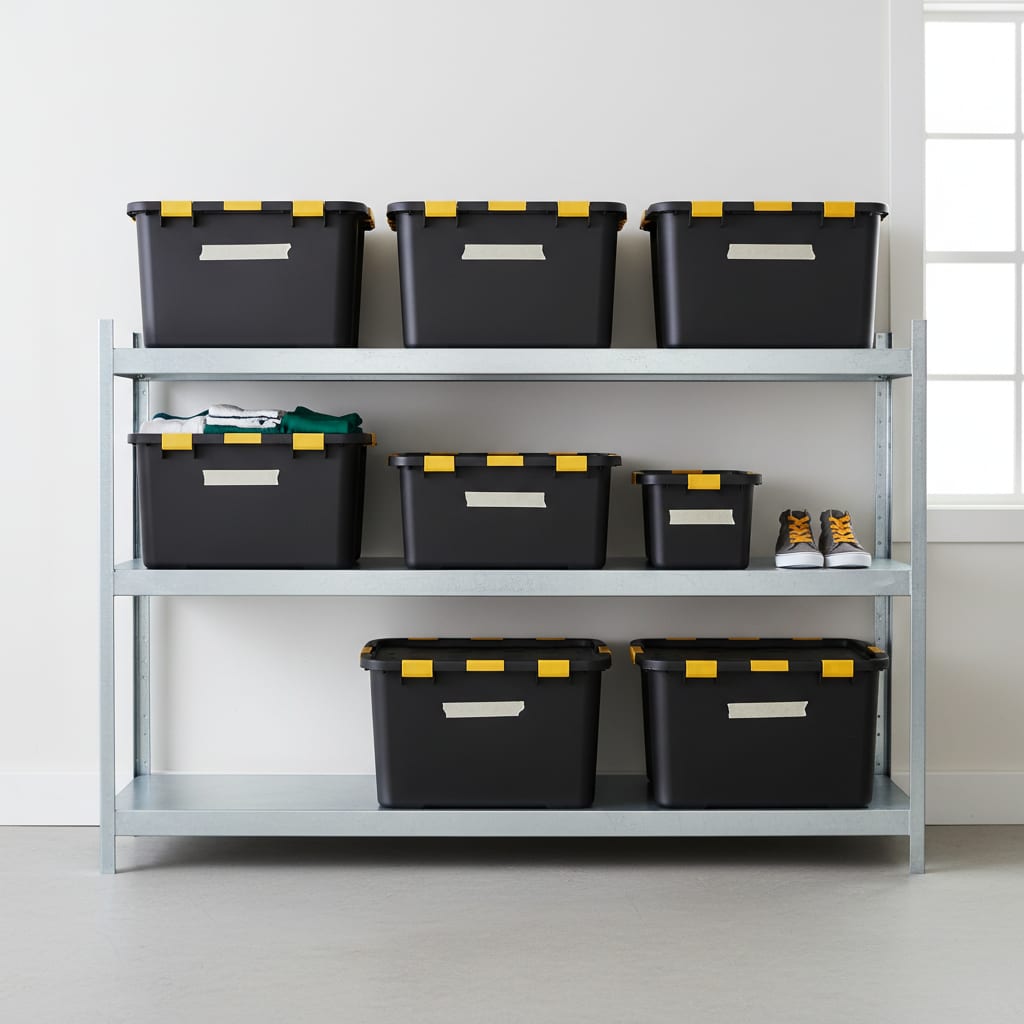
- The launch pad loaded — one zone by the door where bags, shoes and coats live. Nothing goes upstairs at night.
If you get only one of these, take the clothes. Wardrobe decisions are where big-family mornings go to die, and they die loudest with the kid whose opinions arrived before their reading skills.
Stagger the wake times
Waking four kids at once creates a four-person queue at a two-person bathroom, and everyone waits. Stagger them by five to ten minutes in the order of who takes longest, not who’s oldest.
Our order runs: the slow-starter first, then the shower kid, then the twins together (they operate as a unit and separating them costs more than it saves), then the toddler last — because the toddler is the only one whose extra awake minutes actively generate work for me. The kid who needs the longest runway gets the earliest wake, which sounds obvious and is almost never how families actually do it.
Give the slow starter genuine floor time before anything is asked of them. A ten-minute buffer of lying-there-quietly costs you ten minutes and saves you the thirty-minute meltdown, which in a big house takes down the whole convoy, not just one kid.
Bathrooms are a schedule, not a free-for-all
Two bathrooms and five kids is a resource-allocation problem, and it is solved on paper, once, not by shouting up the stairs daily.
Assign slots. Showers happen at night for everyone who can be persuaded — this is the highest-yield rule on the list, because a morning shower is ten to fifteen minutes of exclusive access to a scarce resource. Morning bathroom use gets a three-minute cap for teeth and face, with the older kids on the upstairs bathroom and the littles downstairs where an adult can reach them.
Hair is its own station and it belongs to a person, not to a bathroom: one designated chair, one brush, one adult, kids queue in wake order. Hair done in a bathroom blocks the bathroom.
The last ten minutes: run a launch sequence
The final stretch is where a big-family morning either lands or scatters. Ours is a fixed sequence, called out loud, same words, every day:
- T-10: shoes on. Not “get ready” — shoes. It’s the step most likely to be missing and the hardest to do fast.
- T-7: bags to bodies. Everyone wearing their own bag, in the launch zone.
- T-5: the sweep. One adult walks the kitchen and the launch pad: lunches, water bottles, permission slips, the instrument, the gym shoes.
- T-3: last call. Bathroom, then the door. After last call, the answer to every request is “in the car.”
- T-0: out.
Two mechanics make the sequence stick. First, a visible clock the kids can read without asking — a visual countdown timer on the counter turns “how long do I have?” from a question aimed at you into a disc a six-year-old can see shrinking. Time pressure they can see is time pressure you don’t have to voice.
Second, and this is the one people skip: the adult does not carry anything that belongs to a kid. The moment you’re holding a backpack, you’ve become the launch sequence instead of running it. Everyone carries their own; the youngest carries something token so the rule has no exceptions.
Where the 45 minutes actually goes
For a four-kid house, roughly: 10 minutes of staggered wake-ups overlapping the first bathroom slots, 15 minutes for dressing and bathrooms in parallel, 10 minutes for breakfast at the table together (this is the part worth protecting — it’s the only unhurried thing in the block), and the 10-minute launch sequence. Add ten minutes if you have a baby or a toddler in the mix; subtract five once your eldest can genuinely self-manage, which happens earlier than most of us allow.
Notice what isn’t in there: no lunch-making, no clothes-choosing, no bag-hunting, no signing anything. All of that moved to last night, which is the actual trick. The 45-minute morning is really a 20-minute evening.
Keeping it running past week three
Every household system stalls around the third week, and mornings are no exception. The fixes are the same ones that keep the chore roster alive: one owner per job, a consistent daily check, and boring enforcement rather than a fresh speech.
Fold the morning’s dependencies into the rest of the machine, too. Clothes only exist if the laundry line is level — half the mornings I’ve lost were really laundry failures wearing a costume. And re-run the whole plan every August, because a kid who’s grown a grade needs a shorter runway than last year’s version of them, and giving a competent nine-year-old the wake time of a seven-year-old is how you manufacture a stall.
FAQ: school mornings with multiple kids
What time should kids wake up for a 45-minute school morning?
Work backwards from the door: 45 minutes for the first kid up, with each subsequent kid staggered five to ten minutes later. If your bus is at 7:45, that’s a 7:00 first wake — and a bedtime early enough that 7:00 isn’t a fight, which is the actual constraint.
How do you handle one bathroom with four kids?
Move every shower you can to the evening, cap morning bathroom time at about three minutes each, assign slots in wake order, and run hair at a separate chair outside the bathroom. Nights carry the load a single bathroom can’t carry in the morning.
Should kids make their own breakfast?
From about six, yes, for a pre-decided single option — cereal, toast, yogurt, whatever your one announced choice is. Choice is the expensive part, not the labor. Keep the option list at one on school days and open it back up at the weekend.
What if one kid is always the reason everyone’s late?
Give that kid the earliest wake time and the longest runway rather than more pressure. Slow starters are almost always a sequencing problem, not a motivation problem, and pressure applied to a slow starter in a busy house costs the whole crew the morning.