Once-a-Month Cooking: A Realistic First Batch Day
For your first once-a-month cooking day, plan 10 to 12 freezer meals from just 3 or 4 base recipes, shop the day before, run the cook as three stations — brown, assemble, label — and expect about five hours door to door. That’s the realistic version. The Pinterest version, where a first-timer produces 30 distinct dinners in one afternoon, is how people do once-a-month cooking exactly once and never again. Twelve dinners in the freezer changes your month; a burnout day changes nothing but your willingness to try.
I ran batch production for a living before I ran it for five kids. Here’s the first day that actually survives contact.
Why 12 meals, not 30
The 30-meal day fails on three predictable fronts: fridge space (30 meals of ingredients don’t fit in a home fridge), oven and burner space (you can only brown so much at once), and the human at the stove (hour seven of anything is where mistakes and resentment both spike). Twelve meals from three or four recipes means each recipe is just tripled or quadrupled — the same knife work, the same pans, more volume. Multiplying a recipe is easy; multiplying recipes is what wrecks the day.
Pick your three or four from the dump-bag end of the big-family freezer catalog: a chili or taco soup, a marinade-based chicken bag, a red sauce with meat, and one casserole-style build if you’re feeling strong. Everything should share ingredients — one day’s shopping, one flavor family per bag, onions chopped once for three recipes. Shared ingredients are the whole efficiency; that’s also why batch cooking makes the cheap-meals math work, since tripling a recipe is what unlocks bulk prices.
The two lists
The night before, write two lists, restaurant-style:
The shopping list, organized by store section, bought the day before the cook. Never shop and batch-cook on the same day — that’s two full jobs wearing one trench coat.
The prep list, in fire order: every task the day needs, written down, crossed off as it dies. “Chop 6 onions. Brown 5 lbs beef. Mix marinade ×3. Label 12 bags.” A batch day run from memory leaks time everywhere; a batch day run from a list is just execution. This is the same rule that makes the 30-minute weekly plan work — the thinking happens the night before, so the doing is dumb and fast.
Also the night before: clear the freezer space, find the bags (Ziploc gallon freezer bags) and the marker (a Sharpie), and label every bag empty — name, date, and the cooking instruction (“thaw overnight, crockpot 6h low”). Bags are impossible to write on once filled and slightly heartbreaking to identify in October.
Batch day: the three stations
Run the kitchen as stations, even if every station is you:
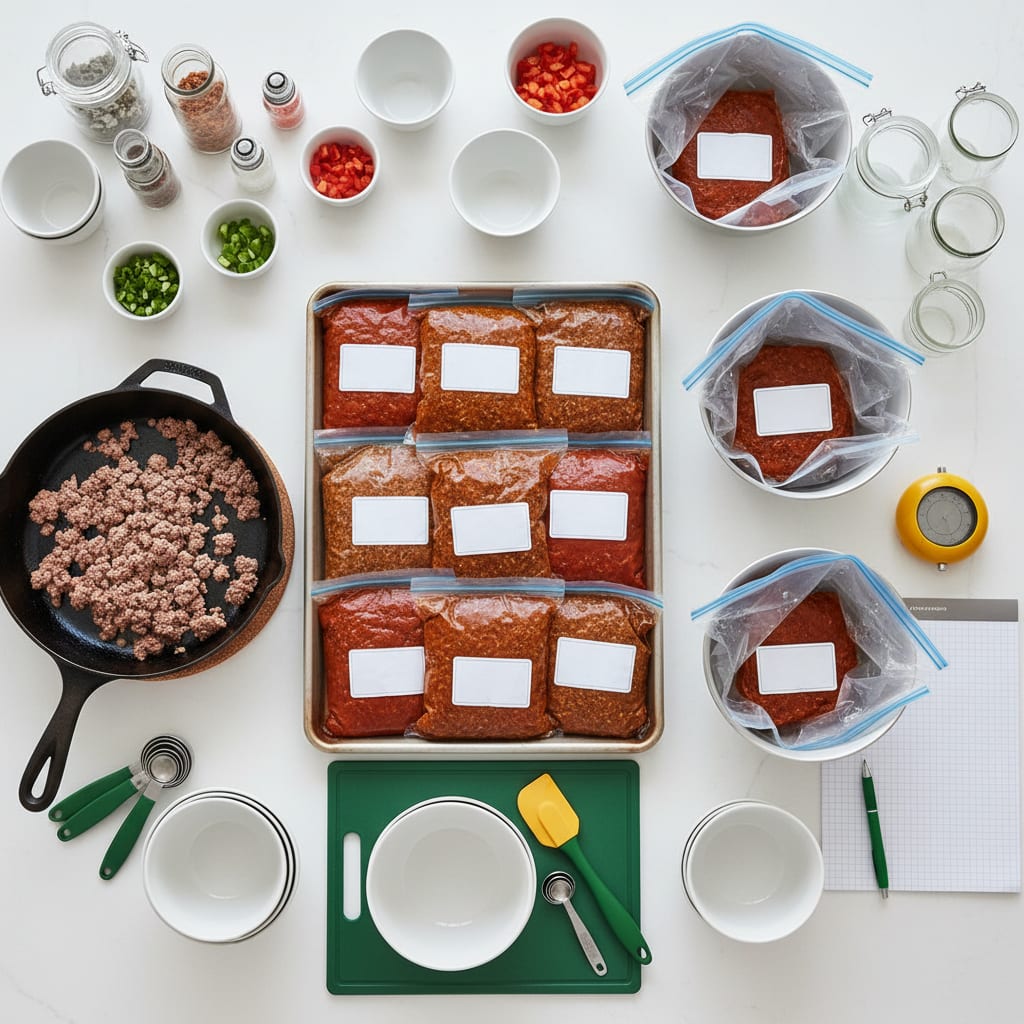
- Station one: the browning line. All the ground meat, all the onions, in the biggest pans you own, in rounds. This is the bottleneck, so it starts first and runs continuously.
- Station two: assembly. Bags stood up in bowls (a bowl per bag stops the tipping disaster), cold ingredients measured in, cooked ingredients added as the browning line delivers them.
- Station three: label, flatten, freeze. Air pressed out, bags laid flat on sheet pans, pans into the freezer. Flat bags freeze faster, stack like folders, and thaw in half the time.
The hour-by-hour, for a 12-bag day: hour one, produce — every onion, pepper, and clove the prep list calls for, chopped in one sitting. Hours two and three, the browning line runs while assembly fills the no-cook bags (marinades first — they’re done in minutes and the early win matters). Hour four, cooked components meet their bags and the casserole build happens. Hour five, the flatten-and-freeze parade, plus cleanup — which you’ve been doing all along, because a sink of hot soapy water open from hour one is the difference between a kitchen and a crime scene at 4 p.m.
Big kids slot straight into station three. My nine-year-old is the fastest labeler in the house and knows it.
After the first day
Run the twelve dinners over the next month and take notes — which bags the crew actually ate, which instructions were wrong, which recipe wasn’t worth its prep. Month two, you rebatch the winners and swap the loser. By month three the day runs closer to four hours, and that’s when scaling to 15 or 18 meals makes sense — with a system underneath it, not instead of one.
FAQ: first batch day questions
How many meals should a beginner make in one day?
Ten to twelve, from three or four recipes. The constraint isn’t ambition — it’s burner space, fridge space, and stamina. A finished 12-meal day beats an abandoned 30-meal day by exactly twelve meals.
How long do freezer meals actually last?
Two to three months is the comfortable quality window for most bag meals — they’re safe longer, but texture drifts. Conveniently, that’s the exact window once-a-MONTH cooking is built around: the freezer empties on schedule.
Do I cook the meals before freezing them?
Split it: meats get browned (raw ground meat clumped in a sauce bag is a bad time), marinades and dump bags go in raw, and casseroles freeze assembled but unbaked. The instruction on the label — written before the bag is filled — carries the rest.
Is once-a-month cooking actually cheaper?
Generally yes, for the boring reason: tripled recipes let you buy bulk sizes, and a stocked freezer is the strongest takeout deterrent ever installed in a kitchen. The savings are real but they arrive as “dinners you didn’t buy,” which is why tracking a month of it is the only way to see the number.