Mornings With a Sensitive Kid in a Busy House
A sensitive kid’s morning in a busy house breaks in two specific places: the first ninety seconds after waking, and the last two minutes before the door. Everything in between is usually fine. So wake that child first rather than last, let light and sound do the waking instead of a person, and give them a solo, low-demand job while the rest of the crew is still asleep. You are not building a calmer household — four other kids will still be loud at 7:15. You are buying one child a quiet head start and a slow exit.
The two places the morning actually fails
Watch it for a week and the pattern is boringly consistent.
Failure one: the wake-up itself. A sensitive kid dragged out of sleep by a person, a light switch and a sentence all at once starts the day already behind. The nervous system got no runway. Everything after that is being managed rather than run.
Failure two: the exit. Shoes, coat, bag, door, car — four transitions in ninety seconds, in the loudest moment of the household’s day, with a deadline attached. This is where the meltdown lands, which is why parents say “she’s fine until we have to leave.”
The middle — breakfast, teeth, getting dressed — is rarely the problem. Fix the two ends and you’ve fixed most of it. Spending your energy on the middle is how families rebuild an entire routine that needed two repairs.
Worth naming plainly: “sensitive” here means temperament. A kid who notices more, reacts harder to noise, light, texture and transitions, and needs longer to shift gears. It is not a diagnosis and nothing here is a screening tool. If mornings involve extreme distress, physical resistance, refusing school, or worsening over months, that’s a conversation with your pediatrician.
Reverse the stagger: this kid wakes first
In the 45-minute school morning, the wake order runs slowest kid first. For a sensitive kid the rule is the same but the reason is different — they don’t need more minutes to get ready, they need more minutes to become a person.
Wake them fifteen to twenty minutes before anyone else. What that buys:
- An empty bathroom. No queue, no waiting in a hallway listening to noise, no negotiating for the sink.
- A quiet kitchen. Breakfast at a table with nobody at it is a completely different experience from breakfast in a scrum of five.
- Time that isn’t measured. Nothing in the first twenty minutes has a deadline attached.
The cost is real: fifteen minutes earlier is fifteen minutes of sleep, so it comes off the other end. Bedtime moves earlier too, or you’ve traded a hard morning for an overtired one. The bedtime side — the protected runway, the fixed sensory setup — is in bedtime for a highly sensitive child, and the two only work as a pair.
Let light and sound do the waking
Nobody should be the alarm clock for this kid. A person arriving to wake a sensitive child compresses three transitions — asleep to awake, alone to accompanied, dark to lit — into one moment.
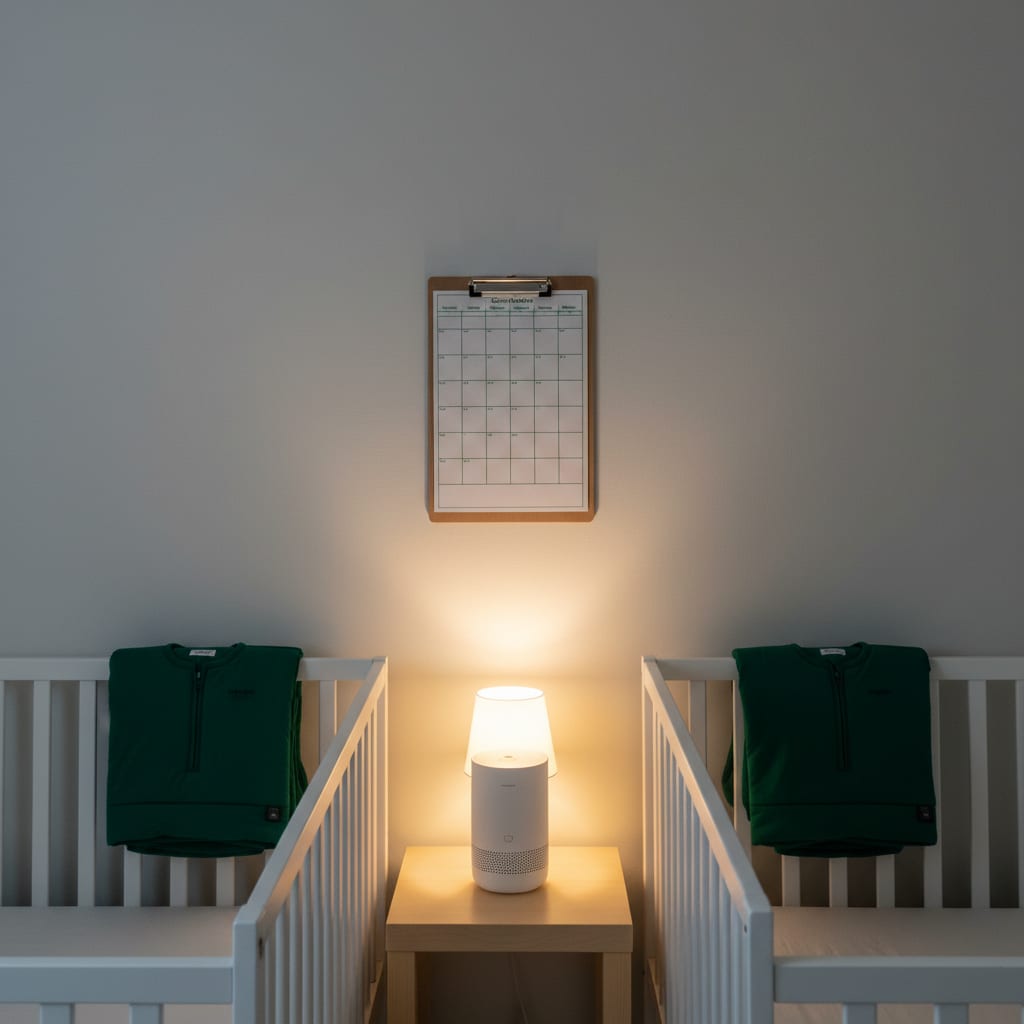
What works instead is a gradual wake: a light that brightens over twenty or thirty minutes so the room changes before the child does. A sunrise-simulation clock like the Philips SmartSleep Wake-Up Light does exactly this and does nothing else, which is the point — and it means the wake-up is the same every single morning regardless of which parent is up.
Some other things that hold:
Do not turn on the overhead light. A lamp, a hallway light, the wake-up light. The ceiling fixture at 6:40 is an assault.
Keep the first sentence short and identical. Ours is “morning — I’ll be in the kitchen.” Not a question, not a list of tasks, and not cheerful. Cheerful at 6:40 is a demand for a matching mood the kid doesn’t have yet.
No screens in the first thirty minutes, and no news radio. A sensitive kid who starts the day with a screen has spent the whole runway without leaving the bed.
Sit for a minute if you can. Not talking. Ours is ninety seconds on the edge of the bed with a hand on a back, and it’s the highest-return ninety seconds of my day.
Give them a job before the crew wakes up
The parallel to the bedtime decompression job: a repetitive, low-demand physical task, done alone, that fills the gap between waking and the house switching on.
Good ones are quiet, solitary, and impossible to fail — filling water bottles, feeding the dog, setting out bowls, putting yesterday’s shoes by the door. Bad ones involve siblings, timing, or anything that can be done wrong.
Two reasons it works. It gives the kid something to do with the twenty minutes, and it converts “you go first because you need to” into “you go first because you’re the one who does the bottles.” A seven-year-old will accept the second and resent the first, and in a big family the sibling framing matters as much as the routine. The job belongs on the household roster like any other — see chore charts by age.
Protect the doorway
The exit is the second failure point and it takes its own design.
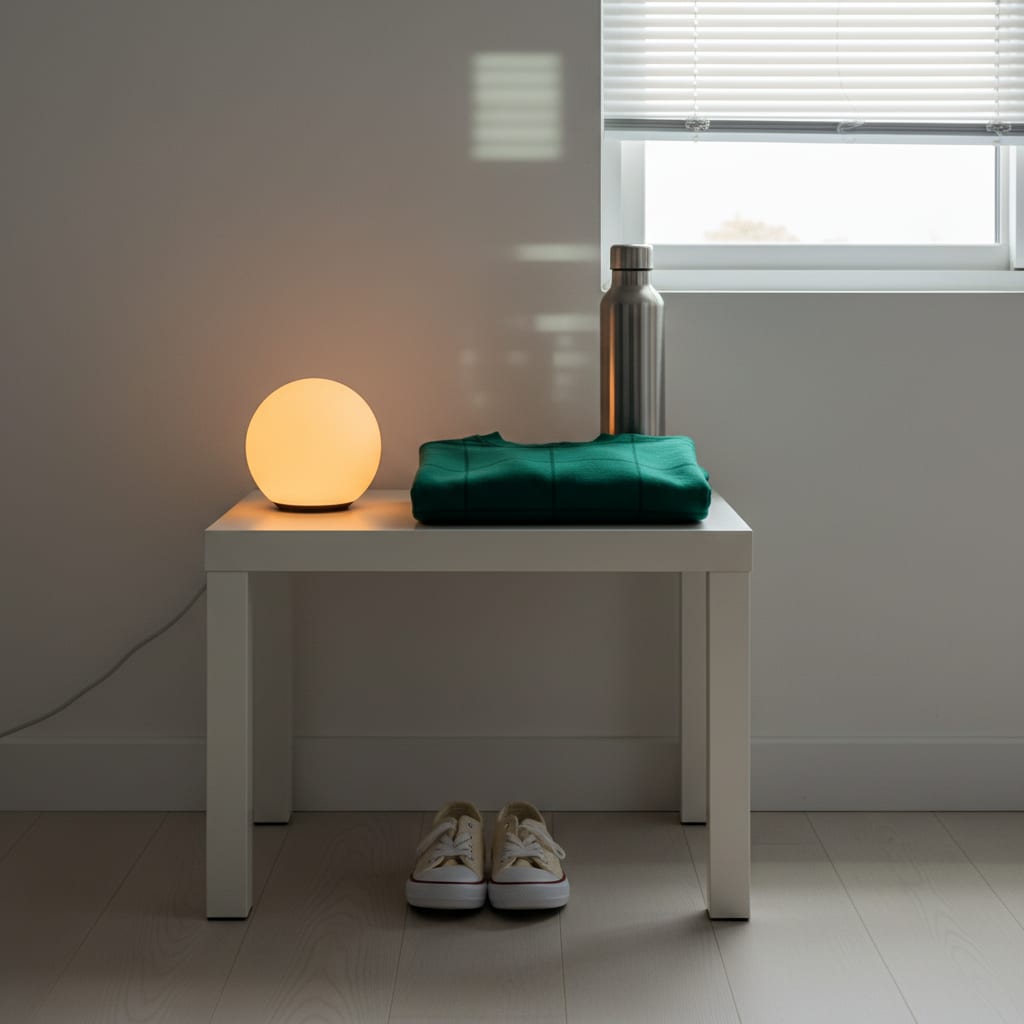
Everything for the door is at the door the night before. Shoes, bag, coat, water bottle, in one spot. A sensitive kid hunting for a shoe with the car running is the whole meltdown, ready-made.
Give a time warning, not a countdown. One warning — “shoes in five” — then silence. A rolling countdown from five to one is five separate alarms.
They go out first, or last, but never in the middle. In the middle means being jostled through a doorway by three siblings. First out means sitting in the car in peace. Ours goes first, and it ended a two-year problem.
Don’t launch anything hard at the door. No spelling quiz, no “did you remember,” no reminders about yesterday. The doorway is a bad venue for information.
Have a plan for the bad morning. Ours: no talking in the car, radio off, conversation after school if at all. Trying to fix a bad morning in the car makes it a bad day.
When it isn’t temperament
Before you rebuild anything, rule out the boring explanations. Overtiredness looks exactly like sensitivity — wired, tearful, slow, falling apart over a sock — and no morning routine fixes a bedtime forty minutes too late.
Then check the honest list: enough sleep for their age, something at school driving it, a recent start or a worsening, a sibling dynamic doing the real work. If mornings involve panic, stomach aches or an escalating refusal to go to school, that belongs with your pediatrician. Temperament describes a kid; it doesn’t explain everything that happens to one.
FAQ: mornings with a sensitive child
Should a sensitive child wake up before their siblings?
Usually yes — around fifteen to twenty minutes earlier. The gain isn’t extra time to get ready, it’s an empty bathroom, a quiet kitchen and a stretch with no deadline attached. Move bedtime earlier by the same amount so it isn’t paid for in sleep.
How do you wake a sensitive child without a meltdown?
Use gradual light rather than a person or a switch, keep the first sentence short and identical, skip the overhead light, and give them a minute of quiet company before any instruction. One transition at a time instead of three at once.
Why does my sensitive kid melt down right as we leave the house?
Because the exit stacks four transitions into ninety seconds under a deadline. Stage everything at the door the night before, give one warning rather than a countdown, and send them out first or last — never in the crush in the middle.
Is a sensitive child the same as an anxious child?
No. High sensitivity is a temperament description; anxiety is a clinical picture. They can look similar in the morning and can also occur together. Persistent worry, physical symptoms or refusing school are reasons to talk to your pediatrician rather than redesign a routine.
How do you do this with four other kids to get out the door?
By moving one child, not the household. The sensitive kid takes the early slot, a solo job and the first seat in the car; everyone else runs the normal launch sequence fifteen minutes behind. A house-wide quiet morning doesn’t survive a week.