Crockpot Meals for a Crowd (Set It, Feed Eight)
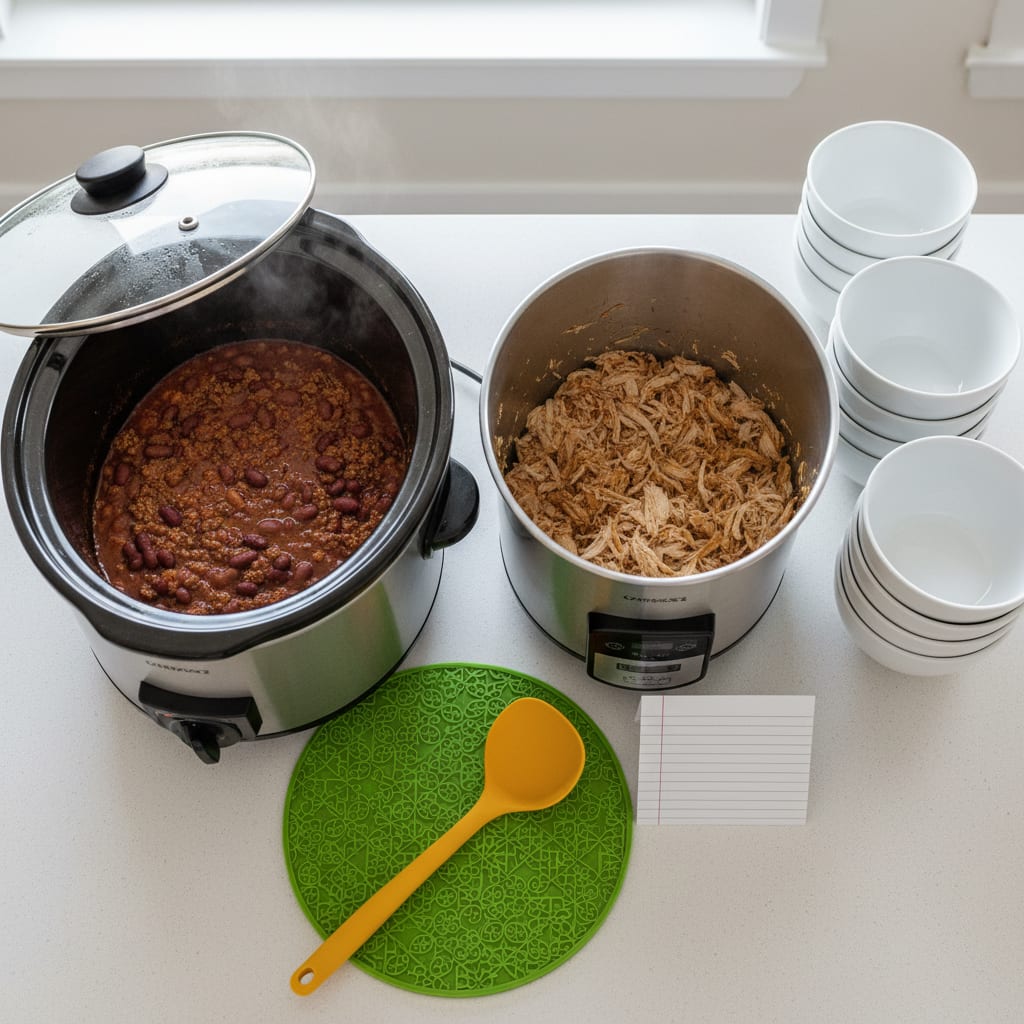
To feed a crowd from a crockpot, you need three things: a pot big enough for the headcount (7 quarts feeds six to eight; a standard 6-quart taps out around six), a dinner shape that scales — shredded protein, chili-and-soup, roast-over-carb, or dump-and-simmer — and a timing window that matches your actual day, not the day the recipe assumes. Get those three right and the crockpot becomes the closest thing a big family has to a second cook. Get them wrong and you’re serving six plates of dinner to eight people at 5:40 p.m.
This is a logistics post, not a recipe post. The internet has a hundred thousand crockpot recipes; what it’s short on is the math for running one machine against eight appetites.
Rule one: size the pot to the headcount
The crockpot lies to you by volume. A 6-quart pot technically holds enough soup for eight, but slow cookers run best filled between half and two-thirds — overfill one and the middle cooks slow while the edges overcook. So the honest capacities look like this:
- 4–5 quart: four plates, maybe five with a side. A starter pot, not a crew pot.
- 6 quart: six plates comfortably. This is the pot most families own and the reason most “crockpot for a crowd” nights come up short.
- 7–8 quart: six to eight plates with leftovers on the low end. The big-family workhorse — something like the Crock-Pot 7-Quart Manual Slow Cooker.
- Two machines: the real answer past eight, and cheaper than you’d think if the second one is a hand-me-down or yard-sale find.
My setup is a 7-quart for the main and the old 6-quart running the carb or the second batch. Two machines also solve the mixed-crowd problem — the mild pot and the “mom stopped diluting the chili” pot.
Rule two: pick a shape that scales
Some dinners scale by the ladle; some scale by the labor. The crockpot shapes that feed a crowd without extra work:
Shredded protein. Pork shoulder, chicken thighs, chuck roast — cook, shred, serve over rolls, rice, or tortillas. This is the highest plates-per-effort shape in the book, because the carb does the stretching and the assembly is self-serve. One shoulder plus a bag of rolls feeds my seven with lunch left over.
Chili and soup. Scales exactly as far as your pot does, freezes flawlessly, and tolerates a toppings bar that makes it feel bigger than it is. Every chili night at my house is secretly two dinners — the second half goes straight into the freezer batch system.
Roast over carb. A roast with vegetables reads like Sunday dinner and demands about eight minutes of attention. The stretch comes from what’s under it — mashed potatoes, egg noodles, polenta — made on the stove while the pot does the work.
Dump-and-simmer. Pantry-only dinners — beans, tomatoes, broth, a seasoning you trust. Lowest cost per plate of anything in the cheap dinners rotation, and the shape you lean on the week the budget is tired.
What doesn’t scale: anything layered (lasagna-style builds cap out at one pot’s worth of surface area), anything breaded, and anything that needs a sear for every piece. If the prep grows with the headcount, it’s not a crowd shape.
Rule three: cook to your window, not the recipe’s
Most slow-cooker recipes assume someone’s home at hour six. Nobody at my house is home at hour six. So I plan by window:
- The 8-to-10-hour window (work-and-school days): big cuts only — shoulders, chuck, dried beans. Delicate proteins turn to sawdust; this window is for the shapes that can’t be overcooked, only improved.
- The 4-to-6-hour window (home-afternoon days): chicken thighs, soups, chilis. Set it at nap time, serve it at dinner.
- The hold: almost every crowd shape holds on “warm” for an hour or two without penalty, which is what makes the crockpot the right machine for practice-night chaos — the 5:15 eaters and the 7:00 eaters get the same dinner.
One line-cook habit worth stealing: prep the pot the night before. Load the insert, park it in the fridge, and the morning version of you only has to carry it to the base and press one button. Morning-you cannot be trusted with more than that.
Running it as a rotation
A crockpot earns its counter space when it has a standing slot. Mine runs twice a week: one 8-hour shape on the worst weekday, one dump-and-simmer on the day I batch everything else. Slot it into your weekly meal plan the same way — the machine is most valuable on the days you’re least available, so assign it the ugliest day on the calendar and let it hold that line every week.
And always cook past the headcount. The marginal cost of filling the pot is small; the payoff is tomorrow’s lunch or a freezer bag. Feeding eight when you needed six is the whole point of the machine.
FAQ: crockpot meals at crowd scale
Can one 6-quart crockpot really feed eight people?
For soup or chili, barely and with nothing left over. For anything served over a carb, no — six plates is the honest ceiling. Past that, size up to 7–8 quarts or run two machines, and let rice, rolls, or noodles do the stretching.
Do I need to brown meat first when cooking for a crowd?
For shredded shapes and dump-and-simmer, skip it — the flavor difference at hour eight is small and the time cost at 6 a.m. is not. Browning earns its pan for roasts you’re serving sliced, where surface flavor actually shows up on the plate.
How long can dinner hold on the warm setting?
One to two hours is the comfortable range for the crowd shapes — soups, chilis, and shredded meats hold quality fine. Past that, texture starts to pay for the convenience, so aim the cook time at the first seating, not the last.
What’s the cheapest crockpot dinner that still feeds a crowd?
Dried beans, canned tomatoes, and broth, run 8 hours and served over rice with a toppings tray. It’s pennies per plate, it scales to whatever pot you own, and the toppings bar keeps the crew from noticing it’s the economy play.